Castle Bay Resort Weligama: Location, Amenities & What to Know
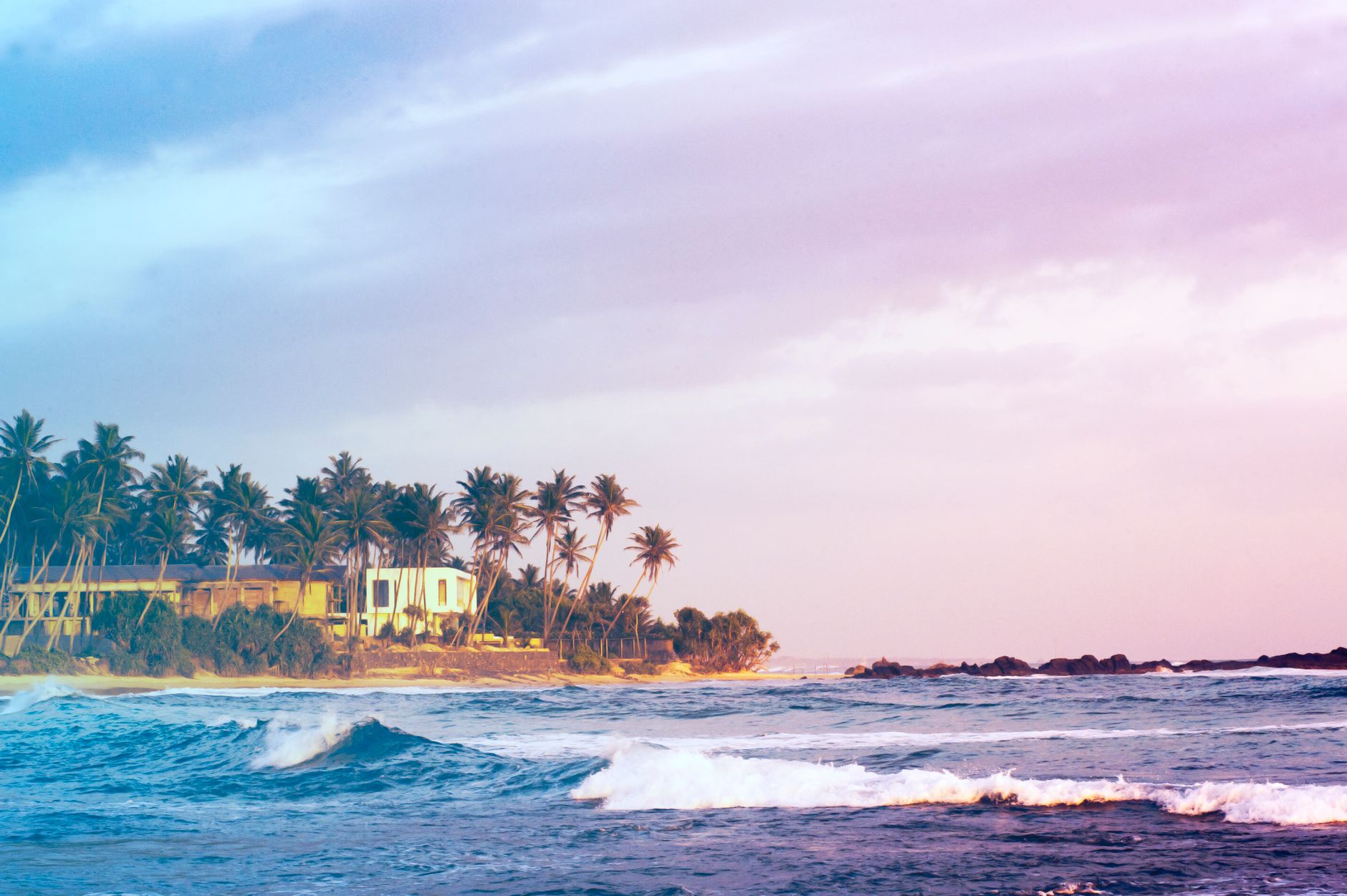
Castle Bay Resort occupies a beachfront position along Weligama's southern shoreline, placing guests steps from the village's iconic crescent bay and within easy reach of the south coast's most compelling sights. The resort's location makes it practical for exploring this working fishing village while maintaining access to quieter stretches of sand and the broader Mirissa–Matara region.
Where exactly is the resort positioned in Weligama?
Weligama curves as a natural bay facing south, and Castle Bay Resort sits on the eastern arm of this crescent, meaning the beach immediately in front offers calmer waters than the exposed western side. The location places you within 100 metres of local fish restaurants and beachfront guesthouses, and roughly 15 minutes on foot from Weligama town centre where the main road, shops and bus station cluster. The nearby Japanese Peace Pagoda sits on a headland about 1 km east along the coastal path—an atmospheric walk that passes fishing nets and small shrines.
What beach experience does the resort offer?
The bay itself is used heavily by local fishermen, particularly in early morning and late afternoon when outrigger boats launch and return with catches. This means the beach carries genuine village character rather than the polished stillness of northern resorts, and swimming is generally safe within the bay's natural shelter, though you'll share the water with fishing activity. The nearby Mirissa beach, a 15-minute drive west, offers a different atmosphere: wider sand, stronger waves, and a younger backpacker crowd.
Related: Is Kalpitiya Worth Visiting? An Honest Take
Related: 3-Star Hotels in Nuwara Eliya: Best Value Stays in the Hill Country
Related: Is Kotapola Worth Visiting? An Honest Take
What are the nearby attractions?
The Japanese Peace Pagoda (Nagaraja Viharaya) stands on the eastern headland and remains Weligama's most visited site—a white stupa built in 1967 and maintained by Japanese Buddhist monks. The walk there takes 20–30 minutes along a coastal footpath with views across the bay; entrance is free but modest dress is expected. Mirissa, just beyond, has developed as a whale-watching hub (November to April, though sightings are unpredictable and require early morning boat trips). Matara town, 15 km west, holds the Matara Fort (a Dutch-era structure now housing a museum) and the Dondra Head Lighthouse, Sri Lanka's southernmost point. For those interested in local craft, the nearby mask-carving workshops of Ambalangoda are a 45-minute drive away.
Weligama itself remains a largely functional village rather than a resort destination—its appeal lies precisely in its working nature. The stilt fishermen (visible year-round, though most active in calm season) offer authentic atmosphere, and local fish restaurants near the beach serve the day's catch at modest prices. The village also sits on the south coast train line, so if you're interested in the iconic seaside railway journey, Weligama is one of the most genuine places to experience it, with the track running directly behind beachfront properties.
How does Weligama compare to other south coast bases?
Weligama differs considerably from Mirissa (busier, more developed, younger atmosphere) and Unawatuna (further east, established tourist centre). It occupies middle ground—quieter than Mirissa but with more local character than purpose-built resorts. Matara, the regional hub 15 km away, offers infrastructure but less seaside charm. If you value authenticity and proximity to active village life, Weligama suits; if you prefer to observe fishing culture from a more insulated setting, Mirissa or Unawatuna may feel more comfortable.
What's the practical context for staying here?
Weligama town has a bus station with frequent services to Galle (45 minutes), Matara (30 minutes) and Colombo (4 hours). The train station sits roughly 500 metres from the resort, with services along the scenic south coast line. Internet and power are reliable; the main road carries shops, pharmacies and a small hospital. Ramzan (April–May 2026) means some local restaurants close during daylight hours, though beachfront resorts and tourist-oriented establishments typically remain open.
The beach itself can become rough during southwest monsoon season (May–September), making Weligama less ideal for swimmers during these months, though the bay's natural shelter still offers better conditions than exposed southern beaches. The calm season (November–April) brings warmer, drier weather and calmer seas.
What's the food situation?
Weligama's beachfront holds a string of small fish restaurants where you can watch boats land their catch and eat it the same evening. These establishments operate at local prices (a whole fish with rice, curry and sambol typically 500–800 LKR, roughly £1.20–£1.90) and offer genuine village dining. The resort likely has its own restaurant, but venturing to nearby spots gives you a genuine feel for how Weligama's fishing economy actually works. Curries tend toward generous chilli heat—ask for mild if that's not your preference.
Practical tips for guests
Bring reef-safe sun cream; the bay's calm waters attract swimmers and snorkellers, and coral protection matters. A light sarong or shawl helps when visiting the pagoda. The coastal path eastward toward the pagoda offers early-morning walks with good photography light and fewer fishermen around. If you plan whale-watching trips, book through a local operator the day before (trips depart around 5–6 am from Mirissa and Unawatuna; Weligama sits slightly further from departure points). Haggling over taxi fares to nearby towns is standard practice; agree a price before getting in, or use local buses for significantly cheaper travel.
The village's main appeal is its unhurried rhythm and genuine working character—expectations of manicured resort experience should be adjusted accordingly. That lack of polish is precisely what draws people here.
FAQ
Is Weligama a good base for exploring the south coast? Yes. It sits centrally between Galle (northwest), Mirissa (west) and Matara (east), and the bus network reaches all. The calm bay makes it suitable for swimmers during November–April; southwest monsoon season (May–September) brings rougher conditions.
Can you see stilt fishermen from the resort? Almost certainly. Weligama bay has active fishing throughout the year, particularly dawn and dusk. Early mornings offer the best light and highest activity.
How far is the Japanese Peace Pagoda? About 1 km east along the coastal footpath, taking 20–30 minutes walk. It's free to enter; dress modestly and remove shoes in the main shrine.
Is the beach safe for swimming? Yes, the bay's natural curve provides shelter. Avoid swimming during fishing activity (early morning, late afternoon) and during southwest monsoon season when swells increase. Always check local conditions with resort staff.