Horton Plains National Park: what you need to know
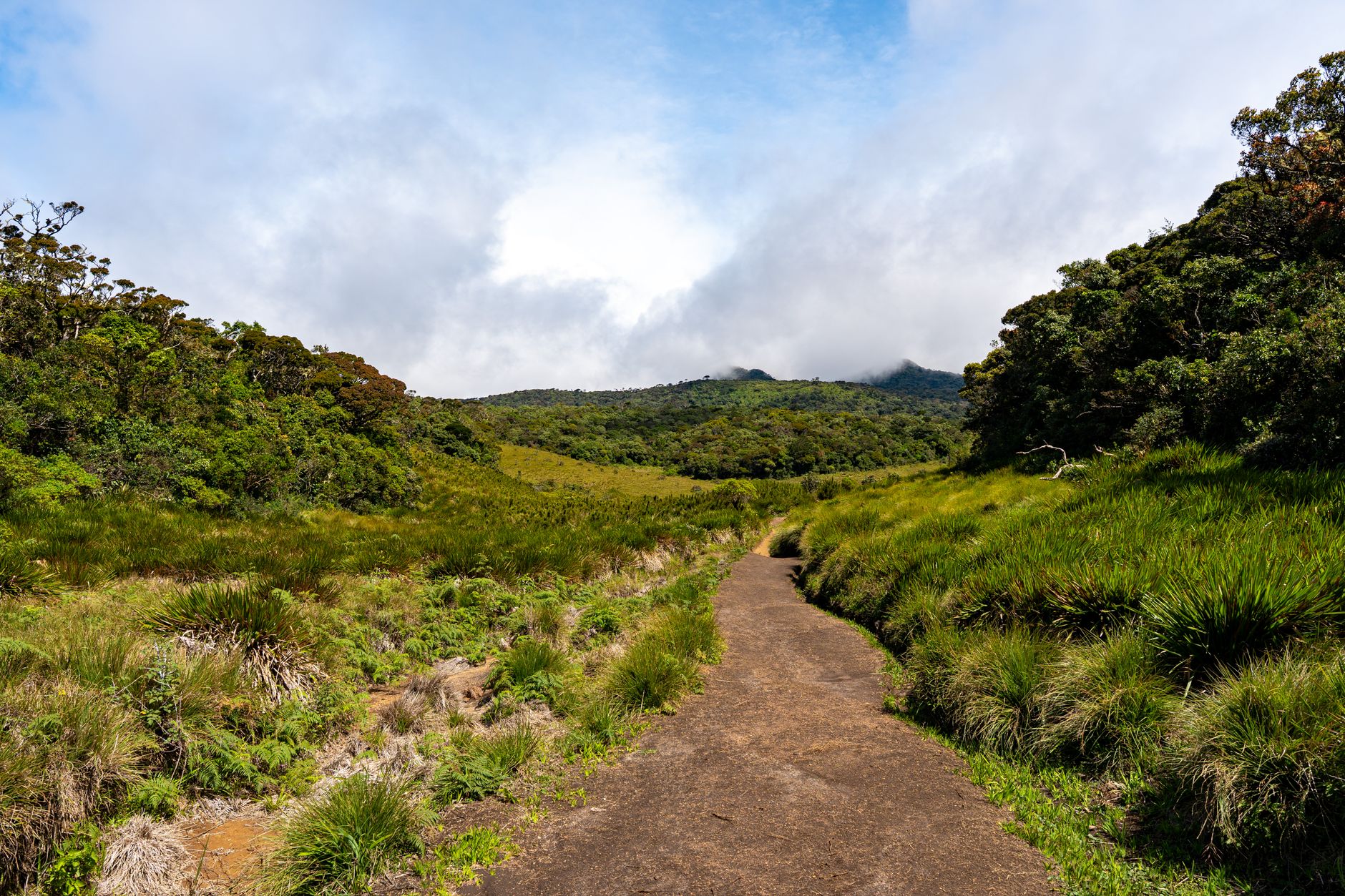
Horton Plains is Sri Lanka's only flat mountaintop. It sits 2,194 metres above sea level in the central highlands. The park covers 3,171 hectares of rolling grassland, cloud forest, and dramatic cliff edges. Most visitors come for World's End—a sheer 1,000-metre drop with views stretching 80 km on clear days. The park is also home to sambar deer, wild boar, and endemic bird species. Entrance is LKR 5,500 per foreign adult (2026 prices); locals pay LKR 1,100. The park operates 6:30 am–4:00 pm daily.
What is the World's End walk?
World's End is a 9.3 km loop trail that most tourists complete in 3–4 hours. The route starts from the entrance, passes Small's Fall waterfall after 2 km, continues to Baker's Fall at the 4 km mark, then descends gently to World's End itself at around 6.5 km. You return via the same path. The terrain is mostly grass and well-marked. The final section to World's End is flat—no scrambling required. Sunrise is optimal; arrive by 7:00 am to catch golden light on the cliffs. By 9:00 am, clouds often obscure the view. Wear proper hiking boots; the grass can be slippery after rain.
Best time to visit
June to September delivers the clearest skies and lowest rainfall. January to March is also dry. October to May brings afternoon cloud and mist—you may reach World's End and see nothing. December to February is coldest (5–15°C overnight). Bring a fleece. July and August see the most day-trippers; visit mid-week to avoid crowds. Avoid May and November; these transition months are wet and unpredictable.
Related: Mandara Resort Mirissa: Location, Rates & What to Expect
Related: Udawalawe with Family: What Works and What to Skip
Related: Best Ayurveda Treatment in Sri Lanka: Where to Go and What to Expect
How to reach Horton Plains
The park entrance is 32 km from Nuwara Eliya town. Drive time: 45 minutes via A7. The road is paved but winding; consider hiring a driver or joining a guided tour. No public buses run directly to the gate. A taxi from Nuwara Eliya costs LKR 3,500–5,000 (USD 12–17) return, including 4-hour wait. Tour operators in Nuwara Eliya charge USD 35–50 per person for small-group trips with a guide. If self-driving, parking is free at the entrance.
Costs & practical details
Entry fees (2026):
- Foreign adults: LKR 5,500 (USD 18.50)
- Foreign children: LKR 2,750 (USD 9.25)
- Local adults: LKR 1,100
- Camera fee: LKR 1,000
What to bring:
- Water: carry 2 litres minimum. No shops or taps inside the park
- Snacks: energy bars, fruit, or sandwiches
- Layered clothing: it's cold at 2,194m; mornings drop to 5–10°C
- Fleece or windproof jacket
- Sturdy hiking boots (grass is wet and muddy)
- Sun protection: UV is intense at altitude; sunscreen and hat are essential
- Binoculars: sambar deer and endemic birds are common, especially early morning
The park has no restaurants. The visitor centre near the entrance sells basic items (drinks, snacks) at high prices. Pack a proper lunch.
Wildlife and what to see
Horton Plains is one of Sri Lanka's best spots for endemic wildlife. Sambar deer graze across the grassland, particularly at dawn. Wild boar are common but shy. Bird species include the Sri Lanka Bush Warbler, Yellow-eared Bulbul, and Sri Lanka Wood Pigeon. Insects are striking: giant dragonflies and butterflies are visible May–September.
Plant life is unusual. Rhododendrons flower March–April. Moss-covered elfin cloud forest covers the south-western sector; this stunted forest has adapted to constant wind and low temperatures.
Guided tours vs. solo walking
The main loop is clearly marked and straightforward; a guidebook map is sufficient. However, a local guide (LKR 2,000–3,000 / USD 7–10) adds value: they'll spot wildlife, explain endemic species, and share history. Tours operating from Nuwara Eliya typically include transport, entry, and a 4-hour guide. The trade-off is pace—groups move slower. Solo walkers reach World's End faster and enjoy solitude, but miss bird and animal identification.
Other trails
Beyond the main loop, two minor routes exist:
- Bamboo Forest trail: 6 km loop, 2 hours. Flatter, quieter, good for birdwatching
- Hakgala Ridge: 8 km loop, 3 hours. Higher altitude, stronger winds, views of Hakgala peak
Neither is as popular or as rewarding as World's End. Most visitors stick to the main 9.3 km loop.
Photography and sunrise tips
Arrive by 6:45 am to catch sunrise light. The morning glow on the cliff face at World's End lasts 30 minutes (roughly 6:50–7:20 am in June; later in other months). Afternoon light is harsher and often obscured by cloud. Use a polarising filter to cut glare and enhance the sky. The landscape is monochromatic (grass, sky, rock); include local people or wildlife for scale and colour contrast.
Practical comparison with other highland hikes
Horton Plains differs from Ella Peak and Adam's Peak. Ella Peak (1,041m) is lower, warmer, and less prone to cloud. It's easier (1-hour return) and suits casual walkers. Adam's Peak (2,243m) is higher and attracts pilgrims; the 5-hour climb is steeper. Horton Plains sits in the middle: altitude without extreme steepness, but more prone to cloud than Ella. Choose based on time and fitness. Horton Plains suits a full half-day commitment; Ella is a quick morning trip.
Accessibility notes
The main World's End loop is not wheelchair-accessible. The path is narrow, uneven, and includes steep sections. Older or less-fit walkers manage the walk, but need steady pace and good footwear. Children aged 8+ typically complete it with breaks. Under-8s struggle; consider the shorter Bamboo Forest trail instead.
Nearby towns and overnight options
Nuwara Eliya is the closest town, 32 km away. Ella is 45 km south-east. Kandy is 85 km north-west. Most visitors base themselves in Nuwara Eliya (cooler, more central) or stay lower in Kandy and drive up early. Nuwara Eliya accommodation ranges from budget guesthouses (USD 15–25) to mid-range hotels (USD 50–100).
Peak season crowds
July–August see 500–1,000 visitors daily. You'll encounter tour groups, especially 8:00–10:00 am. January–February are slightly less crowded. October–May are quietest but cloudiest. Visit mid-week (Tuesday–Thursday) to reduce crowds by 30–40% year-round.
FAQ
Is Horton Plains worth the drive from Kandy? Yes, if you have a full day and clear skies forecast. The 2-hour drive each way eats time, but World's End justifies it once in your trip. If you only have 6 hours, base yourself in Nuwara Eliya instead.
Can I reach World's End in under 3 hours? Fast walkers (good fitness, minimal photo stops) finish in 2.5 hours. Most take 3–4. The return journey is psychologically harder—you're tired and clouds may thicken. Don't rush; a missed shot is better than a twisted ankle.
What if clouds cover World's End? You'll see a wall of white. The cliff edge is still dramatic—the scale is clear even through mist. Occasional gaps reveal glimpses. Start very early (6:30 am opening); the best light window is 6:45–8:00 am before afternoon clouds roll in. If you arrive at 9:00 am or later, odds of clear views drop sharply.
Are there toilets in the park? Yes: a basic facility near the entrance and one near Baker's Fall (roughly 4 km in). Bring hand sanitiser; facilities are basic. No toilet paper is provided.