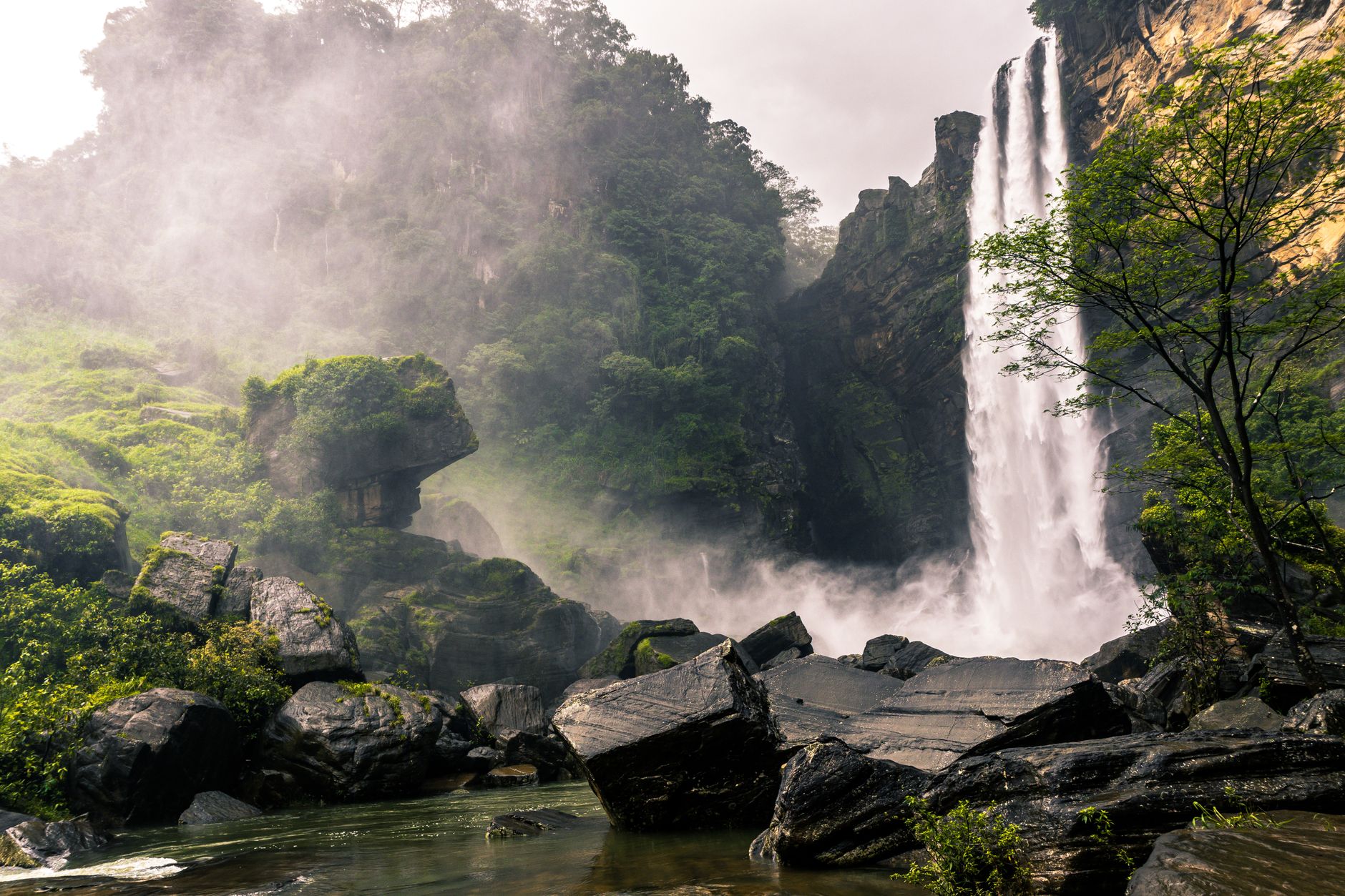
Hunnasfall: Sri Lanka's Hidden Waterfall Trek
Hunnasfall is a remote waterfall accessible only by jungle hiking, located in the forested hills above Kitulgala in the Sabaragamuwa Province. Unlike Sri Lanka's famous tourist cascades, this 10-metre fall sits in pristine rainforest and demands genuine effort: expect a steep, muddy ascent, creek crossings, rope work, and slippery sections. The trek suits experienced hikers comfortable with scrambling and creek navigation, not casual day-trippers. Water flows reliably May–September; outside those months, the fall may be reduced to a trickle.
How far is Hunnasfall from main towns?
Hunnasfall lies roughly 8 km north-east of Kitulgala, a town on the A7 highway between Colombo (105 km west) and Kandy (55 km east). From Kitulgala town centre, the trailhead near the River Kitulgala requires a 20–30 minute walk or short tuk-tuk ride to locate. GPS coordinates and local guidance are essential—trail markers are minimal. Most hikers base themselves in Kitulgala, which offers basic guesthouses and is known for white-water rafting on the Kitulgala River.
What's the difficulty level and fitness requirement?
This is a hard hike, not suitable for casual walkers. Expect:
Related: Negombo Hotels: Where to Stay in Sri Lanka's Beach Town
Related: Hikkaduwa Beach Hotels: Where to Stay in Sri Lanka's Surf Town
Related: Budget Hotels in Bentota: Best Value Options for 2026
- Elevation gain: ~300–400 m over 2–3 hours uphill
- Terrain: Slippery mud, exposed tree roots, frequent creek crossings, boulder scrambling
- Obstacles: Rope-assisted sections, near-vertical scrambles over rocks, water crossings up to waist-deep (depending on season)
- Fitness: Suitable for hikers comfortable on steep terrain, with some scrambling experience and no fear of water
- Pace: 2–3 hours up, 1.5–2 hours down (slippery descent)
If you struggle on steep, muddy trails, or if creek walking unnerves you, this is not the hike for you. Alternatives include Adam's Peak (better maintained) or Pidurutalagala (less technical).
When is the best time to visit?
May–September is the only reliable window. During the south-west monsoon (May–September), the falls flow well and the jungle is lush. October–April brings reduced water flow; by January–February, Hunnasfall may be little more than a seep.
Avoid:
- November–January (dry season; minimal water)
- October (transition; unpredictable)
- Rainy seasons (November–December and March–April can mean flooding, swollen creeks, and hazardous conditions)
Mid-June to August offers consistent flow without peak rainfall. Late afternoon showers are common year-round in the highlands; start early (6–7 a.m.).
What gear and preparation do you need?
Essential:
- Strong hiking boots with grip (not trainers; mud is slippery)
- Quick-dry clothes and spare set (you will get wet)
- Waterproof bag for valuables
- 2–3 litres of water; there are creeks but do not rely on them for drinking
- Torch or headlamp (even on day hikes; jungle darkens fast)
- Basic first-aid kit (plasters, bandage, pain relief)
- Sun protection (hat, cream) for exposed sections
Recommended:
- Trekking poles (reduce impact on descent, useful for creek balance)
- Dry bag for camera/phone
- Insect repellent (leeches possible in wet season)
- Energy snacks (chocolate, nuts, energy bar)
Strongly advised:
- Hire a local guide (£15–25 per day). Trail is unmarked, and guides know water levels and rope placements. Ask at your Kitulgala guesthouse or the Kitulgala Rest House.
- Do not trek alone.
How do you reach the trailhead?
From Kitulgala town, ask locals or your accommodation for directions to the Hunnasfall trailhead (sometimes called Hunnas Ella locally). A tuk-tuk from the town centre costs roughly 400–600 LKR one-way; the driver may need directions. The start is near the Kitulgala River, in a residential area. Parking is roadside; inform the driver when you expect return.
Alternatively, negotiate a guided hike starting from Kitulgala; some local guides will collect you from accommodation.
What's the actual trek like?
The path climbs steadily through dense secondary forest. Initial sections follow an old logging track; this gives way to a narrower trail that becomes increasingly technical. You will cross the creek several times, scramble over boulders, use fixed ropes on near-vertical sections, and navigate slippery mud. The final 30 minutes are steep and exposed.
The waterfall emerges unexpectedly—a narrow 10-metre cascade into a small, deep pool. Water is cold. The pool is deep enough to swim (though current can be strong after rain); many hikers plunge in to cool off. Jungle noise (birds, frogs) is intense; the roar of water echoes through the gorge.
There is no maintained camping; do not attempt this as an overnight trek unless you are an experienced mountaineer. The descent is harder than ascent—mud becomes treacherous when wet.
Hunnasfall versus other Sri Lankan waterfalls
| Waterfall | Difficulty | Crowd | Season | Best for |
|---|---|---|---|---|
| Hunnasfall | Hard | None | May–Sept | Adventurous hikers seeking solitude |
| Diyaluma Falls | Moderate–Hard | Low | Year-round | Multi-step cascade, cooler season |
| Ella Falls | Easy | Moderate | Year-round | Families, casual walkers |
| St Clair's Falls | Easy | High | Year-round | Viewpoint, no climbing |
| Ravana Falls | Easy–Moderate | High | Year-round | Tourist experience |
Choose Hunnasfall only if you are fit, experienced, and seeking a genuine jungle adventure. It is Sri Lanka's least-touristy major waterfall.
Safety considerations
- Leeches: Present in wet season; use salt or insect repellent; do not pull them off (causes infection).
- Flash flood risk: If heavy rain falls upstream, creek levels rise rapidly. Do not wade if water is murky or fast-moving.
- Poor light: Take a torch; jungle gets dark by 5:30 p.m. year-round. Never trek after noon.
- Rock falls: Avoid lingering directly under the falls.
- No rescue infrastructure: This area has no rangers, marked trails, or rescue teams nearby. A guide is not optional; it is essential.
Getting to Kitulgala and nearby areas
Kitulgala sits on the A7 between Colombo and Kandy. By bus from Colombo (Bastian Mawatha station), journey time is 2–2.5 hours; fares around 300–400 LKR. From Kandy, it is 1–1.5 hours. Taxis and hired vehicles (with driver) cost £25–40 one-way from Colombo.
For more information on the region, see our guides to Kandy, Kitulgala attractions, and hiking in Sri Lanka's highlands.
FAQ
When will the waterfall actually flow? May–August. Outside these months, water is negligible or absent. Late June through July is peak flow. Check with local guides before committing; they monitor seasonal changes.
Can I hike Hunnasfall solo? No. The trail is unmarked, hazardous, and remote. Hire a local guide from Kitulgala (£15–25/day). Accidents in unmapped jungle can be serious; guides also know water conditions and safe rope placements.
How fit do I need to be? You should be comfortable hiking uphill for 2–3 hours on steep, muddy terrain without stopping frequently. If Adam's Peak (5,243 m, 7 hours) is beyond you, Hunnasfall will be difficult. Test yourself on moderate hills first.
What if I slip or get injured? There is no mobile signal, no rangers, and no marked evacuation route. Injuries are serious. Wear proper boots, move carefully on wet sections, and turn back if you feel unsafe. A guide increases safety significantly.