Colombo isn't a must-see destination in the way Kandy or the south coast are, but it rewards those who approach it with curiosity rather than guidebook expectations. The capital offers colonial architecture, vibrant street food, gallery spaces, and a palpable sense of how modern Sri Lankans actually live—none of which should be dismissed, even if they don't fit traditional postcard travel imagery.
What makes Colombo genuinely worth a visit?
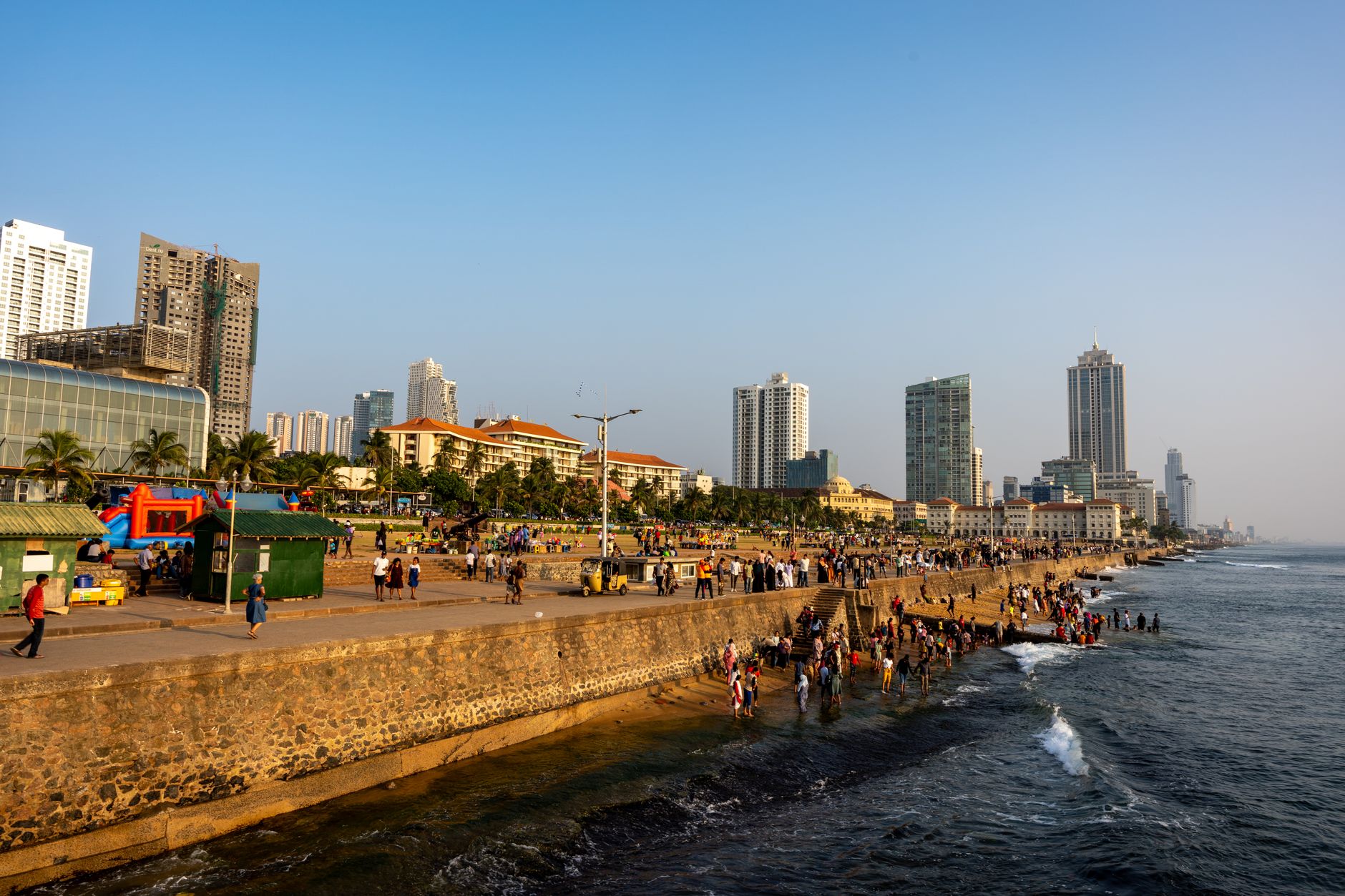
The city works best when you abandon the idea of "sightseeing" and instead move through it as you would any living capital: lingering in neighbourhoods, eating where locals eat, and letting time move slowly. The Galle Face Green on a late afternoon draws families, joggers, and vendors in an entirely unselfconscious way that captures something essential about Colombo's character. The colonial-era buildings clustered around Fort—old courthouses, banks, and hotels—speak to a particular moment in history without feeling preserved in amber. Walk these streets and you're moving through contemporary Sri Lankan life, not a museum exhibit.
The food alone justifies a stop. Colombo has more diverse and accomplished cooking than you'll find elsewhere on the island—not just because of tourism infrastructure, but because it's where Sri Lanka's communities converge. You'll find genuinely excellent lamprais, kottu roti, devilled preparations, and hoppers that rival anywhere in the country, but also the kind of curation that comes from a city with appetite and resources. Short Eats on Galle Road remains a cultural institution worth experiencing, and the newer café and restaurant scene around Colombo 7 reflects serious culinary ambition.
Related: Best Places in Sri Lanka for Ayurveda and Wellness Retreats
See also: Black Forest Beach Resort: Location, Facilities & What to Expect
See also: Accommodation Near Udawalawe National Park: What to Expect
Museums and galleries matter here too. The National Museum holds substantial collections of Buddhist sculpture and historical objects, and whilst it's not world-class, it contextualises much of what you'll see elsewhere in Sri Lanka. Smaller spaces like the galleries around Colombo 7 (Laksha, Saskia Fernando, Paradise Road) showcase contemporary Sri Lankan art in ways that give texture to understanding the country's present, not just its past.
Should you actually spend time here, or skip it?
That depends on your travel style and what you're seeking. If you've booked a week in Sri Lanka and want beaches, wildlife, and ancient sites, a single night in Colombo makes practical sense for arrival and departure—no more. The city isn't scenic enough to justify multiple days purely for aesthetics, and travellers seeking nature will feel frustrated by the sprawl and traffic.
But if you're spending two weeks or longer, or if you're interested in contemporary culture, urban food, and understanding how Sri Lankans live outside the tourism bubble, then three or four days becomes genuinely worthwhile. Colombo rewards a different kind of attention than other parts of Sri Lanka demand.
The practical advantage is also real: Colombo has the widest range of accommodation, from budget guesthouses through boutique hotels like Granbell Hotel Colombo (9.1/10, excellent for design-conscious travellers) to serious luxury at Marino Beach Colombo (9.3/10, beachfront with old-money charm). Mid-range options like The Ocean Colombo Hotel (8.1/10) offer genuine comfort without pretension. This variety means you can find something that suits your budget and style far more easily than in smaller towns.
Honest limitations to consider
Colombo is chaotic. The traffic is genuine, pollution is noticeable, and navigating the city requires either a tuk-tuk, taxi, or willingness to walk through congested streets. The weather is hot and humid year-round, and the rainy season (May–June and November–December) makes things genuinely unpleasant. Some neighbourhoods are grubby, and there's no escaping that this is an Indian Ocean port city with all the attendant disorder that implies.
The beaches near Colombo (Mount Lavinia, Dehiwala) are functional rather than beautiful, and if your primary motivation is swimming or sunbathing, you'll be disappointed—the south coast or the east offer far superior alternatives within a few hours' travel.
Architectural heritage, whilst present, is scattered and sometimes obscured by newer construction. You won't find the unified colonial cityscape of a place like Galle; instead, you'll find fragments and layers, which is more honest but less immediately photogenic.
What to actually do with your time
Begin with the Galle Face area: walk the promenade, watch the light change over the Indian Ocean in late afternoon, and eat from the seafront vendors. Move inland to Fort, where the National Museum and scattered colonial buildings create a loose sense of historical narrative without requiring a structured tour.
Spend time in Colombo 7, where cafés, galleries, and bookshops cluster around Cinnamon Gardens. The neighbourhood has a genuinely pleasant residential feel, and wandering it reveals how a certain segment of Colombo's middle class lives. Eat lunch at one of the restaurants here; many are thoughtful without being pretentious.
Visit a market—Pettah or one of the neighbourhood markets—early in the morning, where the sheer volume of commerce and human energy gives you more understanding of Colombo's actual function than a dozen tourist sites could. Eat hoppers for breakfast. Try the short eats. Spend an evening on Galle Road watching the city move past.
If you stay three days or longer, a day trip to nearby attractions like the Kelaniya Raja Maha Vihara (a significant Buddhist temple just outside the city) or the Pinnawala Elephant Orphanage makes sense, breaking up the urban experience.
Where to stay depends on your priorities
For heritage and atmosphere, Galle Face Hotel (8.6/10) remains iconic, though it's expensive and benefits from its reputation as much as its current service. Mount Lavinia Hotel (7.7/10) offers similar heritage appeal with beachside location, though the beach itself is modest.
For contemporary comfort at reasonable cost, The Kingsbury Colombo (8.9/10) or Cinnamon Grand Colombo (8.6/10) deliver well-maintained luxury without the premium pricing of the heritage properties. Mandarina Colombo (8.8/10) offers excellent value with strong design sensibility.
For budget-conscious travellers, C1 Colombo Fort (8.8/10) provides clean, well-positioned accommodation in a central location without excessive frills.
The honest conclusion
Colombo is worth visiting if you're curious about cities, food, contemporary culture, or how actual Sri Lankans live outside the tourist trail. It's not worth visiting if you're seeking scenic beauty, historical monuments, or pristine nature. The city works best when you approach it without high expectations of spectacle and instead allow it to reveal itself as a place where millions of people work, eat, argue, create, and live their ordinary lives—which, if you pay attention, is genuinely interesting.
Given more time in Sri Lanka, you might explore /kandy or /ella for their distinct character; but if Colombo is on your itinerary anyway, give it the kind of unhurried attention it deserves, and it will likely surprise you.
Frequently asked questions
How many days in Colombo is enough? One night works if you're arriving or departing and want to experience the city minimally. Three to four days allows you to move beyond first impressions and actually understand neighbourhoods and eat properly. More than five days becomes difficult unless you're specifically interested in urban exploration or have visits to nearby attractions planned.
Is Colombo safe for tourists? Yes, broadly. The usual urban precautions apply—don't display valuables, avoid walking alone very late at night, and be aware of your surroundings. Petty theft occurs, but serious crime affecting tourists is uncommon. The city's congestion and chaos feel more intimidating than it actually is.
What's the best time to visit Colombo? Dry periods (February–April and August–September) are most pleasant, though the city remains hot and humid. November through December and May through June are rainy and uncomfortable. Colombo doesn't have a truly bad time to visit, only less pleasant times.
Can you visit Colombo as a day trip from elsewhere in Sri Lanka? Yes, if you're based on the south coast (roughly Mirissa to Galle) or in the hill country, day trips are feasible. However, you'll spend significant time travelling, and the experience will be rushed. Staying overnight is worthwhile if the time exists in your itinerary.