Mirissa for Solo Travellers: Safety and Practical Tips
Mirissa welcomes solo travellers with open arms, offering a blend of beach relaxation, reliable transport links, and a well-established traveller community that makes meeting others straightforward. The town is generally safe for independent visitors who exercise normal precautions, with budget accommodation aplenty and plenty of social gathering points where you'll naturally meet other travellers without forcing it.
Is Mirissa safe for solo travellers?
Yes, Mirissa is considerably safer than many beach towns in Southeast Asia, with a stable and welcoming atmosphere that suits independent visitors of all backgrounds. Petty theft does happen—mostly from unattended bags on the beach or from poorly secured accommodation—but violent crime against tourists is extremely rare. The traveller community is longstanding, creating an informal support network; locals are accustomed to solo visitors and rarely hassle you for sales or unwanted attention once you've politely declined an offer. That said, stay alert in the same way you would in any coastal town: avoid displaying expensive jewellery or cash, don't leave valuables unattended, and use common sense after dark, particularly if you've been drinking. The main beach area is lit and fairly busy until late evening, but quieter side streets should be navigated with a torch or phone light.
Where should solo travellers stay?
Mirissa's accommodation spectrum suits every budget, and the best choice depends on whether you want social interaction or quiet reflection. For budget travellers seeking community, Bon Accord Mirissa Hotel is exceptional value at the 2-star level with a rating of 9.6/10, offering a genuinely sociable atmosphere where solo guests naturally connect over breakfast. Hotel Vacanza - Mirissa is another friendly budget option with 8.7/10 ratings and a straightforward, no-frills vibe. If you want slightly more comfort without losing the social element, Peacock Villa (3-star, 9.4/10) offers excellent value and a pleasant common garden where guests gather, whilst Wavelength (3-star, 8.2/10) has a laid-back surfer crowd atmosphere.
Related: A Nice Place in Kandy: Where to Find Authentic Atmosphere
See also: Elite Holiday Homes in Anuradhapura: Luxury Stays & Value Analysis
Related: Herbal Gardens in Sri Lanka: Where to Visit & What to Expect
For those with a modest mid-range budget seeking more privacy, IMAGINE Villa Hotel (4-star, 9.2/10) delivers boutique touches and quiet spaces without the overwhelming social scene, and Triple O Six (4-star, 8.9/10) offers similar quality with a more intimate setting. Handagedara Resort (2-star, 8.6/10) works well if you want beachfront proximity and a relaxed setting, whilst Talalla Retreat (3-star, 8.2/10) sits slightly outside the main town if you prefer quieter surroundings with easy beach access. If luxury is part of your plan, Mandara Resort Mirissa (5-star, 7.4/10) provides five-star service, though at that level you may find fewer solo travellers and a more formal social dynamic.
Regardless of choice, book accommodation with secure lockers, request rooms with reliable locks, and always lock your door when you're out. Many places offer safe-deposit boxes at reception—use them for your passport, cards and excess cash.
Getting around as a solo traveller
Mirissa itself is walkable, with the main beach, town centre and restaurants stretching along a manageable coastal strip. Beyond that, three-wheelers (tuk-tuks) are your lifeline and are genuinely safe for solo women and men alike; the town is compact enough that most rides cost under 500 rupees. Negotiate fare beforehand or ask your hotel to book one—rates are fair and drivers are accustomed to solo foreign travellers. For longer distances to Unawatuna, Galle or Matara, buses leave from the main road every 20–30 minutes and are cheap, social and reasonably frequent until early evening. If you're nervous about buses, pre-arrange a private driver through your hotel; the cost (roughly 3,500–4,500 rupees for short trips) is reasonable and eliminates uncertainty.
Avoid travelling alone on roads late at night, particularly if you've been drinking; instead, ask your accommodation to book a tuk-tuk or driver rather than flagging one down in the dark. During daylight and early evening, solo travel by tuk-tuk or bus is straightforward and low-stress.
Where do solo travellers meet and socialise?
Mirissa's traveller scene clusters around a handful of reliable spots, making it easy to find company without feeling isolated. The main beach during daytime is the easiest social hub—sit near other backpackers and conversation naturally unfolds, particularly during sunset when the whole beach seems to gravitate toward drinks and chat. Most beachfront restaurants—especially those facing the sand—have communal seating vibes, and solo diners are welcomed rather than pitied. Evening drinks at beachfront bars naturally draw solo travellers, and groups regularly form around tables; ask where others are heading for dinner and tag along.
Jetwing Lighthouse in nearby Galle (a 30-minute tuk-tuk ride) is worth a day trip if you want to meet a wider crowd in a more curated setting. Many Mirissa-based travellers take whale-watching boats together (December to April is peak season), which is an excellent way to spend time with others whilst doing something genuinely memorable.
Budget breakdown and money safety
Daily costs in Mirissa sit around 1,500–2,500 rupees per person once accommodation is factored in: budget guesthouses run 800–1,500 rupees per night, street food costs 200–400 rupees, and beachfront restaurant meals range from 600–1,200 rupees. If you're selective, you can live very cheaply; if you want occasional meals at nicer restaurants or take activities like boat trips, budget accordingly.
Keep cash in multiple locations: a small amount in your pocket for daily spending, the bulk in your room safe or hotel deposit box, and cards as backup. Mirissa has ATMs, but they occasionally run out of cash during weekends; withdraw funds at Matara or Galle if you're unsure. Avoid changing money on the street, and don't flash large sums in public. Petty theft from bags or poorly locked rooms is the main financial risk; valuables are far safer locked away than carried around.
Local customs and respectful behaviour
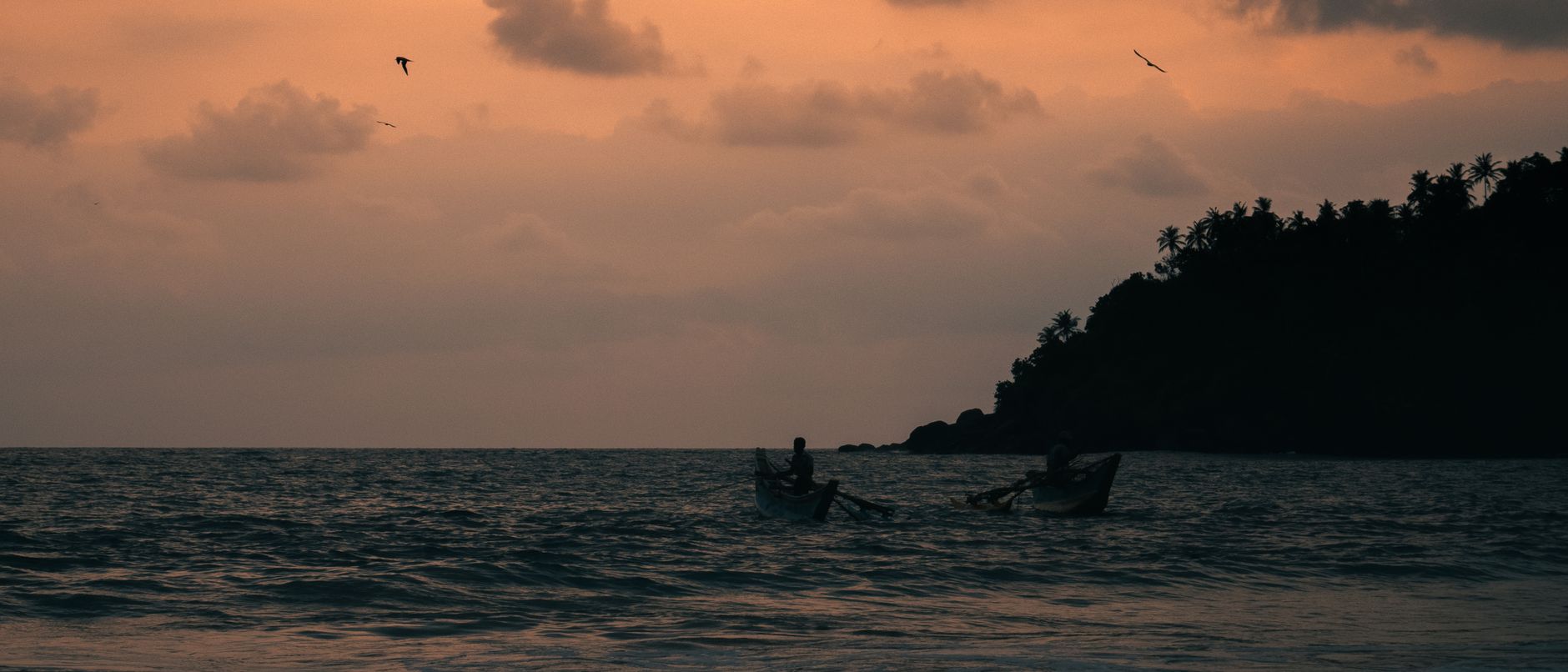
Mirissa is a Buddhist fishing village first and a beach town second; dress modestly away from the beach (cover shoulders and knees in town), and avoid public displays of affection. The fishing community is integral to daily life—don't photograph boats or fishermen without permission, and show respect if you see a funeral procession. Alcohol is readily available to tourists but discretion is appreciated; don't drink visibly in the main town during daylight. If you're visiting temples, remove shoes, cover shoulders and knees, and ask permission before photographing.
Local workers—tuk-tuk drivers, restaurant staff, shop owners—appreciate basic Sinhala phrases like "Ayubowan" (hello) and "Shukriya" (thank you). A small gesture of genuine interest in their lives goes far; they're not props for your travel story.
FAQ
Is it safe to walk the beach alone at night? The main beach is lit and busy until around 10 p.m., so it's fine then. After that, use a torch and stay on the main path; deserted stretches should be avoided. Early morning walks are pleasant and safe.
What should I do if I feel uncomfortable or threatened? Tell your hotel staff immediately—they have local contacts and can help resolve issues. The police are generally helpful with tourists, though response times vary. The British High Commission in Colombo and your embassy can provide support if needed, but such situations are rare.
Is it cheaper to travel solo or in a group? Costs are identical for food, transport and activities; the only advantage of a group is splitting driver or boat costs. Solo travellers generally pay slightly more for private transport but save if they share rooms (though most solo travellers prefer private rooms).
Can I take part in activities like whale watching alone? Absolutely. Boats operate daily during season (December–April) and are predominantly full of solo travellers and small groups; operators arrange you alongside others naturally. Book through your hotel the day before.