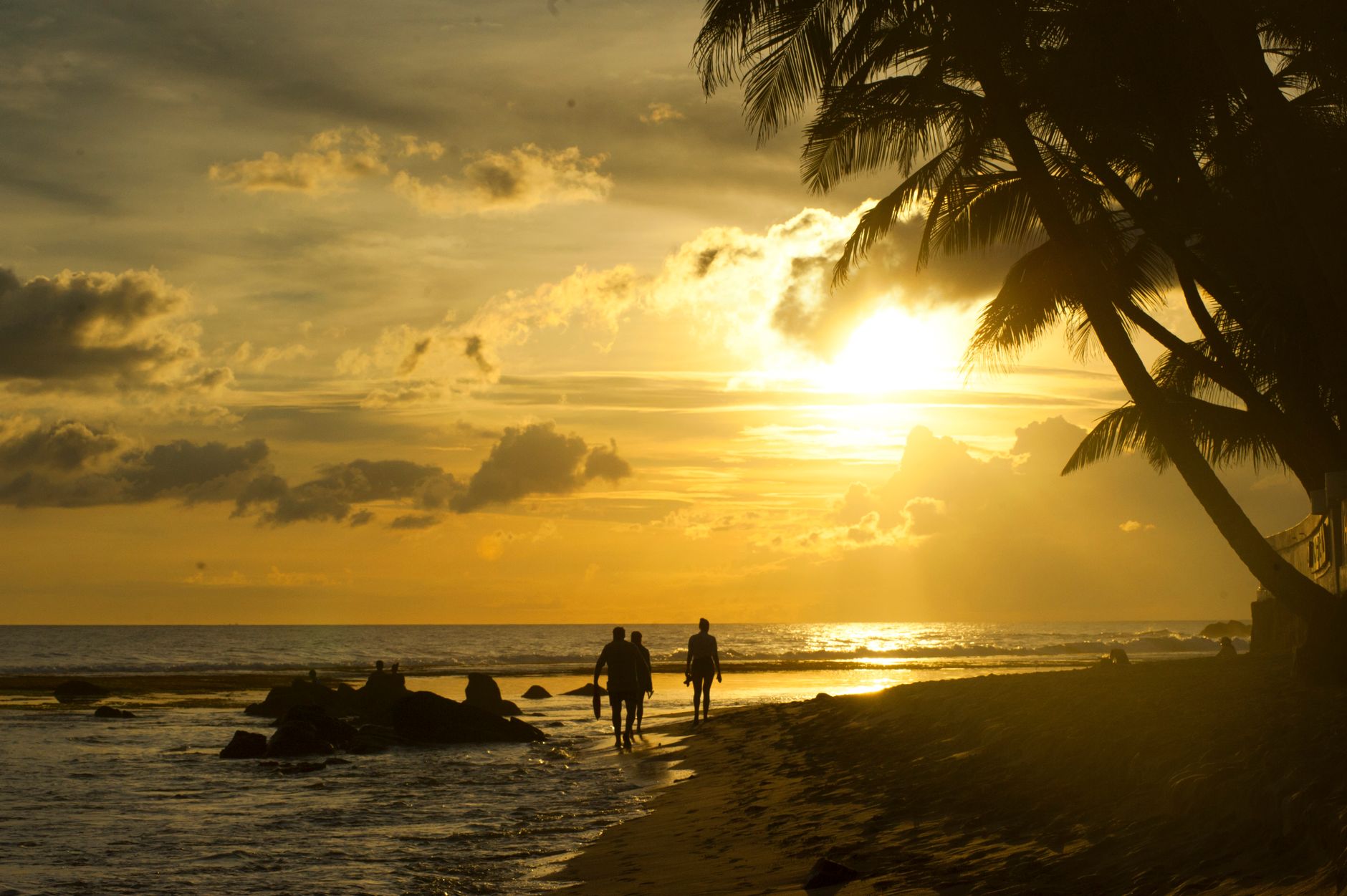
Unawatuna's crescent bay and affordable accommodation make it tempting for families, but the town has genuine strengths and real limitations worth understanding before you book. This guide separates what actually works with children from the tourist traps and seasonal challenges that catch families off guard.
The beachfront is genuinely family-friendly during shoulder months (November to March), with calm, sheltered water ideal for paddling and snorkelling. However, the main beach strip becomes congested with competing beach clubs, loud music, and vendor hassle from December onwards, so timing and location choices matter enormously. Quieter pockets exist along the bay's southern edge and in nearby Mirissa, though each requires different transport and planning.
What genuinely works for families in Unawatuna
The shallow, protected bay is the main draw, and for good reason: children can wade safely without strong currents or significant wave action, particularly from November through March. The water temperature sits around 27–28°C year-round, so no wetsuits needed for young swimmers.
Related: White House Ratnapura: Contact & Visit Details
See also: Black Forest Beach Resort: Location, Facilities & What to Expect
See also: Colombo to Kandy Bus: Routes, Times & What to Expect
Snorkelling requires minimal effort here. You can walk from the main beach into the water and spot parrotfish, wrasse, and occasional turtles without a boat trip. This suits families with children aged 5 and up who have basic swimming ability; younger children should stay in the shallow margins unless supervised by a confident adult.
Accommodation is genuinely affordable compared to other coastal towns. Mid-range options like Dunes Unawatuna Hotel and Hibiscus Villa offer family rooms, reliable hot water, and beachfront location without the premium pricing of Mirissa or Tangalle resorts. If your budget stretches further, Araliya Beach Resort & Spa Unawatuna and Thambapanni Retreat provide proper family facilities, children's menus, and quieter grounds set back from the main beach noise.
Food is varied and child-friendly without requiring adventurous palates. Western cafes line the main strip, but worthwhile meals exist too: rice and curry served at local spots near the market is genuinely good value and not intimidatingly spiced if you request mild versions. Fresh fruit smoothies and fish meals at beachfront restaurants are reliable lunchtime options.
Galle Fort, 15 minutes by tuk-tuk, genuinely engages school-age children: the ramparts, bastions, and old streets offer exploration without museum fatigue, and the fort's elevated position provides safe walking away from traffic.
What to skip or approach with caution
The main beach strip itself becomes problematic from December through February when it transforms into a tourist marketplace. Beach clubs blast competing music, vendors approach constantly selling boat trips and massages, and the sand fills with sun loungers and parasols. Families seeking peace should avoid peak hours (10am–3pm) and head to quieter sections near the southern headland or consider nearby Mirissa instead.
Water sports marketed aggressively on the beach—jet skis, parasailing, banana boats—rarely operate safely for young children and typically exploit inexperienced tourists with inflated prices. Skip them entirely unless your child is a confident teenager and you're comfortable with inherent risks.
Full-day snorkelling boat trips sound appealing but disappoint many families. Boats are crowded, seasickness is common in Sri Lankan waters even in calm conditions, and children often become bored after the initial novelty wears off. The reef is accessible from the shore anyway, making boat trips unnecessary unless you're seeking specific dive sites (which require specialist operators).
Nightlife venues and late-night beach bars are concentrated along the main strip and create noise and crowds unsuitable for families prioritising early bedtimes and calm evenings. If you want to dine out after children sleep, organise reliable in-room childcare or bring teenagers old enough to supervise younger siblings.
Unawatuna's narrow roads and limited parking make navigating with young children and luggage frustrating. Tuk-tuks are the practical transport, but quality varies: agree fares beforehand and avoid travelling with very young children during peak afternoon hours when traffic congestion peaks.
Timing makes all the difference
November to early December and late February to early March offer the sweet spot: water is calm, weather is warm, but crowds remain manageable. Schools are in session elsewhere, so family accommodation is available without the December-January premium pricing.
Avoid July through September entirely—monsoon rains make the beach unswimmable and accommodation leaks. June and October are marginal: occasional rain is normal, and the sea can be rough.
December through January is viable if you book accommodation away from the main beach strip and accept peak-season pricing. The town becomes a tourist fair, but daily beach time before 9am is still peaceful.
Where to base yourself with children
If you want beachfront convenience without the main strip's chaos, Thaproban Beach House and Thaproban Pavilion Resort and Spa occupy quieter positions at the bay's edge, with beach access but distance from the densest vendor concentration.
For families wanting more resort amenities—pools, activity programmes, spacious grounds—Cocobay Unawatuna and The Long Beach Resort provide proper family infrastructure without the main beach's intensity.
Budget-conscious families should consider nearby Mirissa (20 minutes by tuk-tuk), which offers similarly calm water, better-value accommodation, and a less frantic atmosphere, though fewer restaurant options.
Practical culture tips for family travel here
Respect temple etiquette if you visit Galle Fort's Meera Mosque or nearby temples: shoes off, covered shoulders, no photography of prayer spaces. Children should understand this as normal courtesy rather than restriction.
Water safety requires vigilance: no lifeguards patrol this beach. Supervise young swimmers constantly, regardless of claimed swimming ability. Strong swimmers can venture beyond the shallow zone, but rips can form near rocky points, so set clear boundaries.
Public displays of affection are culturally conservative here; families are welcomed and respected, but excessive PDA isn't. This shouldn't affect your visit materially, but awareness prevents awkward moments.
Tipping isn't expected or necessary at roadside food stalls, but restaurant staff appreciate 10% for good service. Never feel pressured to tip; it's genuinely optional.
FAQ
Is Unawatuna safe for families? Yes, absolutely. Crime targeting tourists is rare, and locals are generally welcoming to families. Standard travel precautions apply: watch belongings on busy beaches, use registered tuk-tuks, and avoid walking unfamiliar roads alone late at night.
What's the best age range for Unawatuna? Families with children aged 4–15 find it most rewarding. Toddlers manage well if you prioritise accommodation with pool access and quiet beaches; teenagers may find the town quiet unless they're interested in snorkelling or nearby Galle Fort.
Do I need to book accommodation in advance? During November–March shoulder season, booking 4–6 weeks ahead ensures reasonable pricing and choice. December–January requires earlier booking (8–12 weeks) or expect 20–30% premium pricing for mid-range options.
Can I rent a car or must I use tuk-tuks? Hiring a driver with vehicle is possible but unnecessary; tuk-tuks are cheaper, simpler, and avoid parking stress. Only hire a car if planning multi-day regional drives beyond the immediate coast.
Visit our guides on Galle and Mirissa to compare nearby alternatives and plan regional day trips effectively.