Where to Stay in Polonnaruwa: Complete Area Guide
Polonnaruwa rewards those who linger in its particular neighbourhoods rather than rushing through the ancient ruins. The town divides naturally into lakeside enclaves offering calm and reflection, zones clustered near the medieval city for archaeological immersion, and budget quarters pulsing with local life. Your choice shapes not just where you sleep but how you experience Sri Lanka's second great kingdom.
Lakeside Polonnaruwa: Serene views and upmarket stays

The shores of Parakrama Samudra—the vast artificial lake engineered in the 12th century—form the atmospheric heart of modern Polonnaruwa. Hotels here sit back from the water, their gardens opening onto reflections of palm trees and evening sky. The water itself rarely sees swimmers; it's quieter than a beach, more meditative.
Ekho Lake House Polonnaruwa anchors the premium end with a 9.1/10 rating across 142 reviews, offering five-star attention in a secluded setting where you can genuinely unwind after hot days exploring ruins. The Deer Park Hotel commands 8.3/10 approval with wildlife-focused theming—genuine leopard sightings occur locally, and the hotel's gardens reflect that context. Giritale Hotel sits on its own bay, earning consistent 8.1/10 marks from 259 reviewers who appreciate both the setting and reliability.
Related: Where to Stay in Marawila: Complete Area Guide
See also: Best Hotels in Kandy, Sri Lanka: Rated and Compared for 2026
See also: Best Hotels in Pinnawala, Sri Lanka
For mid-range comfort without premium pricing, Hotel Sudu Araliya scores 7.8/10 across 257 reviews, delivering clean, straightforward rooms where the lake view justifies the modest price bump over town options. The Lake Hotel sits slightly more central, rating 7.7/10 from 412 reviews—the highest review count here suggests consistency attracts repeat visitors.
Best for: Those seeking space, quiet mornings with bird calls, and evenings where the day's heat finally breaks. Lakeside suits longer stays and reflection; day trips to ruins feel less pressured from a peaceful base.
Near the Ancient City: Walking-distance archaeology

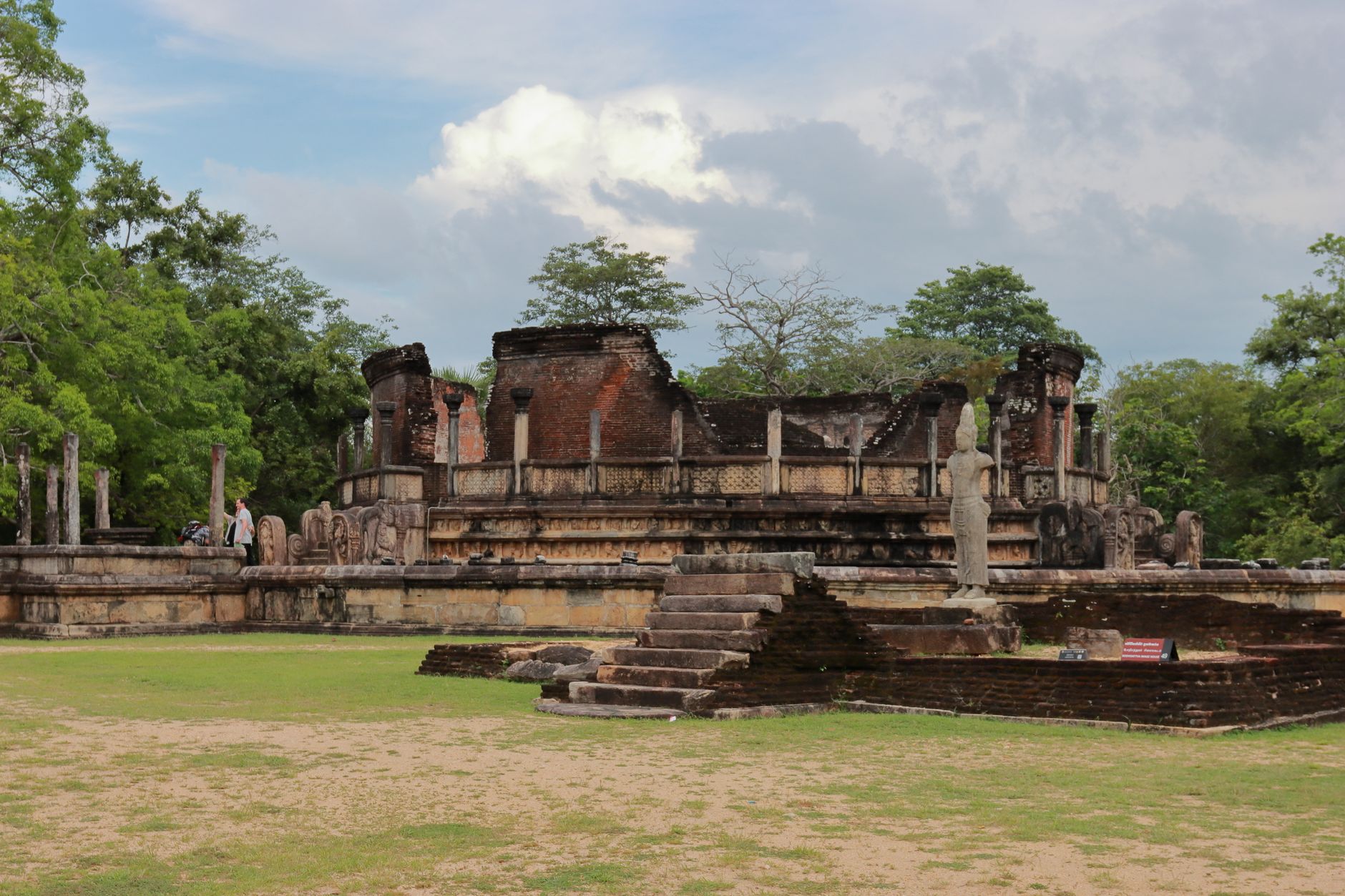
The medieval ruins cluster within a few kilometres of town centre, and staying adjacent means early morning site visits before crowds and heat intensify. Hotels here cater to focused heritage tourists who want ruin exploration as their primary activity.
Ruins Chaaya Hotel scores highest in this zone at 8.6/10 from 63 reviews, with direct positioning near key structures and staff accustomed to guiding guests through the site's layout. Hotel Ancient Village earns 8.3/10 across 63 reviews, living up to its name by positioning itself within the broader ancient settlement context rather than as a separate resort. Both these properties understand their niche.
Best for: Serious archaeology enthusiasts, early risers keen to beat the heat, travellers with limited time who want maximum ruin immersion. You'll spend daylight hours on-site regardless, so proximity matters more than surrounding atmosphere.
Town Centre and Local Quarters: Budget-friendly character

Polonnaruwa's actual town, clustered around the bus station and market areas, pulses with local life—bakeries opening at dawn, schoolchildren in uniforms, trishaw conductors negotiating fares, vendors selling bright fabrics and household goods. Hotels here position you amongst ordinary Sri Lankan life rather than in resort isolation.
Living Inn Polonnaruwa scores 8.5/10 from 45 reviews whilst maintaining two-star pricing, suggesting excellent value judgment by guests. Clay Hut Village offers 7.9/10 approval with distinctive architecture—actual clay construction, not marketing—that appeals to travellers seeking something different. Seyara Holiday Resort and Siyanco Holiday Resort both hold 7.9-7.0/10 ratings respectively, representing the true budget tier where cleanliness and friendliness matter more than amenities.
For something between budget and resort, Rock Cascade - Home Stay operates as a genuine family guesthouse (7.6/10 from 70 reviews) where owners often cook breakfast and share local knowledge freely.
Best for: Budget-conscious travellers, those interested in daily local life, backpackers comfortable without resort facilities, anyone spending multiple days exploring the wider region (Sigiriya, Dambulla) where Polonnaruwa forms just one stop.
Comparing areas: What matters most?
If early morning archaeology and focused site exploration dominates your plan, near-ruin hotels save time and heat exposure. If you came for calm reflection and landscape, lakeside properties justify their premium through genuine peace—you're paying for that water view and morning quiet, legitimately. If you're budget-conscious or interested in local flavour, town-centre and homestay options connect you with actual Polonnaruwa life rather than a sanitised resort version.
Consider also that Polonnaruwa works excellently as a two-night base exploring Sigiriya and Dambulla via day trips—in which case a reliable mid-range town-centre hotel makes more financial sense than a premium lakeside retreat you'll barely use.
Practical neighbourhood notes
The lakeside suburbs sit 3–5 kilometres from town centre; you'll need a tuk-tuk or arranged transport for evening meals beyond your hotel restaurant. Town-centre hotels walk you to actual shops, local eateries, and the bus station if moving on.
Water and electricity run reliably across all listed properties. Wifi varies—lakeside and mid-range hotels generally offer decent connection; budget homestays may only have ground-floor coverage. None of Polonnaruwa's neighbourhoods feel unsafe; the town is small and tourism-familiar. Rubbish, like most Sri Lankan towns, accumulates visibly in certain areas; this is infrastructure limitation rather than specific zone problem.
The best season runs November through March, when heat and humidity ease—this affects your enjoyment of any location. Lakeside rooms stay slightly cooler than town. Most hotels offer air conditioning; genuinely budget options may offer only fans, which works adequately during cooler months.
FAQ
Which area has the best food? Town centre, unambiguously. Local restaurants cluster near the market and bus station; lakeside hotels mostly serve hotel restaurants. For authentic kottu, lamprais, and lunch curries, stay central. Lakeside areas cater to tourist palates.
Can I reasonably walk between areas? Lakeside to town centre (3–5km) works as a tuk-tuk ride, not a comfortable walk in heat. Within town or near ruin zones, yes, walking is practical. Most visitors take tuk-tuks casually rather than walk extensively.
Which hotel suits a solo traveller best? Town-centre options like Living Inn Polonnaruwa and homestays create social atmospheres; lakeside resorts can feel isolating alone. Mid-range town hotels offer the balance—safety, social potential, and independence.
Do I need to book in advance? Polonnaruwa never approaches Sigiriya's crowds. Walk-in accommodation works year-round except brief peaks around Sinhala New Year (mid-April). Off-season (May–August) means empty hotels and better negotiation room.
Explore more about when to visit and what else the region offers at Polonnaruwa's best time to visit and consider day trips to Sigiriya and Dambulla from any base you choose.