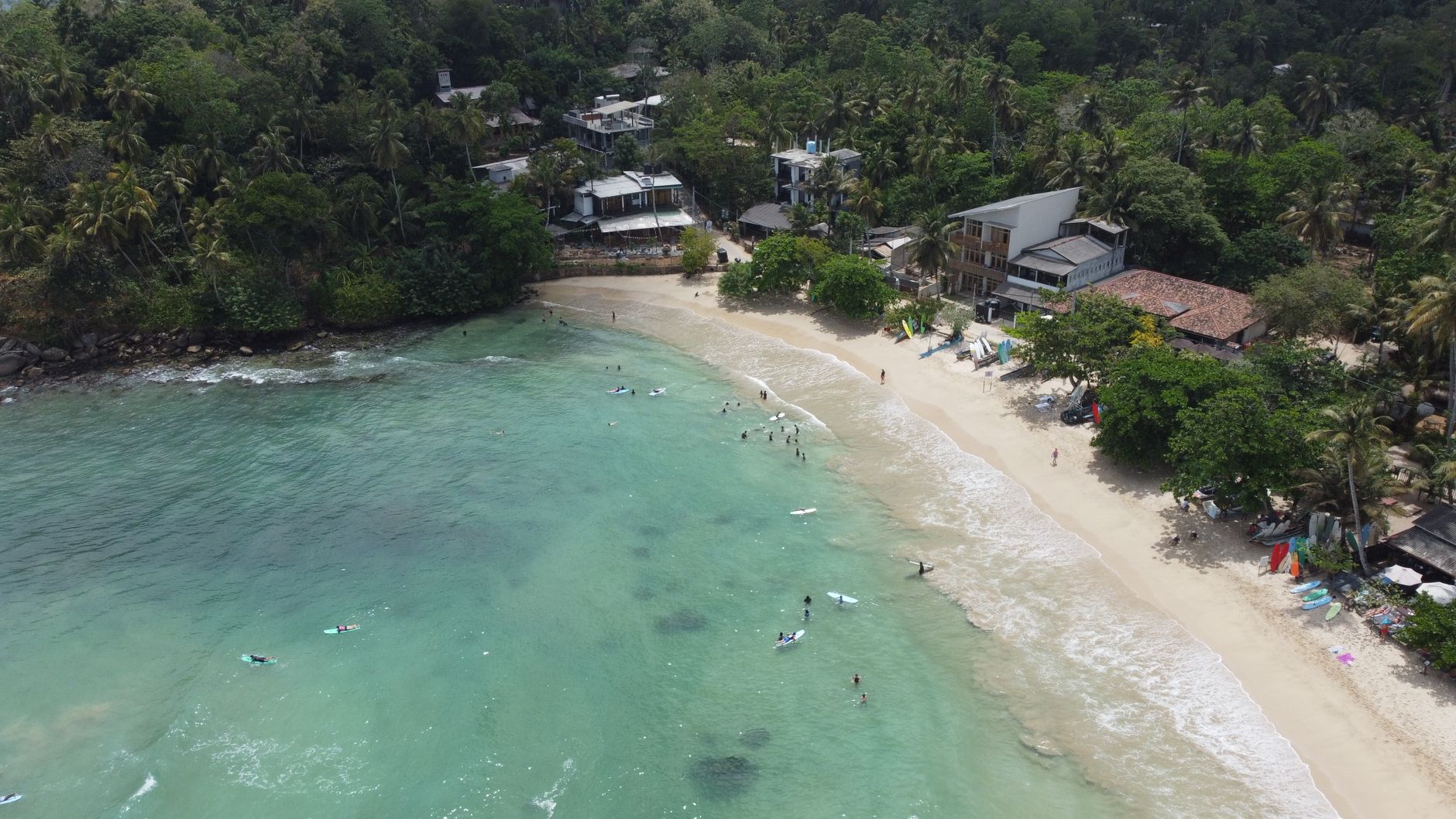
Where exactly is Coral Beach Hotel in Mirissa?
The property sits on the southern, quieter stretch of Mirissa Beach—roughly 1.5 km from the main town cluster. If you're staying here, you're trading immediate proximity to shops and restaurants for relative peace and unobstructed sea views. The southern end tends to be less crowded, especially outside peak season (December–March).
Direct beach access: the main selling point
Beachfront properties in Mirissa are common, but this one places you directly on the sand with no road or compound separating you from the water. That matters if you want to swim at sunrise or simply watch the Indian Ocean from your room. Early mornings here are genuinely quiet—you'll see fishing boats and occasional whales in season (November–April) without the midday churn of tourists.
However, "beachfront" also means salt spray maintenance, higher humidity, and limited shade on the beach itself. Bring a hat and reef shoes; the sand shelves quickly and the bottom is rocky in places.
Related: Mandara Resort Mirissa: Location, Rates & What to Expect
Related: Way of the Bay, Arugam Bay: A Complete Guide
Related: Best places in Sri Lanka for beach hopping
Walking distance to amenities
The town centre—where most restaurants, the whale-watching boats, and the supermarket sit—is about 10–15 minutes on foot along the main road. That's manageable but not instant. If you prefer staying within a 2-minute walk of food and drink, you'd be better in the central cluster. If solitude matters more than convenience, this works.
Practical logistics
Getting there
From Mirissa's main junction (where the A2 coast road meets the town), head south along the beachfront road. You'll see the property clearly marked. If arriving by tuk-tuk, ask the driver for "the south end of Mirissa Beach." Expect to pay 200–400 LKR from the town centre, depending on negotiation.
Nearest transport hub
Matara town lies 12 km north and has direct buses to Colombo (3–4 hours), Galle (30 mins), and Ella (4–5 hours). Mirissa itself has no long-distance station; you walk or tuk to Matara to catch intercity services. See /mirissa for fuller transport options.
Room standards and what to verify
Beachfront hotels in Mirissa range from basic (fan, cold water, shared toilet) to mid-range comfort (A/C, hot water, private bath). Before booking, confirm:
- Water supply: Mirissa town has frequent cuts May–August. Ask if the property has backup tanks.
- Wi-Fi strength: Beachfront rooms sometimes have patchy signal due to distance from town routers.
- Noise: Even quiet Mirissa gets monsoon swell July–September; check if that's a problem for you.
- Rates: Seasonality swings prices dramatically. December–February can be 2–3 times higher than June. Always compare at least two booking dates.
Comparison: is beachfront worth the trade-off?
Beachfront pros:
Direct sand access, sunrise swimming, no walk to the beach.
Beachfront cons:
Higher prices, salt air corrosion, stronger wind, fewer shade trees, further from restaurants and shops.
Mid-town alternative:
Staying 200–400 metres inland in central Mirissa usually costs 20–30% less, puts you within 2 minutes of restaurants and whale-watch boats, but requires a 1-minute walk to the beach.
If you're budget-conscious, willing to walk, and not desperate for sea-view rooms, the savings might outweigh the convenience loss.
Seasonal considerations
Best time to stay: November–March. Calm seas, reliable dry weather, good whale watching.
Shoulder season (April–May, September–October): Fewer tourists, cheaper rates, but occasional rain and rougher waves.
Monsoon (June–September): Cheapest rates, highest rainfall, strong swell. The beach is still usable, but not ideal for swimming.
For more detail, see /mirissa/best-time-to-visit.
Booking and payment
Direct vs platforms
Contacting the hotel directly often yields better rates than Booking.com or Agoda, especially for stays longer than 3 nights. Many Mirissa properties discount walk-in rates in low season.
Cancellation policies
Check whether your booking is free cancellation. Mirissa sees weather disruptions; flexibility matters.
Payment methods
Cash (Sri Lankan rupees) is standard. Some properties accept card, but add 3–5% processing fees. Bring rupees or visit Matara's ATMs (nearest reliable option).
Is Mirissa the right base for you?
Mirissa suits whale-watching trips, beach downtime, and access to southern coastal sites. It's quieter than Galle, busier than Unawatuna, and closer to Ella by road. If you're building a 2–3 week south-coast itinerary, Mirissa makes sense as a 2–3 night stop. If you're looking for nightlife, it's limited.
For transport to other parts of Sri Lanka, see /mirissa for bus and tuk-tuk advice.
FAQ
Can I negotiate the price if I walk in without booking?
Yes, often—especially May–September and outside weekends. You may save 10–20%, though you risk the room being full. Phone ahead if you're unsure.
Is the beach safe for swimming year-round?
November–April: yes, calm and suitable for most swimmers. May–September: rough swell, strong currents. Always ask the hotel staff or locals about conditions before entering the water. Designated swimming spots exist; ask staff to point them out.
How far is it to Galle, Ella, and Colombo?
Galle: 30 km, 1 hour by bus. Ella: 90 km, 4–5 hours (via Matara). Colombo: 160 km, 4–5 hours via the A2 coast road or faster A9 inland route.
What should I pack for a beachfront stay?
Hat, sunscreen (SPF 50+), reef shoes, lightweight rain jacket (even in "dry" season), and a sarong for sun protection. Salt-resistant lock for your room and a waterproof bag for valuables when swimming.