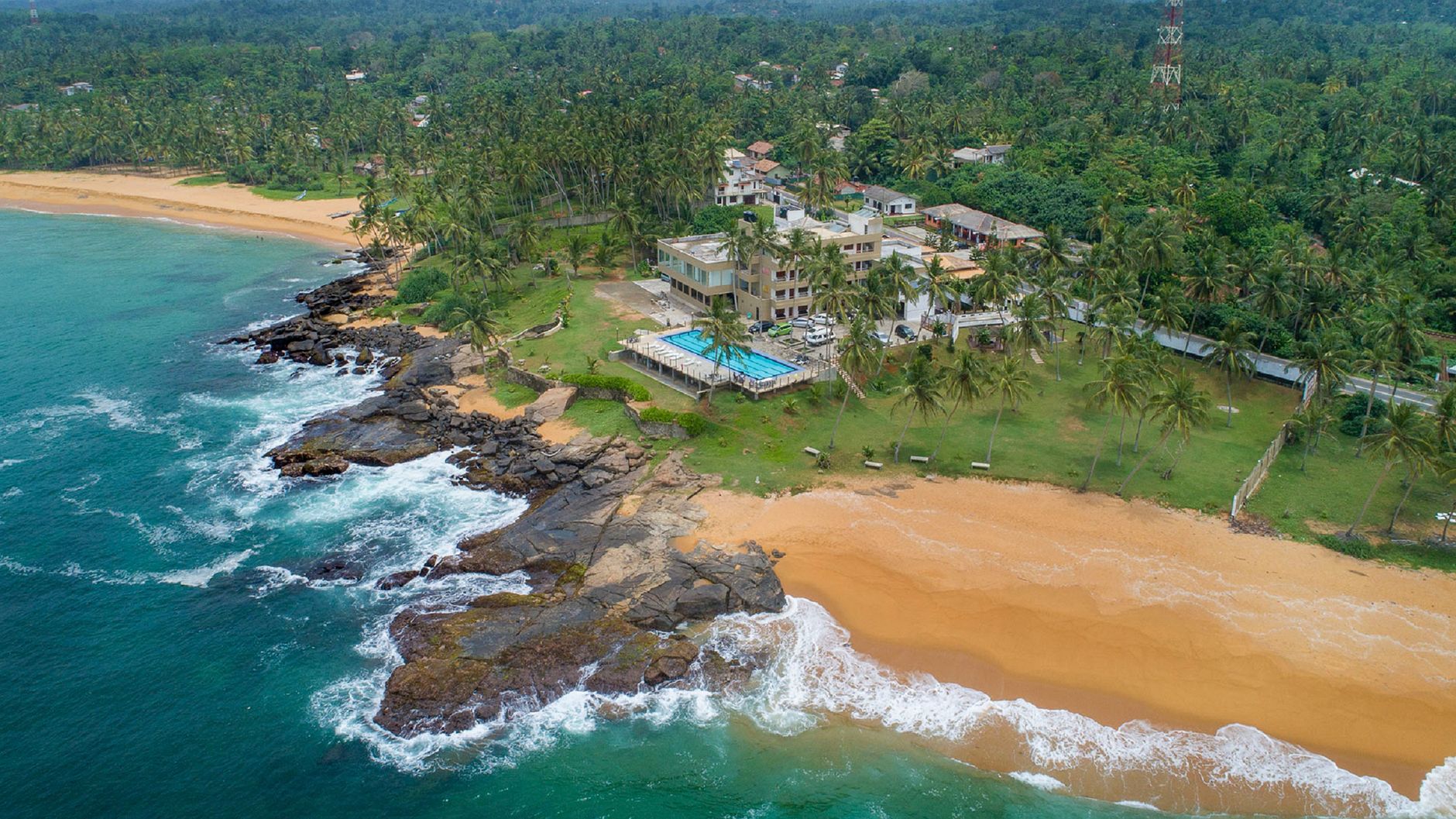
Hikkaduwa's hotel landscape divides cleanly: beachfront or back-street, resort or guesthouse, tourist-facing or local-run. Your choice determines everything from noise levels to sunset views to daily spend. The town stretches about 2km along the coast, and where you stay affects which reef spots you'll access and which bars become your local.
What's the real difference between beachfront and inland hotels?
Beachfront properties sit on sand facing the Indian Ocean. You'll wake to waves, walk 30 seconds to the reef, and pay roughly 40–60% more. They're louder—music from bars until midnight, boats launching at dawn—but the constant water view justifies it for most beach-focused travellers. Inland hotels are set 50–300 metres back, in or near Hikkaduwa town's dusty main road. They're quieter, cheaper, and close enough to the beach (5–10 minute walk), but you'll hear tuk-tuks and smell cooking instead of salt air.
Which hotel type matches your travel style?
Beachfront resorts suit couples, families with kids, and anyone prioritising ease. They often include pools, restaurants, and activity desks. Expect 30–50 rooms, moderate noise, and mid-range pricing (£30–80 per night). Best for: sunset swimmers, reef snorkellers who want immediate access, people staying 3+ nights.
Related: Best Places in Sri Lanka for Ayurveda and Wellness Retreats
See also: Kanneliya Rainforest: Wildlife, Trails & Visitor Guide
See also: Is Hikkaduwa Worth Visiting? An Honest Take
Mid-range beachfront guesthouses are smaller (8–15 rooms), often family-run, with basic rooms and a bar-restaurant. These occupy the sweet spot for many: less corporate than resorts, direct beach access, affordable. Best for: backpackers upgrading from dorms, couples on moderate budgets, anyone wanting local interaction.
Budget guesthouses cluster inland along the main road and side lanes. Rooms are simple—fan or basic AC, shared or private bathroom—but clean. Many have a ground-floor restaurant and rooftop bar. Noise varies wildly; some are peaceful, others sit above clubs. Best for: backpackers, solo travellers, those happy to walk 5 minutes to the beach, budget-conscious groups.
Upmarket resorts are few in Hikkaduwa; they exist but Sri Lanka's luxury beach scene gravitates toward Mirissa, Unawatuna, and the south coast. Expect more in Colombo, 90 minutes north.
Where should you actually book?
Main beach strip (central Hikkaduwa). Walking distance to reef snorkelling, main bars (Tropicana, Laughing Buddha equivalent venues), restaurants, and dive shops. Loudest at night. Busiest during high season (December–February). Good if you want action.
North beach (towards Narigama). Quieter than central, still beachfront, 15-minute walk or short tuk-tuk to town. Better for sleeping, easier for early dives. Less crowded reef access some mornings.
Inland town centre (main road). Budget-friendly, walkable to shops and local restaurants, but 5–10 minute walk to beach. Good for those prioritising value and don't mind noise from passing traffic.
South beach. Quieter again, further from bars, good if you want a retreat feel but still on-beach. Tuk-tuk needed for evening out.
When should you book and what will you pay?
High season (November–February). Book 2–4 weeks ahead. Beachfront: £40–80/night. Inland mid-range: £20–40/night. Budget: £10–20/night. Rates are fixed; little room to negotiate.
Shoulder (March, September–October). Book 1–2 weeks ahead. Same properties drop 10–20%. More negotiating room, especially inland.
Low season (April–August). Walk in or book days ahead. Prices fall 20–40%; weather is hot and humid with afternoon rain, so fewer tourists. Beachfront may offer 50% discounts. Good for budget travellers with flexibility.
What's actually included and what isn't?
Most hotels include Wi-Fi (reliable in resorts, patchy in budget places) and breakfast (continental in guesthouses, buffet in resorts). Air-con and hot water are standard even at budget level, though AC in cheap hotels may be window units and unreliable. Salt-water showers are common near the reef due to corrosion; don't expect luxury plumbing. Many include a simple restaurant; eating out is cheaper anyway (curry with rice: £2–4).
Reef damage is visible everywhere, so expect murky water in places; the best snorkelling is north of central beach. Pools are rare in guesthouses, common in resorts. Activity desks (snorkelling trips, dive courses, whale watching) exist in most resorts; budget places can arrange via local dive shops, often cheaper.
Common pitfalls when choosing
Proximity to bars and clubs. If you want quiet, stay north or south of the main strip. If you enjoy nightlife, central beachfront is ideal but expect noise 10pm–1am.
"Beachfront" definitions vary. Some hotels claim beachfront but have a 50m strip of eroded sand; check photos carefully. Ask staff direct: "Can you swim from the beach in front of your hotel year-round?"
AC reliability in cheap hotels. Test the unit before paying. Backup fan essential in low season (April–August) if AC fails.
Food quality. Hotel restaurants (especially in guesthouses) are often mediocre. Expect good breakfasts; eat lunch and dinner elsewhere in town.
Water pressure and hot water. Ask staff. Some inland places have weak showers; sea-facing hotels have stronger systems but occasionally deal with salt-water issues after storms.
Comparing Hikkaduwa to nearby towns
If Hikkaduwa feels too touristy or fully booked, consider Unawatuna (20km south, slower, more laid-back) or Mirissa (50km south, more upmarket). Ella is 4 hours inland if you want mountains instead of beach. Colombo is 90 minutes north if you need a city base.
FAQ
Q: Is Hikkaduwa safe for solo female travellers? Yes, it's one of Sri Lanka's most established beach towns with many solo visitors. Stay aware of petty theft (lock your room), avoid walking alone late at night, and use registered tuk-tuks. Beach-facing and mid-range hotels tend to have better security than very cheap places.
Q: Can I negotiate hotel rates in person? In low season (April–August) and shoulder months, yes—especially inland guesthouses. High season (December–February): no. Always ask about multi-night discounts regardless of season.
Q: Do hotels offer dive or snorkel trips? Most resorts and many guesthouses have front-desk staff who can book these. Independent dive shops on the main road are often cheaper and more flexible. Expect £30–50 for a reef snorkel trip, £60–90 for a beginner dive course.
Q: What's the water temperature? Warm year-round (26–29°C). No wetsuit needed, but a rash guard helps with sun and coral scrapes. Strongest swells June–September; calmer December–April.
Notable Hotels Worth Knowing in Hikkaduwa
Our article deliberately avoids endorsing specific properties — recommendations go stale, ownership changes, and quality shifts. That said, a handful of names appear consistently in traveller conversations and help you understand the range available.
At the upper-mid end, **Hikka Tranz by Cinnamon** is the largest and most recognisable resort on the strip — part of a Sri Lankan hotel group, with a pool, multiple restaurants, and direct beach access. It reads more like an international chain than a local guesthouse, which suits travellers who want consistency.
**Citrus Hikkaduwa** is another established mid-size property, slightly more relaxed in feel, popular with couples and families who want comfort without full resort formality.
For boutique options, smaller properties branded around "crystal sands," "sapphire," and "sea star" themes appear at the mid-range beachfront tier — typically 10–20 rooms, more personal service, and direct owner involvement. These vary considerably in quality; read recent reviews rather than relying on names.
At the budget end, hostels and villa-style guesthouses — often unbranded or trading under family names — fill the inland streets. Several offer shared social spaces and local knowledge that solo travellers find genuinely useful.
The most practical approach: use the hotel categories in this article to define what you need, then search by zone (north beach, central, south) rather than by name. Filter for recent reviews from travellers with similar priorities to yours.
---
What to Do From Your Hotel Base
Where you stay in Hikkaduwa determines more than just your view — it shapes your daily rhythm. Most beachfront hotels sit within walking distance of the town's main activities, so it's worth knowing what's available before you book.
**Snorkelling and reef access.** The Hikkaduwa National Park reef is the main draw. It's accessible directly from the beach in front of most central and north-facing hotels — no boat required in calm conditions. Beachside vendors rent masks and fins by the hour. Dive schools operate from shops along the main strip, offering PADI courses, reef dives, and equipment rental.
**Turtle watching.** Green and hawksbill turtles feed on the reef regularly, particularly in the morning. Most beachfront hotels can point you toward spots where sightings are common, or arrange guided snorkel trips focused on turtle encounters.
**Surfing.** Hikkaduwa has a long-standing surf culture. The main break at the reef works best in the high season swell (November to April). Board hire and beginner lessons are available through surf schools along the beach — some resorts have tie-ups with local instructors.
**Glass-bottom boats.** For non-swimmers or those travelling with children, glass-bottom boat tours run short loops over the reef. Operators approach guests directly on the beach or work through hotel activity desks.
**Whale and dolphin watching.** Day trips to deeper water off Hikkaduwa and nearby Mirissa are available seasonally (November–April is prime). Your hotel can book these, though going directly to operators near the beach usually costs less.
**Inland day trips.** Galle Fort is roughly 20km south — an hour by tuk-tuk or a short train journey. It's a well-preserved Dutch colonial fort town with restaurants, boutique shops, and architecture worth a half-day. Many travellers use Hikkaduwa as a beach base and Galle as their culture day trip.
**Nightlife and the main strip.** Central Hikkaduwa has a lively evening scene concentrated along the beachfront road — bars with live music, fire dancers on occasion, and open-air restaurants serving fresh seafood. North and south beach hotels offer quiet evenings; central ones don't.
---
Eating and Drinking Near Your Hotel
Food quality varies sharply in Hikkaduwa, and it's worth separating hotel restaurants from independent ones.
Most beachfront hotel restaurants serve a mix of Sri Lankan rice-and-curry dishes alongside traveller-friendly staples — pasta, burgers, fresh juice. Breakfast is generally the strongest meal: hoppers (bowl-shaped rice pancakes), egg dishes, fruit, and curd with treacle are common and worth trying. Dinner at hotel restaurants can be average; the better meals in Hikkaduwa tend to come from smaller independent spots along the main road.
For fresh seafood, look for the catch-of-the-day boards at restaurants right on the beach — many will cook fish, prawns, or crab simply grilled or in a Sri Lankan curry. Prices are reasonable compared to Southeast Asian beach towns, though seafood commands a premium over vegetable dishes.
Lunch spots near the inland guesthouses often serve proper local rice-and-curry meals at local prices — a significant saving on three meals a day if you're budget-conscious. These typically operate cafeteria-style at midday, with a few curries, dhal, and fresh coconut sambol.
Sunset drinks are best enjoyed from beachfront bars along the central strip — most hotels in this zone have a bar that opens to the beach, and non-guests are usually welcome. Arrive around 6pm for the best light and a table near the water.