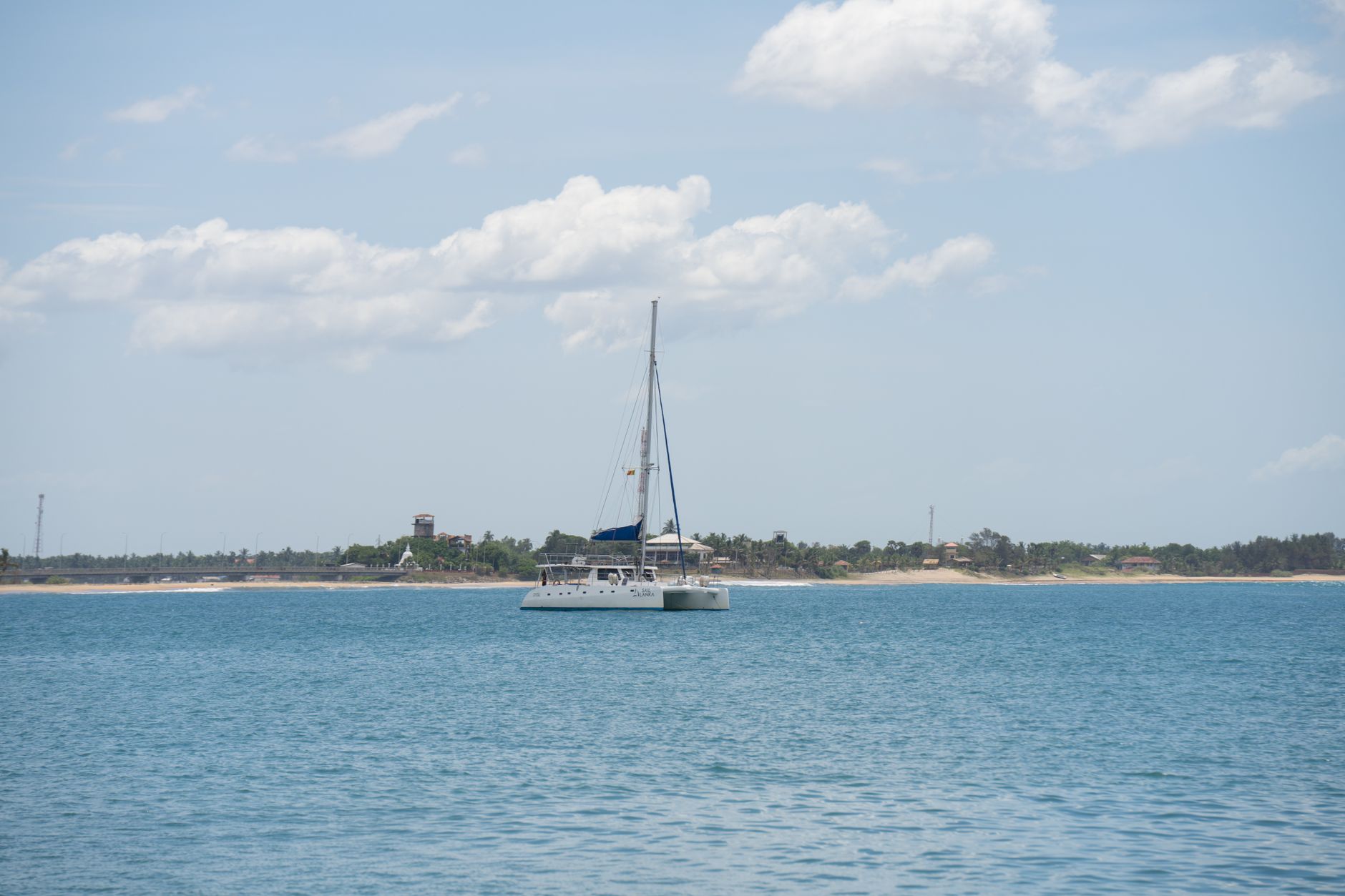
What Is a Hotel Catamaran in Sri Lanka?
A hotel catamaran is a twin-hulled vessel permanently or semi-permanently moored in sheltered coastal waters, functioning as overnight accommodation. Unlike chartered sailing catamarans you hire for day trips, hotel catamarans keep you floating in one location—typically a lagoon or bay—with meals, activities, and sea access built into your stay. They're most common on the south and west coasts, where protected waters provide natural mooring points.
Where Are Hotel Catamarans Located?
South Coast Concentrations
Mirissa and Unawatuna host the highest density of hotel catamarans. Mirissa's bay has calm morning water ideal for mooring, with reefs nearby for snorkelling and whale-watching season (November to April) bringing boat traffic that these vessels navigate easily. Unawatuna's crescent bay is shallower and more sheltered; catamarans here feel more stationary, less like you're at sea. Prices in both reflect their tourist infrastructure—expect higher rates during peak season (December–February).
Matara and Tangalle have fewer floating options but offer quieter experiences. Tangalle's catamarans sit in expansive bays with less crowding; the trade-off is isolation from restaurants and shops unless the vessel provides transport.
Related: Hikkaduwa Places to Stay: Budget to Mid-Range Options
See also: Coral Beach Hotel Mirissa: Location, Access & What to Expect
See also: Best Hotels in Kandy Sri Lanka
West Coast Options
Negombo Lagoon hosts budget guestboat catamarans, typically filled with backpackers. These are functional rather than luxurious, often converted fishing boats. The lagoon's brackish water means less appealing swimming but mangrove ecosystems and birdwatching nearby. Beruwala (30km south) has more upmarket floating accommodation in a working fishing port—noisier but authentic.
What to Expect: Onboard Reality
Space and Layout
Unlike hotels, cabins are compact. Standard doubles occupy one hull; bathrooms are small with limited freshwater. The deck becomes your main living space—most catamarans have shade structures, hammocks, or seating areas where you'll spend idle hours. Motion is minimal when moored but noticeable during tide shifts or rough seas; sensitive sleepers should test this before booking.
Dining and Water Access
Most catamarans serve meals in a central galley or on-deck, often family-style communal eating. This creates social environments—you'll meet other guests. Water is typically seawater for swimming from the deck (exceptional, if the mooring is clean) or freshwater showers onboard. Some vessels include snorkelling gear; others charge extra.
Power and Comfort
Electricity depends on the catamaran's infrastructure. Budget options run generators (noisy, limited hours). Upmarket versions have solar panels and 24-hour power. Internet is rare; mobile signal varies by location and provider. Air conditioning is infrequent in mid-range vessels; ceiling fans and cross-ventilation are the norm.
Which Season? Timing Matters
Mooring safety dictates when catamarans operate. On the south coast, October to May is ideal—calmer seas and reliable mooring. June to September brings southwest monsoon swells; many vessels move locations or close. West coast (Negombo, Beruwala) operates year-round but experiences rougher conditions May to September.
For wildlife: November to April catches sperm whale, blue whale, and spinner dolphin pods from the south coast. February to March sees fewest visitors but consistent sea conditions. July–August attracts backpackers to budget guestboats; water can be choppy and the experience crowded.
Catamaran vs. Beachfront Hotel: What's the Difference?
| Aspect | Hotel Catamaran | Beachfront Hotel |
|---|---|---|
| Swimming | Direct sea access, anytime; water quality depends on mooring cleanliness | Beach swimming; set times; fewer surprises |
| Isolation | More pronounced; sea acts as barrier | Walkable to shops, restaurants, bars |
| Cost | Often cheaper than equivalent beachfront; includes meals | Higher; meals separate |
| Motion | Gentle rocking (some find meditative, others nauseating) | Completely still |
| Novelty | High; memorable experience | Standard |
| Flexibility | Activities tied to vessel availability | Independent exploration easier |
How to Book a Hotel Catamaran
-
Verify mooring legality: Ensure the catamaran has permit documentation. Local tourism boards maintain registries; ask agents whether vessels are authorised.
-
Check reviews for motion sensitivity: Read recent reviews mentioning seasickness, waves, or noise. This signals actual conditions, not marketing.
-
Confirm meal inclusions: Does the rate include breakfast, dinner, snacks? Are vegetarian options available? Ask about water quality and whether drinking water is filtered.
-
Ask about weather clauses: What happens if monsoon swells force evacuation? Are deposits refundable? Insurance questions matter here.
-
Visit during shoulder season (March–April or September–October) for better rates and acceptable mooring conditions without peak-season crowds.
What Activities Happen Onboard?
Most catamarans offer snorkelling from the deck, fishing trips, or sunrise/sunset cruises to nearby beaches. Some include yoga or meditation sessions. Whale-watching boat tours depart from the vessel during November to April. Cooking classes or traditional boat-building demonstrations appear on upmarket itineraries. Reality check: you're limited by what's on offer aboard; spontaneous exploration requires water-taxi access to shore.
Is a Hotel Catamaran Worth It?
Yes, if you value novelty, direct water access, and social atmospheres over comfort and independence. No, if you're motion-sensitive, need reliable power, or want easy access to restaurants and shops. Budget options (£20–40 per night) compete with hostel dorms but offer more character. Upmarket floating stays (£80–150+) are niche; you're paying for experience, not facilities.
The best guests are adventurous, flexible about comfort, and genuinely curious about maritime life. If you're rigid about shower pressure, air conditioning, or dietary needs, a beachfront hotel in /mirissa or /unawatuna serves you better.
Frequently Asked Questions
Do hotel catamarans rock constantly? No. Well-moored catamarans in protected bays feel almost stationary. Noticeable movement occurs during tide changes or when wind picks up. Budget vessels with less stable moorings move more; upmarket ones less. Test tolerance by requesting a trial night or asking the booking agent about current motion levels.
What's included in catamaran rates? Typically: accommodation, breakfast, and dinner. Some include snorkelling gear, one activity (sunset cruise or fishing), and filtered drinking water. Alcohol, additional activities, and extras like laundry are usually separate charges. Always clarify before booking.
Can I leave and explore the area? Yes, but it requires planning. Most catamarans offer shuttle boats to shore (sometimes free, sometimes paid). You lose the "floating accommodation" appeal if you're ashore most days. This model suits people planning 1–3 nights, not week-long stays.
Is it safe to swim from the catamaran? Depends on mooring cleanliness and water conditions. South coast December–March is generally safe; avoid murky water or vessel-heavy harbours. Ask the captain about visibility, currents, and recent bacterial samples. Snorkelling is safer than freeform swimming due to gear and briefings.