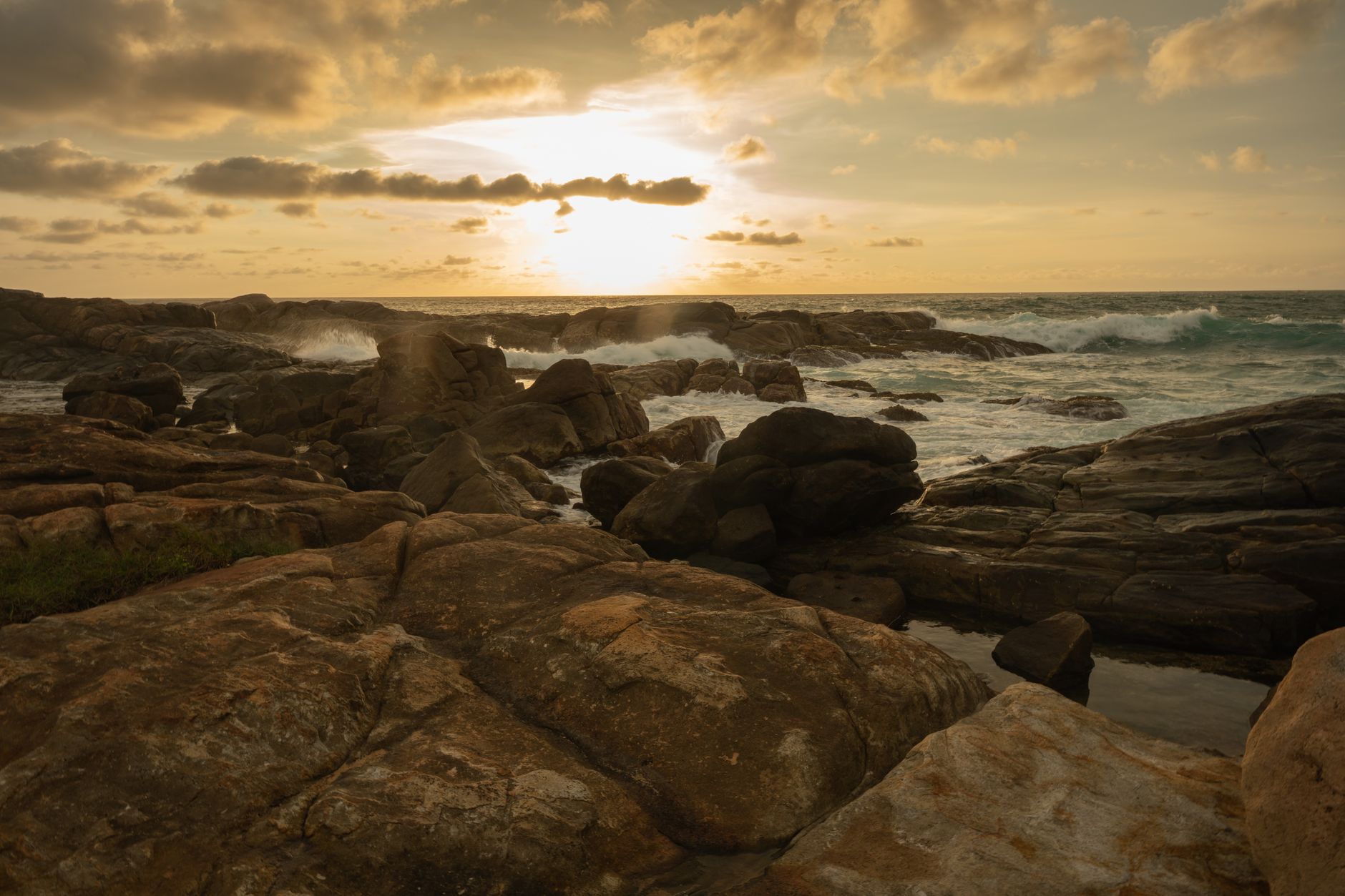
Hummanaya Blowhole: Sri Lanka's Most Dramatic Coastal Feature
Hummanaya blowhole sits on the southern coast near Mirissa, where the Indian Ocean's raw power meets a geological accident that turns ordinary waves into a spectacular fountain. When swell hits the right conditions, compressed water explodes through a narrow rock opening, sending spray 10 metres into the air. It's less predictable and far more violent than tourist-board photos suggest—and that's precisely why it's worth seeing.
What Exactly is the Hummanaya Blowhole?
The blowhole isn't a geyser or thermal feature. It's a natural sea cave with a narrow overhead opening. When waves funnel into the cave's tunnel system during high swell, air pressure builds rapidly. The water has nowhere to go but up, and it exits through cracks in the rock above with considerable force. The phenomenon requires three conditions: decent swell, the right tide stage, and a clear cave opening (occasionally blocked by sand or debris).
The name itself comes from Sinhala—humma meaning "to spray" and naya meaning "cave." Locals have watched this for centuries; tourists started arriving in meaningful numbers only in the last two decades.
Related: Hikkaduwa Beach Hotels: Where to Stay in Sri Lanka's Surf Town
Related: Beach Huts in Arugam Bay: Where to Stay by the Shore
Related: Pasikuda Beach: A Guide to Sri Lanka's Calm Eastern Shores
When Does the Blowhole Actually Perform?
Southwest monsoon season (May–September) delivers the most consistent and dramatic shows. During this period, swell regularly approaches 2–4 metres, and you'll see spray fountains almost every 20–30 seconds. July and August are peak performance months—afternoon sessions (2–4pm) often coincide with high tide, amplifying the effect.
From October to April, the swell drops substantially. The blowhole still activates during this period, but sporadically. Winter swells (December–February) occasionally generate decent action, but don't count on it. If you arrive during calm conditions, the cave simply inhales and exhales without drama—water rises and falls gently inside, but there's no visible spray.
Tide timing matters. The blowhole is most active around high tide or 1–2 hours after high tide begins. Check local tide tables before visiting; if you arrive at dead low tide during small swell, you'll see little more than a modest gush.
Safety: What You Need to Know Before You Go
This isn't a viewing platform with railings. The rocks are spray-wet, uneven, and slippery. The blowhole sits directly on the ocean; freak waves occasionally sweep higher than predicted. Every few years, someone gets knocked off the rocks or swept into the sea. It's not common, but it happens.
Practical safety rules:
- Never turn your back to the ocean. Watch for sets of larger waves—they often come in groups of 3–4.
- Stay well back from the cave opening during strong swell. Spray reaches further than it looks.
- Wear proper footwear with grip—flip-flops are a liability.
- Check weather and swell forecasts before visiting. Avoid the site if storms are forecast within 12 hours.
- Don't visit alone if possible, and tell someone where you're going.
- Respect warning signs and local advice. If locals say conditions are dangerous, they mean it.
How to Get to Hummanaya Blowhole
The blowhole lies between Mirissa and Weligama on the southern coast, about 165 kilometres from Colombo (a 3–4 hour drive).
By private transport: Hire a driver or rent a vehicle in Mirissa. The turn-off is signposted; drive to Haranwella village, then follow the rough coastal track (300–400 metres on foot) to the rocks. The final approach is unmissable—follow the crowds or ask locals.
By tuk-tuk: From Mirissa town, a tuk-tuk ride costs 600–1,000 LKR one way (negotiate beforehand). It's a 15-minute ride. The driver will wait while you explore.
On foot: If you're staying in Mirissa, it's a 90-minute coastal walk south. The path is rocky but scenic, passing fishermen's coves and small beaches.
There's no entrance fee and no official visitor centre. A few local vendors sell drinks and snacks nearby.
What to Expect When You Arrive
The site itself is small—the viewing area spans maybe 30 × 20 metres of sloped, wave-worn rock. During peak season (July–August), you'll share the space with 20–40 other visitors. During shoulder months, you might have only a handful.
The rocks are dark, porous basalt, sculpted smooth by decades of spray. The air smells of salt and sea foam. If the blowhole is active, the sound is percussive—a rhythmic thump as waves compress, followed by the rushing hiss of expelled water. The spray itself is cold and can sting if you're facing it directly.
Timing: plan for 30–45 minutes. Arrive with a camera secured in a waterproof bag; regular phones get soaked by spray drift.
Hummanaya vs Other Southern Coast Attractions
If you're based in Mirissa, Weligama, or Ella, you're within reach of several coastal features:
- Mirissa Beach: Safe, sandy swimming; popular for sunset watches. 15 minutes from the blowhole.
- Weligama Bay: Protected crescent beach, calm waters, turtle spotting. 10 minutes away.
- Parrot Rock (Weligama): Small rocky outcrop, decent for snorkelling. Same area.
- Hummanaya Blowhole: Raw, dynamic, requires respect and timing. Unique phenomenon on the island.
The blowhole is the most weather-dependent and most dramatic. Plan it for a day when swell is forecast—don't treat it as a casual stop.
Best Time to Visit Hummanaya Blowhole
Peak experience: July–August. Consistent swell, warm water, regular spray displays. Afternoon visits (2–4pm) align with high tide.
Good alternative: May–June and September. Still reliable swell; fewer tourists than July–August.
Possible but unpredictable: October–April. Only worth the effort if you're already in the area and swell is forecast.
Check Mirissa or Weligama pages for wider regional timing guidance if you're planning a multi-day southern coast trip.
FAQ
Q: Can you swim in the blowhole cave? No. The cave is shallow, wave-churned, and dangerous. The tunnel narrows and rocks are sharp. Swimming here would be extremely risky.
Q: Is Hummanaya blowhole worth visiting in calm conditions? Not particularly. You'll see water movement but no dramatic spray. If you arrive and conditions are flat, visit Mirissa Beach or Weligama Bay instead and return another day if possible.
Q: How do I know if conditions will be good? Check swell forecasts via Magicseaweed or Surfline for the southern coast. Anything above 1.5 metres is usually sufficient. Contact your accommodation in Mirissa or Weligama—locals read conditions daily.
Q: Are there guides available? No formal guide service operates at the site. Local tuk-tuk drivers or accommodation staff in Mirissa can advise on best times to visit that day.