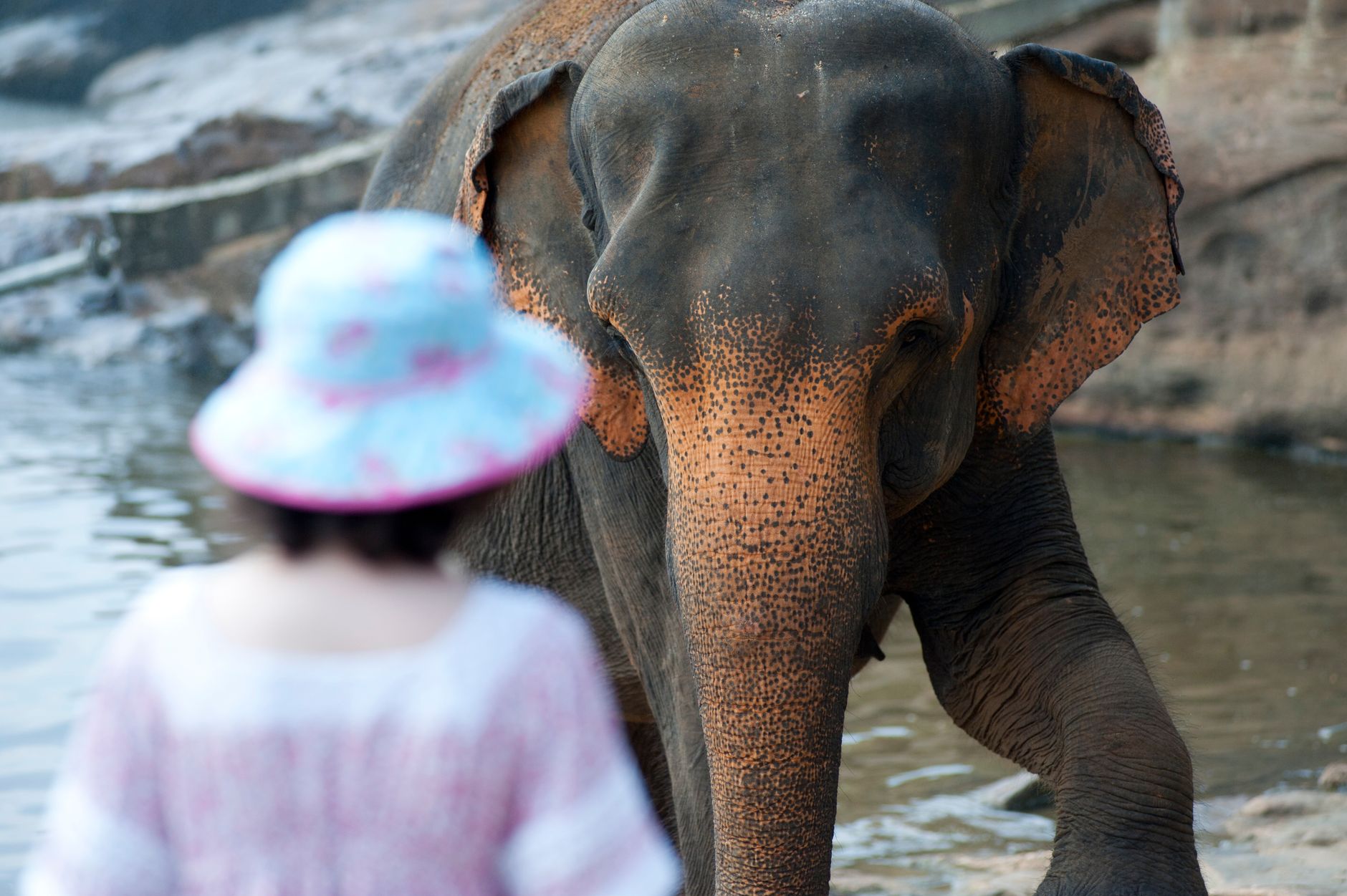
Pinnawala Elephant Orphanage attracts over 600,000 visitors yearly. It's central Sri Lanka's most-visited attraction. The question isn't whether people visit—they do, in large numbers—but whether you should.
The core offer: What you actually get
You pay 5,500 LKR (approximately £15 or $19 USD) for entry. The experience lasts 90 minutes to two hours. You'll see approximately 60 rescued elephants in purpose-built enclosures. The centrepiece is the river bathing at 10:00 and 14:00 daily, when elephants wade into the Maha Oya to bathe.
You walk through the sanctuary grounds. You see calves in separate areas. You pass the feeding stations. If timing aligns, you watch the bathing ritual. Photography is unrestricted. Some visitors buy elephant dung paper (8,000-12,000 LKR per piece) at the exit shop.
Related: Best Hotel in Kandy Sri Lanka: What Actually Matters
Related: Riviera Sri Lanka: Coastal Towns, Beach Culture & Travel Guide
Related: Negombo with family: what works and what to skip
Should you go? The honest breakdown
Go if you want to:
- See a large number of elephants in one location
- Photograph elephants bathing in a river setting
- Support elephant rescue operations (all fees fund the sanctuary)
- Tick a major attraction off your itinerary
Skip if you:
- Have limited time and want remote wildlife encounters
- Prefer natural elephant behaviour in uncontrolled settings
- Cannot justify crowds (peak hours see 500+ visitors simultaneously)
- Are concerned about ethical sanctuary practices
Timing matters significantly
Arrive by 8:30 a.m. The bathing session at 10:00 is where 80% of the experience happens. Morning light is superior for photography. Crowds peak between 11:00 and 14:00.
If you arrive after 13:00, you'll catch the afternoon bathing. This is busier but often has better light for photos.
Avoid midday entirely. Elephants rest, visitors are thick, heat is extreme.
Cost and value comparison
Pinnawala entry: 5,500 LKR. This includes access to all areas and both bathing sessions if you stay long enough.
Compare this to other Sri Lankan wildlife experiences:
- Mirissa whale watching: 3,500-5,500 LKR, four-hour boat trip
- Bundala National Park: 2,800 LKR, three-hour guided safari
- Udawalawe National Park: 3,000 LKR, half-day safari
Pinnawala costs more per hour than safari parks. The value hinges on whether proximity to elephants justifies premium pricing.
Ethical considerations
The sanctuary rescues genuine abandoned and injured elephants. It operates as both a rescue facility and tourism operation—a common tension in Sri Lanka.
Elephants are kept in enclosures. Some animal welfare critics argue the conditions are suboptimal for long-term elephant wellbeing. Others view it as necessary rescue infrastructure given Sri Lanka's human-elephant conflict.
No riding or direct touching is permitted (unlike some other facilities). This is a positive sign.
Bathing appears natural to elephants; it's a genuine behaviour, not entertainment forced for tourists.
Accommodation near Pinnawala
If you stay overnight, Pinnawala is centred in tea-country terrain, roughly 95km from Colombo.
Top-rated options:
Budget: Green Land Guest House (8.1/10, 38 reviews) offers basic rooms under 3,000 LKR per night.
Mid-range: Cottage 23 (9.0/10, 14 reviews) is the highest-rated locally, offering comfort at 6,000-10,000 LKR range. Hotel Pinnalanda (8.3/10, 133 reviews) is reliably good at similar pricing.
Premium: Villa Labugolla (9.8/10, 6 reviews, 5 stars) sits at the top. Boutique property with strong ratings, though limited review base. Expect 15,000+ LKR nightly.
Many visitors stay in nearby Kandy (35km away, 45-minute drive) for better amenities and restaurant choice.
How to structure a Pinnawala visit
Half-day option (recommended): Arrive 8:15 a.m., depart 11:30 a.m. This captures morning bathing, avoids peak crowds, leaves your afternoon free.
Full-day option: Arrive early, visit mid-morning, return for afternoon bathing. Use the gap for lunch at one of the on-site cafes (overpriced: 800-2,500 LKR for basic meals). Justifiable only if you're interested in the breeding programme details or want extensive photography time.
Comparable attractions: Should you visit instead?
If you have limited time in Sri Lanka:
- Choose Pinnawala if: You want guaranteed elephant sightings and are comfortable with sanctuary settings.
- Choose Udawalawe National Park if: You prefer natural settings and want diverse wildlife (leopards, buffalo, monkeys alongside elephants). Cost is lower, experience is less controlled but more varied.
- Choose Galle Fort if: You want a major, uncrowded historical site and have limited days in the south.
Real visitor satisfaction
Online accommodation ratings near Pinnawala are generally strong. Hotel Elephant Park (8.4/10, 289 reviews) and Hotel Elephant Bay (7.7/10, 293 reviews) show consistent scores, suggesting visitors feel the experience meets expectations.
This indicates most who visit don't regret the decision. Satisfaction appears to correlate with arrival timing (early = happier) and pre-visit expectations (those expecting wild elephants are disappointed; those expecting a sanctuary walk are content).
The verdict
Pinnawala is worth visiting if you:
- Haven't seen elephants before
- Are in central Sri Lanka anyway
- Arrive early (by 8:30 a.m.)
- Accept you're visiting a sanctuary, not a wild encounter
- Budget 5,500 LKR and 1.5 hours
Skip it if you've seen Asian elephants elsewhere, prioritise untouched wilderness, or have fewer than three days in Sri Lanka (use that time for Ella tea plantations or southern beaches instead).
Realistic expectation: You'll see many elephants, get decent photos, feel the experience was reasonable but touristy. Most visitors feel satisfied. Few describe it as life-changing. That's an honest read.
FAQ
Q: What time should I arrive? A: 8:15–8:30 a.m. The 10:00 bathing is the highlight. Arriving later means crowds and limited viewing space by the river.
Q: Is it ethical to visit? A: Pinnawala rescues genuine abandoned elephants. No riding or abuse occurs. The facility has legitimate welfare criticisms, but it's more ethical than many Asian elephant tourism operations. If you're uncomfortable, Udawalawe National Park offers wild elephant sightings without sanctuary concerns.
Q: Can I touch or ride the elephants? A: No. Photography and observation only. This is a responsible policy that sets Pinnawala apart from less reputable operators.
Q: How far is it from Kandy or Colombo? A: From Kandy: 35km, 45-minute drive. From Colombo: 95km, two-hour drive. It's best combined with Kandy or a central Sri Lanka tea-country visit.