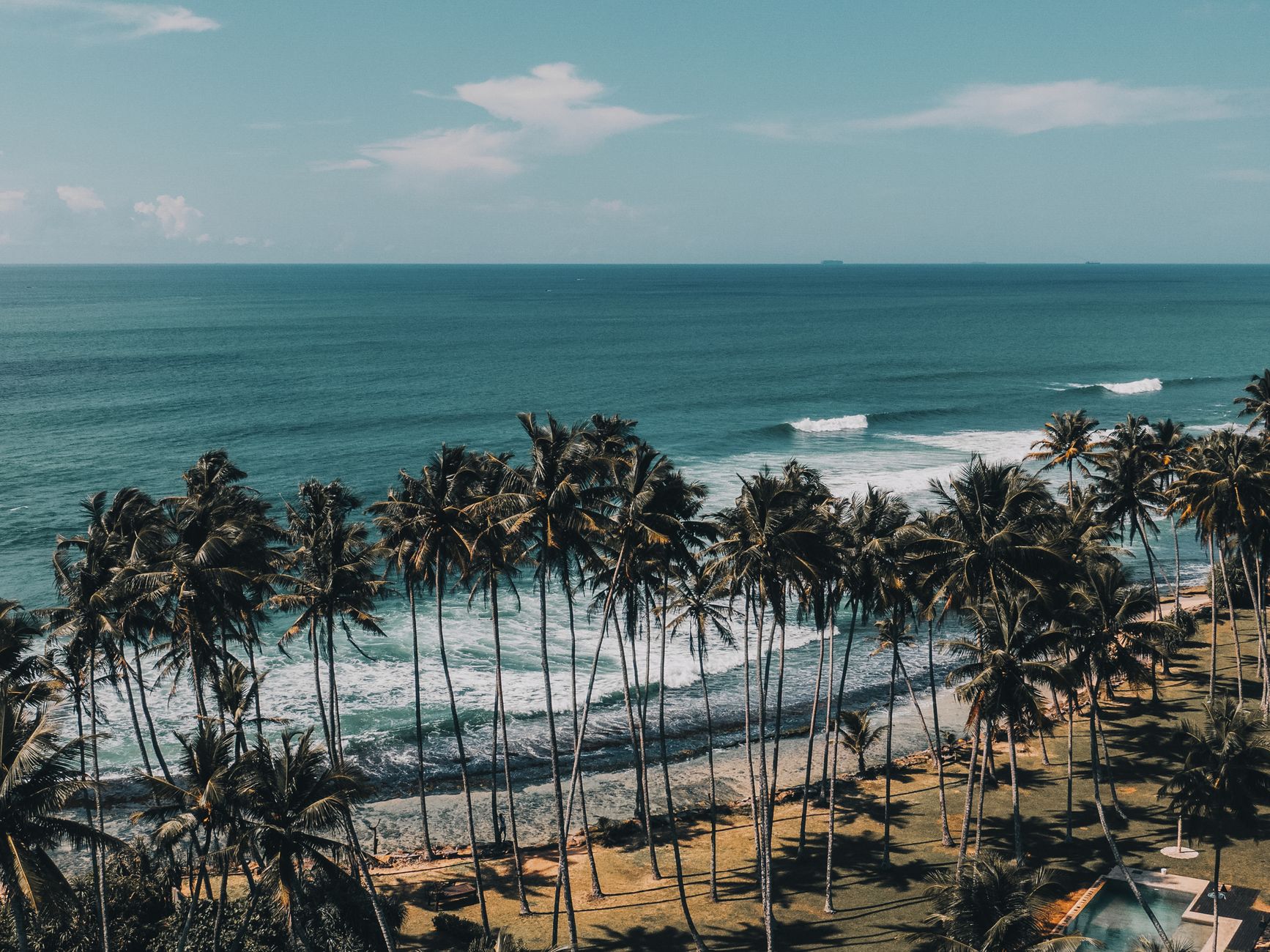
What is Sri Lanka's Riviera?
The term "Riviera" in Sri Lanka refers to the south and southwest coastal belt—primarily Mirissa, Unawatuna, Hikkaduwa, Weligama and Matara. These settlements form a loose chain of beach culture, where fishing remains the backbone and tourism the newer pulse. Unlike the consolidated beach resorts of Thailand or the Caribbean, Sri Lanka's Riviera is loose, scattered and unapologetically Sri Lankan. You'll find colonial charm mixing with budget guesthouses, proper meals eaten at family-run restaurants, and mornings when the beach is still the fishermen's domain.
Which Towns Form the Riviera?
Mirissa sits at the western edge of the cluster, a crescent bay sheltered by rocky headlands. The beach itself is narrow but the sand is fine and pale, and the water reaches bathwater warmth by April. Mirissa is the most developed of the Riviera towns—proper restaurants, bars with sea views, and a younger crowd—but it hasn't lost its working-village soul. Fishing boats launch from the same stretch where tourists swim.
Unawatuna lies 10 kilometres west, a larger bay with a more established infrastructure. The palm-fringed beach is longer, the accommodation ranges from budget to mid-range comfort, and the water is generally calmer than Mirissa. A coral reef sits offshore, making snorkelling a genuine option. The town hums with both backpackers and local families on weekends.
Related: Bentota with Family: What Works and What to Skip
Related: Arugambe: A Guide to Sri Lanka's East Coast Surf Town
Related: Best places in Sri Lanka for beach hopping
Weligama is the largest settlement, a fishing hub where hundreds of boats work the waters. The beach is split by a lagoon, creating different swimming zones. It's less touristy than Mirissa or Unawatuna—fewer bars, more nets drying in the sun—but offers better value and a real sense of everyday coastal life.
Hikkaduwa, further west, is the oldest tourist hub on this coast. A reef runs parallel to shore, and it's a reliable snorkelling and diving spot. The town has matured beyond its backpacker-boom days but retains that energy. Water sports operators are established here, and the infrastructure for diving courses is solid.
Matara marks the eastern boundary, a slightly larger town that serves as a transport hub and market centre. The beach is less touristy, the vibe more local, and it's a good base if you want authentic coastal living without the concentrated tourism feel.
Best Time to Visit the Riviera
The southwest coast faces two seasons. The dry season runs November to April, when the skies clear, the water is calmest and warmest, and you'll see the most sunshine. December to February are peak months—expect crowds, especially at Mirissa and Unawatuna, and higher prices. March and April are still excellent, with slightly fewer tourists and still-reliable weather.
The wet season (May to October) brings afternoon rains and stronger swells. Water conditions are rougher and visibility for diving/snorkelling drops. However, rainfall is usually brief, the beaches empty, prices fall significantly, and the lushness of the landscape peaks. June to August can see large swells, making the Riviera ideal for surfers.
Explore seasonal guides for better planning.
What to Do Along the Riviera
Snorkelling and diving are the headline activities. Hikkaduwa's reef is the most accessible—mask, fins and snorkel rented in town for 800–1200 LKR per day. You'll see parrotfish, sergeant majors, and the occasional larger reef fish in water 6–12 metres deep. Mirissa and Unawatuna also offer reef access, though Unawatuna's is the shallowest and safest for beginners. Diving shops run PADI courses and guided dives; expect to pay $50–80 USD for a two-tank morning outing.
Whale and dolphin watching operates from Mirissa and Weligama. Boats leave at dawn (5–6 a.m.), targeting blue whales (November to April is peak), sperm whales and spinner dolphins. A trip costs 3000–4000 LKR per person and lasts 4–5 hours. Sightings aren't guaranteed, but if you encounter a blue whale, the scale is unforgettable—a creature 25 metres long, closer to you than you expect.
Fishing is both a livelihood and an activity you can join. Some guesthouses arrange early-morning trips aboard traditional fishing boats. You'll learn net-casting, see the water at the calmest hour and understand how the catch gets to dinner plates. Expect to pay 2000–3000 LKR and return with sunburn and salt in your hair.
Surfing works best in the wet season (June–August) when swells run waist-to-head-high. Mirissa and Hikkaduwa have rental shops and a few casual breaks. Beginners find gentler conditions here than on the east coast. Boards rent for 800–1200 LKR daily.
Coastal walks connect the towns. The footpath between Unawatuna and Mirissa takes roughly 1.5 hours, passing fishing villages and rocky coves. The Matara to Mirissa stretch follows the shore for much of the way, though some road-walking is necessary.
Where to Stay
The Riviera has accommodation at every budget. Budget guesthouses (backpacker-friendly, dorm beds or basic private rooms) cluster in Mirissa and Hikkaduwa, offering clean basics for 1500–3000 LKR per person. Mid-range hotels run 5000–12000 LKR for a double room with hot water, a fan or AC, and breakfast. Upmarket options start around 15000 LKR and offer sea views, proper restaurants, sometimes pools.
Mirissa suits travellers wanting beach nightlife and easy restaurant access. Unawatuna is good for families and those wanting comfort with fewer party vibes. Weligama and Matara suit budget travellers and those seeking less touristy rhythms. Hikkaduwa bridges both—tourism infrastructure alongside local character.
Getting Around the Riviera
Buses connect the towns frequently. A journey from Mirissa to Hikkaduwa (30 km) takes 45 minutes to an hour and costs 100–200 LKR. Tuk-tuks are available for short hops or private hires; negotiate before boarding. Renting a motorbike (1500–2500 LKR daily) gives independence to explore at your own pace, though roads can be congested near towns and potholed in stretches.
From Colombo, a train to Galle runs 2.5–3 hours and costs 300–800 LKR depending on class; you can bus onward to Mirissa in another 1.5 hours. Direct buses from Colombo to Mirissa take 4–5 hours.
Eating and Drinking
Fresh seafood is the Riviera's trump card. Expect grilled fish, prawn curry, lobster pasta and cuttlefish at beach restaurants. Main dishes run 800–2500 LKR at casual spots, double that at tourist-facing establishments. Rice and curry (Sri Lanka's daily staple) is available everywhere and costs 300–600 LKR. Each town has at least one proper bakery selling lamprais (rice-stuffed pastry) and short eats.
Bars and cafes cluster in Mirissa and Hikkaduwa. A beer costs 300–500 LKR at a local shop, 600–1000 LKR at a tourist venue.
Practicalities
Money: ATMs are reliable in every town. Guesthouses and most restaurants accept cash (LKR). Card payments attract a 2–3% surcharge at some establishments.
Mobile and internet: SIM cards cost 500 LKR and come loaded with 3–5 GB data from Dialog or Airtel. Wi-Fi is available in guesthouses and cafes but can be slow.
Valuables: Beach thefts do happen. Don't leave phones, wallets or cameras unattended on the sand. Guesthouses have safes.
Health: Bring reef-safe sunscreen (local shops are limited). Dehydration is real—carry water. Pharmacies in each town stock basic medicines and painkillers.
FAQ
Is the Riviera safe for solo travellers? Yes, solo travel is normal here and the towns are well-trodden by backpackers. Stick to busy beaches during daylight, avoid isolated areas at night, and use your usual street sense. The communities are welcoming and petty theft (rather than violent crime) is the main concern.
Can I learn to dive here? Absolutely. Hikkaduwa, Mirissa and Unawatuna all have PADI-certified diving schools. A four-day Open Water course costs $200–300 USD. The reef environment is suitable for beginners, and instructors are experienced.
What's the difference between the Riviera and the south coast? The Riviera is the specific cluster of towns (Mirissa to Matara) on the southwest coast. The broader south coast includes Tangalle and further east, which have different beach character, fewer crowds, and primarily dry-season appeal.
Is whale watching reliable? Blue whales are present November to April, with peak sightings January–March. Sightings on any given day run 60–75% in peak season, lower outside those months. Conditions (calm water, clear skies) improve chances. It's worth doing but not guaranteed.