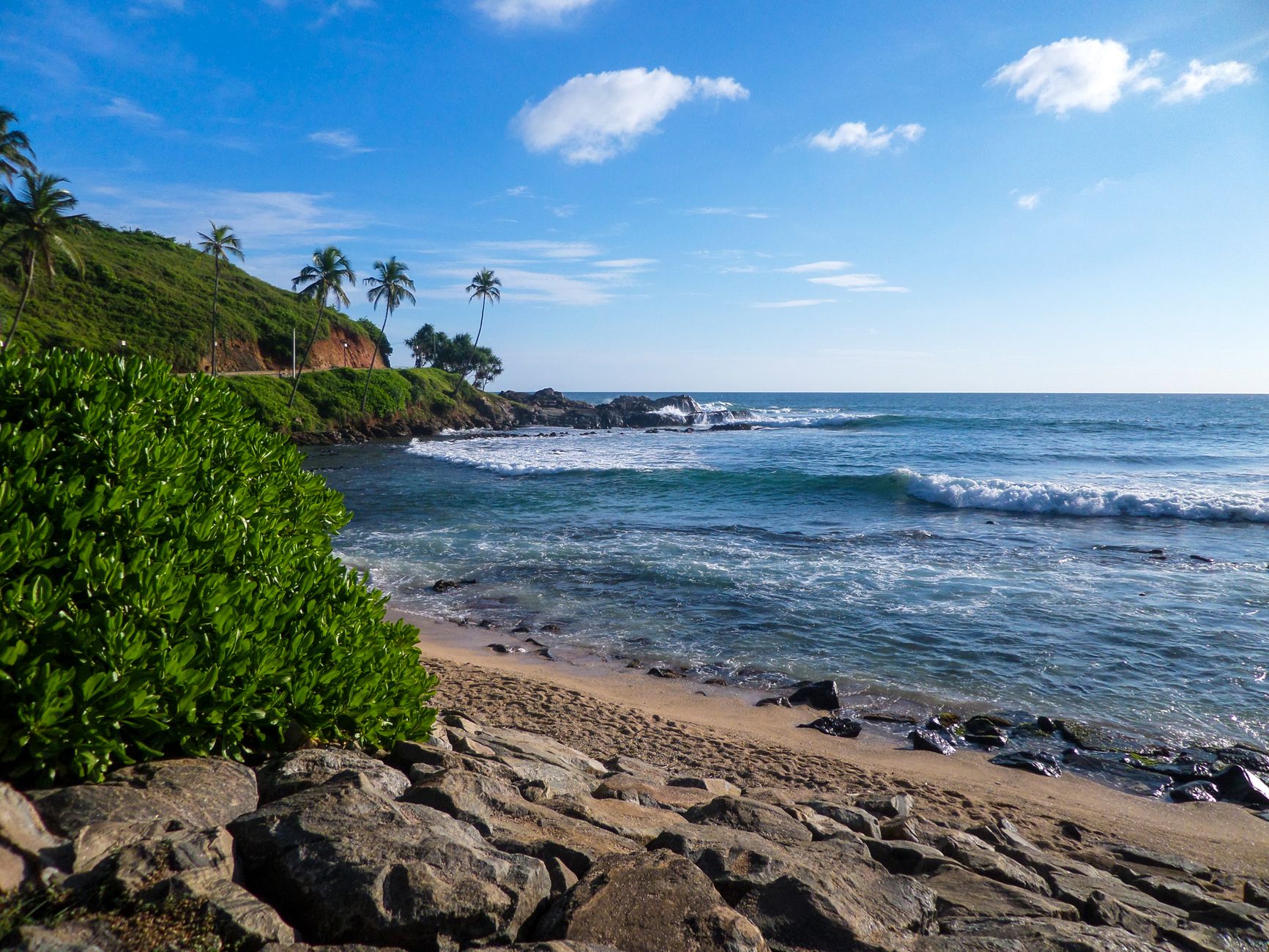
Mawella Beach: A Quieter South Coast Escape
Mawella is a relatively quiet stretch of sand on Sri Lanka's south coast, between Mirissa and Matara, characterised by golden beach, rocky outcrops, and active fishing communities. It's calmer than nearby tourist hubs and works well for swimming, sunset views, and experiencing local life without heavy crowds.
What makes Mawella different from nearby beaches?
Whilst Mirissa has developed into a more commercial hub with beachfront restaurants stacked shoulder-to-shoulder, and Unawatuna draws a steady stream of backpackers, Mawella remains relatively understated. The beach is narrower than some South Coast alternatives, with distinct rocky points at either end that give it character and create small coves for exploration. What you'll notice immediately is the presence of traditional outrigger fishing boats—the colourful oruwa—drawn up on the sand throughout the day, a working reminder that this remains primarily a fishing village rather than a tourist destination first.
The water here tends to be calmer than at Mirissa's open bay, and the seafloor is generally sandy with a gentle slope, making it suitable for swimming for most of the year. The beach faces southwest, so it catches some swell during monsoon periods (May to September), but outside those months you're looking at fairly settled conditions.
Related: Where to Stay in Colombo: Neighbourhoods, Types and What to Expect
See also: Elite Holiday Homes in Anuradhapura: Luxury Stays & Value Analysis
See also: Tissamaharama Hotels: Where to Stay in Sri Lanka's South
When should you visit Mawella?
The best window for calm seas and reliable sunshine is December through March, when the Southwest Monsoon is dormant and the weather patterns favour the south coast. During these months, the water is clear, warm, and manageable for swimming; the light before sunset is particularly golden and soft, ideal if photography or simply sitting quietly are on your agenda.
April and November sit at the shoulder of the season—still pleasant but with occasional rain showers and slightly more swell. May through September brings the Southwest Monsoon; waves can be substantial, the sky is often overcast, and accommodation is more spacious and cheaper since fewer visitors come. If you don't mind dramatic, moody weather and want solitude, this period has an appeal. October is transitional and unpredictable.
For a detailed seasonal breakdown, check best time to visit the South Coast to contextualise Mawella within wider regional patterns.
How do you get there and where do you stay?
Mawella sits roughly 8 km east of Mirissa and 5 km west of Matara. By road, it's easily accessible by tuk-tuk from either town—the journey takes 15–20 minutes from Mirissa and about 10 minutes from Matara. If you're travelling by bus, the main road runs through the village, and regular local services connect Matara and Mirissa; ask the conductor to drop you at Mawella, which is well signposted.
Accommodation directly on Mawella beach is limited and modest—a handful of small guesthouses and family-run hotels occupy the beachfront, most in the budget-to-midrange bracket. Rather than naming specific properties, we'd recommend walking the beach itself when you arrive; you'll see signs for available rooms, and speaking directly to owners gives you a clearer sense of what you're getting. The village also has a few inland options within a five-minute walk of the sand.
Alternatively, many travellers stay in nearby Mirissa (15 minutes away) or Matara (10 minutes away) and visit Mawella as a day trip or sunset excursion. This approach gives you more choice of restaurants and facilities while keeping Mawella's quieter atmosphere intact.
What is there to do at Mawella?
Mawella isn't designed for packed itineraries. Most of what draws people here is straightforward: swimming, walking the shoreline to spot fishing activity or rock pools, watching the sunset, and sitting quietly with a drink.
The fishing village aspect is worth engaging with if you're curious. Early morning (around dawn to mid-morning) is when boats return with the catch, and you'll see fishermen sorting, selling, and repairing nets. It's not a staged spectacle—it's genuinely local work—so be respectful with cameras and mindful that this is how people earn their living. Eating fresh fish at a beachfront stall shortly after it's landed is one of the straightforward pleasures here; grilled or curry-based preparations are typical, and prices are very reasonable.
The rocky points at either end of the beach invite exploration on foot, particularly at lower tide when you can move between sand and rock pools more easily. The eastern point (towards Matara) is more accessible; walking westward towards Mirissa is also possible but requires some scrambling across rocks.
Snorkelling is possible if the sea is calm, though Mawella itself doesn't have the clarity or coral density of more dedicated snorkelling sites. If you're interested in better reef conditions, Unawatuna Beach, about 30 km east, is a stronger choice.
Practicalities and atmosphere
There are a few small shops in the village for basic supplies, though they're not comprehensive; it's wise to bring sun protection, drinking water, and any particular toiletries from Matara or Mirissa beforehand. Mobile phone signal is generally adequate, and there are a couple of small restaurants and cafés on or near the beach, though don't expect extensive menus or late-night service.
The beach becomes noticeably quieter towards late afternoon, and once the sun sets around 6 p.m. (in the dry season), the village settles into a fairly quiet evening rhythm. This suits people seeking calm and reflection; it may feel slow if you're looking for nightlife or extensive social options.
Dressing respectfully is appreciated, as this is an active fishing community, not an exclusive tourist resort. Casual beachwear is fine in the water, but covering up once you're on sand is a courteous gesture.
Is Mawella worth visiting?
Yes, if you're drawn to quiet, low-key coastal experiences and don't require extensive tourism infrastructure. It works particularly well as a break between busier destinations, or as a base for a couple of nights if you want to slow down without leaving the South Coast entirely. The fishing village context, calm waters (outside monsoon), and relative absence of commercialised beach culture set it apart from nearby alternatives.
If you're seeking restaurants, activities, accommodation variety, or a more developed social scene, you'll find more in Mirissa (busier, with more infrastructure) or Matara (the regional town, inland but accessible). Mawella is best suited to travellers comfortable with simplicity and genuinely interested in observing local life rather than consuming a curated tourism product.
FAQ
Is Mawella safe for swimming? Yes, generally. The beach shelves gently and conditions are typically calmer than open bays nearby. Outside the Southwest Monsoon (May–September), waters are most settled. Always check local advice on the day, particularly after heavy rain or during rougher months.
Can you snorkel at Mawella? Snorkelling is possible when seas are calm, but Mawella isn't known for exceptional reef or coral. For better snorkelling conditions on the South Coast, consider visiting Unawatuna or offshore sites accessible by boat from larger towns.
How long should you spend at Mawella? Most visitors spend a few hours (sunset visit) to 1–2 nights as part of a broader South Coast itinerary. It's not a multi-day destination unless you're specifically seeking solitude and simplicity.
What's the difference between Mawella and Mirissa? Mirissa is more developed with numerous restaurants, guesthouses, and tourist infrastructure; Mawella is quieter, more village-based, and less commercialised. Mirissa offers more choice and nightlife; Mawella offers calm and authenticity. They're only 8 km apart, so visiting both is straightforward.