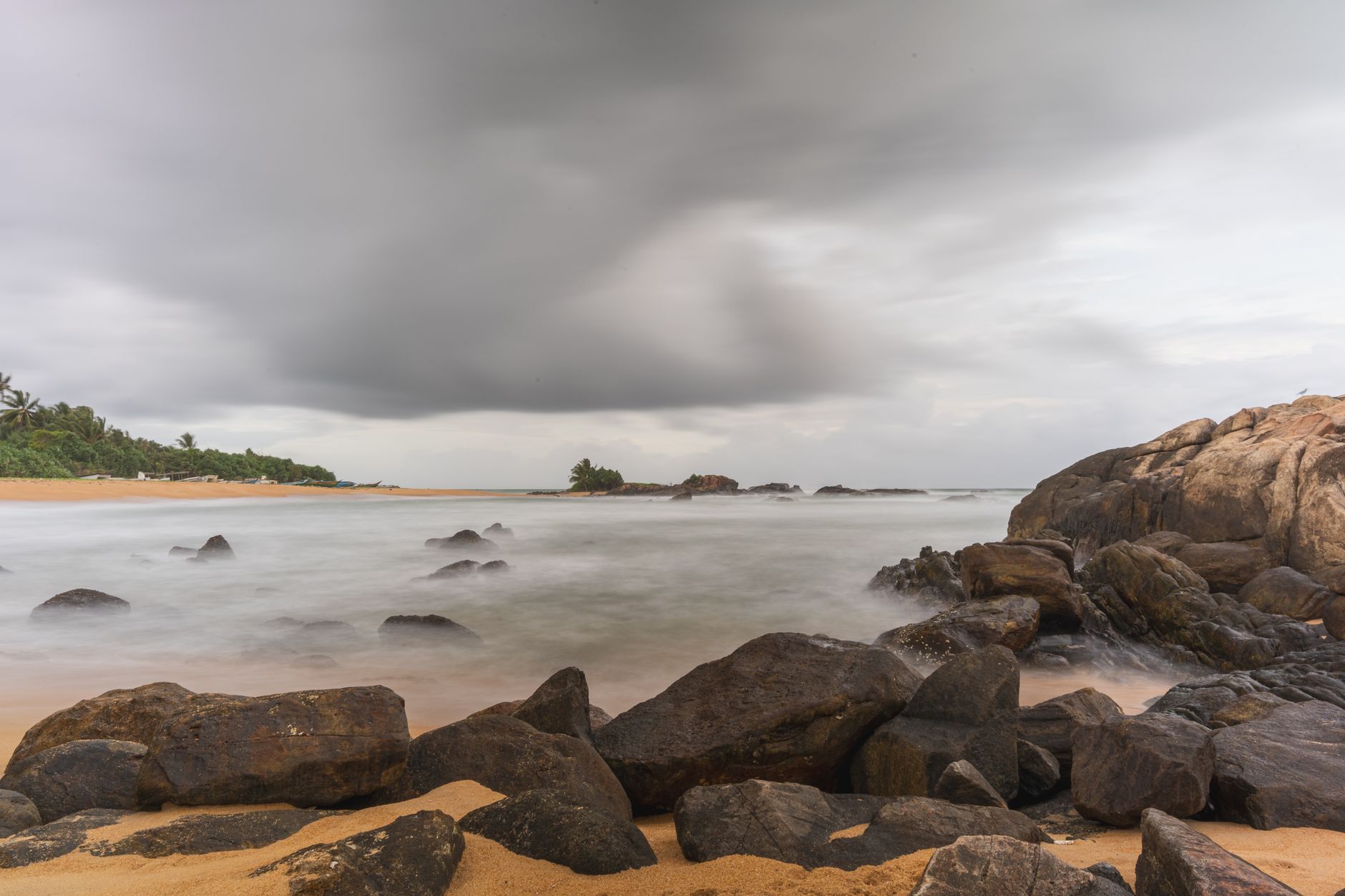
Midigama is a working fishing village on Sri Lanka's South Coast where reef breaks attract surfers year-round, loggerhead and green turtles nest on the beach, and local fishermen still operate traditional boats at dawn. It's quieter than nearby Mirissa, with genuine village character rather than resort tourism—you'll see wooden oruppu boats hauled onto sand, nets drying in the sun, and families cooking lunch over coconut-husk fires along the shoreline.
The beach itself is narrow and pebbly in places, with dark sand exposed at low tide. Waves hit the offshore reef consistently, creating defined breaks suitable for intermediate surfers. Turtle-watching is best during October–March, when loggerheads and occasional greens crawl ashore at dusk to lay eggs in holes above the tide line.
What makes Midigama different from Mirissa?
Mirissa, 8 km west, has become heavily commercialised with beachfront bars, whale-watching tours, and package-holiday accommodation. Midigama remains a fishing community where tourism hasn't reshaped daily life. There are guesthouses and small cafés, but no sprawling resorts or party atmosphere. If you want quietness and a glimpse of how South Coast villagers actually live, Midigama wins. If you prefer amenities and nightlife, Mirissa suits you better.
Related: Mannar for Solo Travellers: Safety and Practical Tips
Related: Puttalam for Solo Travellers: Safety and Practical Tips
Related: Unawatuna for Solo Travellers: Safety and Practical Tips
When is the best time to visit?
October–March (dry season): Reef breaks are reliable, the sea is calmer for swimming, and turtle nesting peaks. Loggerheads arrive nightly in November and December. Daytime temperatures hover around 28–30°C. This is peak season; expect more visitors and higher prices.
April–September (monsoon): The southwest wind drives larger, messier Atlantic-style swells toward the reef. Experienced surfers favour this period for bigger waves, but the sea is choppy for swimming. Turtle nesting drops significantly. Fewer tourists means lower costs and quieter nights.
Surfing at Midigama
The main break—called "Midigama Reef" or simply "the Reef"—sits 150–200 metres offshore. It's a right-hander over a live coral and rock reef, peaking in 3–6 feet waves during dry season swells (October–March). The wave is fast, fairly hollow, and suits intermediate surfers with decent pop-up speed and wave sense. Beginners typically struggle; it's not forgiving like beach breaks.
Local conditions: Water temperature ranges from 27°C in February to 29°C in September. Currents can be strong after monsoon swells; always ask local guides about conditions before paddling out. A reef bootie or shoe is essential—the reef is sharp, and cuts become infected quickly in tropical heat. Boards can be hired from village shops for around 1,500–2,500 LKR per day; quality varies, so inspect for dings and delamination.
The best swell window is November–February, when Southern Hemisphere winter storms push consistent swells toward the Indian Ocean. Mornings (6–9 a.m.) usually offer the cleanest conditions before wind picks up. After monsoon rain, river runoff murks the lineup, so wait a day or two before paddling out.
Turtle nesting and viewing ethics
Loggerhead sea turtles (Caretta caretta) nest on Midigama Beach during their October–March breeding season. Egg-laying occurs at night; females haul themselves from the water at dusk, dig a pit above the tide line, deposit 80–130 eggs, and return to sea within 1–2 hours. Hatchlings emerge 55–60 days later, usually in January–April.
If you want to watch nesting:
- Hire a local guide who knows turtle patrol schedules; they can alert you if females emerge.
- Keep back 2–3 metres from a nesting turtle; use red torch light only (white light disorients hatchlings and nesting females).
- Don't touch, photograph with flash, or disturb the nest site.
- Avoid beaches with bright resort lighting; it confuses hatchlings on their dash to the ocean.
Green sea turtles (Chelonia mydas) occasionally nest here too, but they're rarer and more elusive. Hatchling emergence is less predictable and harder to witness. Never buy turtle products (leather, shell, eggs) sold by beach traders—it's illegal and funds poaching.
Food and local life
Eat fish curry and coconut sambol at small family-run cafés perched on the sand. Prices are low (200–400 LKR for a curry plate). Fishermen unload their catch at dawn around 6 a.m.—worth rising early to watch. The market smell is intense: diesel, salt, guts, and ice. Local fruit vendors sell papaya, mangoes, and king coconuts from pushcarts along the main road.
Stay in a guesthouse run by a village family rather than a corporate resort. You'll eat better meals, hear real stories about fishing pressures and turtle conservation, and your money stays in the community.
How to get there and when to stay
Midigama is on the A2 coastal highway, 158 km south of Colombo and 8 km east of Mirissa. Buses run hourly from Mirissa and Galle (30–60 minutes). Tuk-tuks from Mirissa cost 800–1,200 LKR. If driving, the A2 is well signposted; turn toward the beach at the main junction in the village centre.
Stay 2–4 nights if you're surfing and turtle-watching. One night is a rushed visit. If the swell forecast is poor and turtle season is off, Midigama becomes very quiet—consider heading to Ella or Mirissa instead for variety.
Related exploration
From Midigama, you can reach Galle Fort (25 km west) by bus in under an hour. Unawatuna Beach (30 km west) is another laid-back South Coast spot. Matara, inland, has colonial charm. Check best times to visit Sri Lanka's South Coast for detailed seasonal breakdowns across the region.
FAQs
Is Midigama beach safe for swimming? Yes, but be aware of reef currents and sharp rocks underfoot. Wear reef shoes and swim at lifeguard-attended times (early morning or late afternoon). The sea is calmest October–March; avoid swimming alone during monsoon swells.
Do I need surfing experience to enjoy Midigama? You don't need to surf to visit, but the main appeal is the reef break. Swimmers and photographers enjoy the turtle season and village atmosphere. Beginners should take lessons elsewhere (Unawatuna or Arugambe) before attempting the Midigama Reef.
Can I see turtles every night in season? No. Nesting is sporadic and weather-dependent. Peak nesting occurs November–December, but even then, a sighting is not guaranteed. Hire a guide or stay at a guesthouse with turtle-patrol connections for your best chance.
Is there reliable accommodation? Yes, guesthouses and small lodges are scattered through the village. Book ahead during October–March. Facilities are basic compared to Mirissa or Unawatuna, but that's the trade-off for authenticity and lower costs.