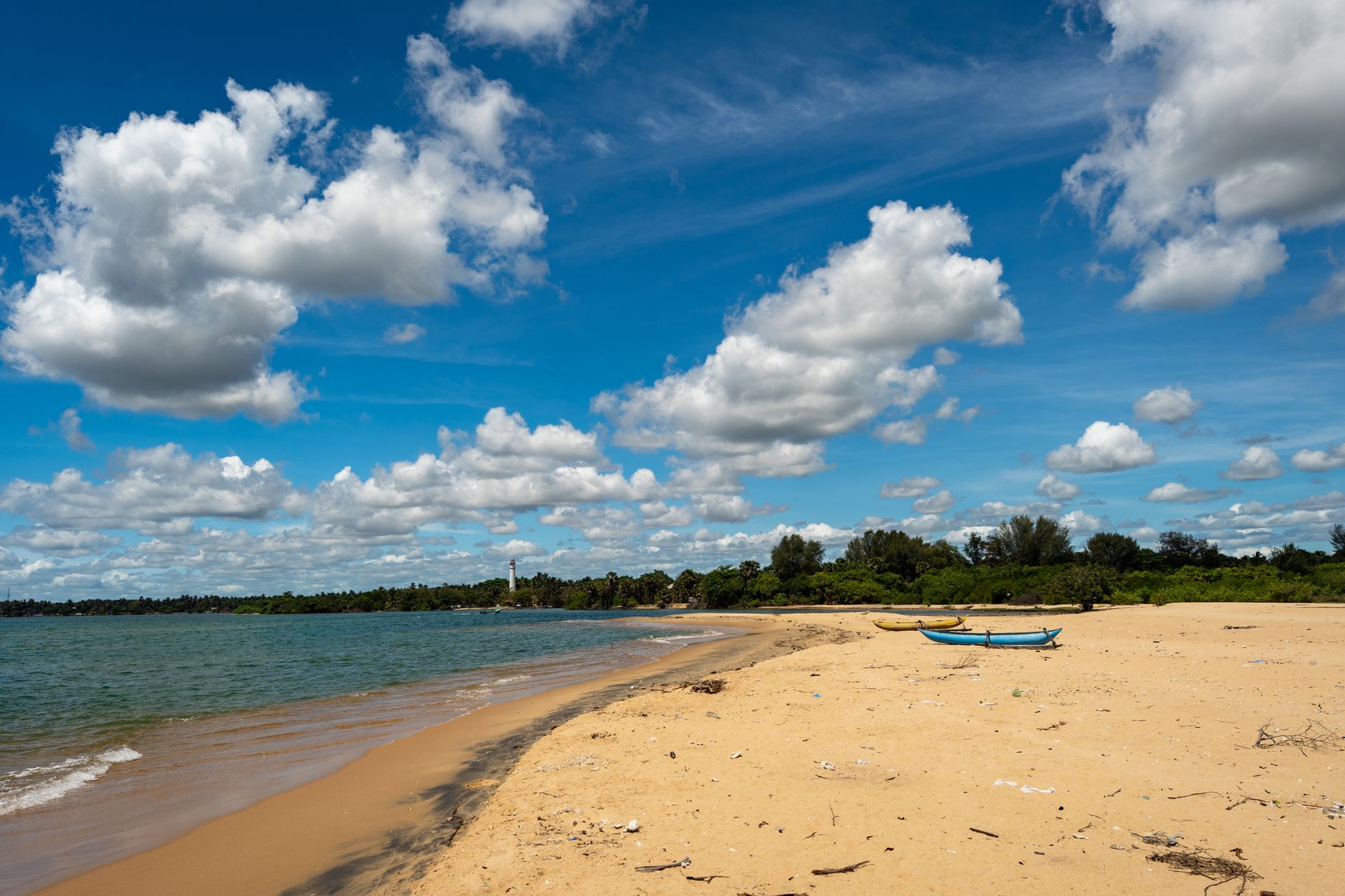
Pasikuda: Sri Lanka's Calmest Beach
Passikuda's defining feature is its sheltered crescent bay with water so shallow and clear you can wade 50 metres and still see your feet. Unlike the exposed western and southern coasts, this east-coast beach faces waters protected by reef formations and the geography of Batticaloa District. The bay rarely shows white caps or dangerous currents—conditions favour swimmers over surfers, snorkellers over advanced divers, and families over solo adventurers seeking isolation.
What makes Pasikuda different from other Sri Lankan beaches?
Most popular Sri Lankan beaches trade tranquillity for infrastructure. Mirissa and Unawatuna offer nightlife and crowds; Arugambe works for surfers. Pasikuda inverts this: you get genuine calm water with modest development. The beach itself stretches nearly 2 kilometres in a gentle crescent, backed by low-rise guesthouses rather than resort compounds. Snorkelling happens in natural conditions—coral gardens begin at the reef edge, roughly 400–600 metres offshore, rather than requiring boat trips.
The trade-off is accessibility. Pasikuda sits 5–6 hours from Colombo via Batticaloa town, and roads remain variable during monsoon season. Public transport exists but is slow. You'll find fewer Western restaurants, less English spoken in shops, and fewer organised activities than southern beach towns.
Related: Things to Do in Marawila: Visiting Places & Local Experiences
See also: Is Arugam Bay Worth Visiting? An Honest Take
See also: Ceylon Olive in Galle: Exploring the Historic Spice Trail
When should you visit Pasikuda?
Best season: May to September. The southwest monsoon affects the west and south coasts during these months, but Pasikuda faces northeast waters and receives dry conditions. June and July are peak—warmest water, most reliable sunshine, and minimal rain. August can bring occasional showers but remains swimmable.
Shoulder months (April, October): April is hot and humid but still dry. October marks the tail end of the dry season; water remains calm, though the northeast monsoon approaches. Both months suit visitors avoiding crowds.
Avoid: November to March. The northeast monsoon drives strong winds and rough seas directly into Pasikuda's bay. Water becomes murky, snorkelling visibility drops to 3–4 metres, and swimming feels unsafe. Hotels close or reduce staff. Rainfall is modest, but conditions are unpleasant.
Visit /batticaloa for regional context and connections to nearby attractions.
Snorkelling and underwater conditions
Passikuda's reef is accessible without boats—a huge advantage over southern diving spots. Walk into the shallows, and within 15–20 minutes you'll reach the reef edge where coral and fish densities increase noticeably. Visibility ranges from 6–12 metres in May–September; expect 3–5 metres in winter months.
Common sightings: parrotfish (aggressive, colourful, noisy), surgeonfish, emperors, fusiliers, angelfish, and occasional trevally. Smaller corals dominate—branching Acropora, table corals, and massive Porites. Anemones and clownfish are present but not guaranteed daily. Sea turtles occasionally pass through; octopi hide in deeper crevices.
For serious diving, day boats operate from Pasikuda town and visit deeper reefs and pinnacles up to 25 metres—sites like Bar Reef (east of Batticaloa) hold more diverse fish life. But most visitors do fine with shore snorkelling and handheld underwater cameras.
Always check conditions with your accommodation before entering water. Coral cuts are common; wear reef shoes and a rash guard.
How to reach Pasikuda
By road: Colombo to Batticaloa (330 km, 6–7 hours via A6 and A14) is the standard route. From Batticaloa town, Pasikuda is 15 km north—a 20–30 minute drive. Roads are paved but can flood during heavy rain. If arriving from Kandy or the cultural triangle, the journey is 8+ hours via Batticaloa.
By bus: Intercity air-conditioned services run Colombo–Batticaloa daily (6–8 hours); local buses connect Batticaloa to Pasikuda (30–45 minutes, standing room likely). Journeys are slow but cheap (₨300–500 for local, ₨1000–1500 for intercity).
By private driver or hired car: Recommended if you're staying 3+ nights. Rates roughly 6000–8000 rupees daily from Colombo; splitting costs with other travellers is common.
No domestic flights serve Batticaloa; Colombo Bandaranaike International Airport (135 km from Pasikuda) is the nearest option.
Activities beyond the beach
Lagoon trips: Batticaloa Lagoon, 15 minutes south, is a brackish water system thick with mangroves and birdlife. Early-morning boat tours (typically 2 hours, 3000–5000 rupees) yield sightings of painted storks, herons, kingfishers, and occasionally crocodiles in deeper channels. The water is murky—not for swimming—but ornithological value is high.
Local fishing villages: Walk north from Pasikuda's main beach and you'll reach Lagoon-side settlements where fishermen mend nets and repair boats. Photography is best done with permission; women's-only spots (certain prayer areas) should be respected.
Batticaloa Fort and town: A Dutch fort ruin sits in the town centre; restoration is ongoing. The waterfront has no major museums but offers insight into local maritime culture. Visit during daylight and bring a guide if interested in historical detail.
Coral springs (Nilaveli area): A short drive south reveals natural freshwater springs that bubble up through limestone, creating unique microclimates. These are better accessed from Trincomalee (50 km south) if you're interested in exploring further east.
For broader regional exploration, see /batticaloa/best-time-to-visit.
Practicalities and accommodation
Passikuda has no five-star resorts—this is intentional. Guesthouses, small hotels, and modest family-run operations cluster along the beach road. Expect clean rooms, basic wifi, and friendly service. High-season rates (June–August) run 4000–8000 rupees for budget doubles; shoulder season drops to 2500–5000 rupees. Booking in advance for June–July is wise.
Eating options are simple: rice and curry, kottu roti, fresh fish, and coconut-based curries dominate. Western breakfasts (toast, eggs, fruit) are available at guesthouses but pricier than local meals. Supermarkets in Batticaloa town stock imported goods at markup; stock up there if you need specific items.
Cash (Sri Lankan rupees) is essential—ATMs exist in Batticaloa but are sparse in Pasikuda itself. Most guesthouses accept cash or bank transfer; credit cards are rarely accepted.
Mobile coverage is reliable (Dialog, Airtel, Hutch); purchase a local SIM for data and calls.
Safety and health
Passikuda is safe for tourists. Petty theft from beach bags is rare but possible; don't leave valuables unattended. The area is Muslim-majority and Christian-minority; dress modestly (cover shoulders and knees away from the beach). Alcohol is sold but less visible than in southern tourist towns.
Medical facilities are basic. For serious issues, travel to Batticaloa General Hospital (15 km) or, if critical, Colombo. Bring personal medications, sunscreen, and insect repellent. Mosquitoes are active at dawn and dusk—dengue and malaria are rare but possible; use a net or repellent at night.
Drink bottled water only. Coral cuts can become infected in tropical heat; treat immediately with antiseptic.
A note on season and weather
Passikuda's advantage—facing calm northeast waters—reverses during the northeast monsoon (November–March). Wind gusts 30–40 km/h, whitecaps form, and the bay becomes choppy. Hotels empty, staff are minimal, and the beach loses its appeal. If you're drawn to Pasikuda specifically for calm water, avoid this period entirely. If you're flexible and willing to explore inland (lagoons, forts, cultural sites), shoulder months work.
FAQ
Can I snorkel without a guide or boat? Yes. Pasikuda's reef is accessible from the beach. Swim out 20–30 minutes to the reef edge (roughly 400–500 metres), and snorkel the shallow coral gardens. Check conditions with your accommodation first; hire a local guide (typically 2000–3000 rupees for 2 hours) if you're unsure about currents or navigation. Deep diving requires operators based in Batticaloa.
Is Pasikuda good for families with young children? Excellent, provided you visit May–September. Water is warm (28–30°C), shallow enough for wading, and sheltered. No dangerous rips or heavy surf. Bring reef shoes and a rash guard for sun and coral protection. Your children can play in the shallows while you snorkel nearby.
How long should I stay in Pasikuda? Two to four days is ideal. One day gives you a taste; two days allow beach time plus a lagoon trip or Batticaloa exploration. More than four days and you'll exhaust local activities unless you hire a driver for day trips to Trincomalee or Arugambe.
Is Pasikuda worth visiting if I've already been to Mirissa or Unawatuna? If you're seeking quiet, shallow water, and don't mind modest facilities and longer travel time, yes. If you want nightlife, varied restaurants, and easy access from Colombo, no—southern beaches suit you better. Pasikuda rewards visitors prioritising calm swimming and snorkelling over infrastructure.