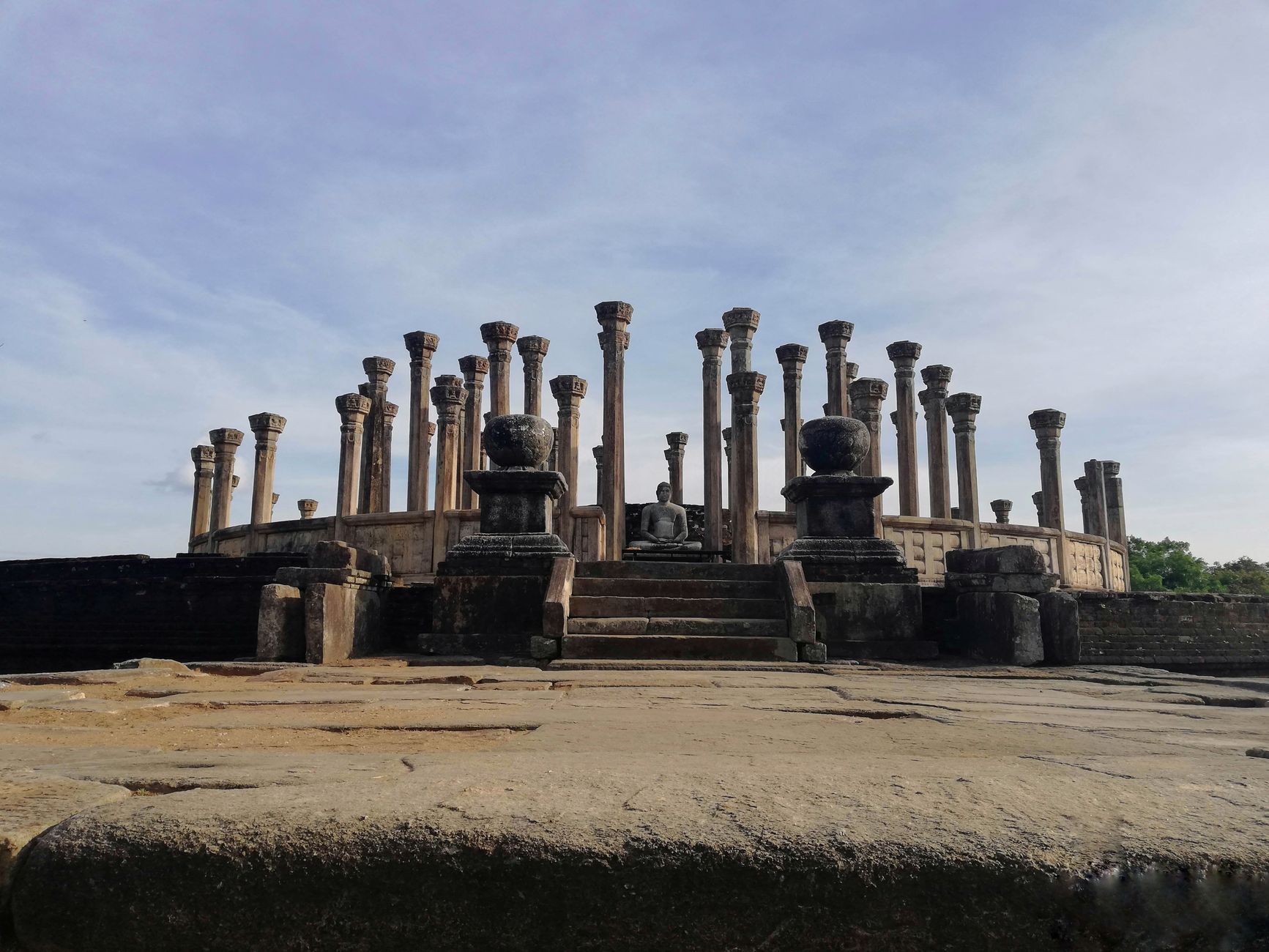
Four days in Polonnaruwa is genuinely the right amount of time. It lets you explore the UNESCO-listed ancient city without rushing, fit in a safari at Minneriya or Kaudulla, reach the undervisited Medirigiriya vatadage, and still have an afternoon to cycle the tank bund at Parakrama Samudra. Here's how to structure it.
Why does the order of your days matter in Polonnaruwa?
Polonnaruwa's ancient city is large — roughly 5 km end to end — and the monuments face east, which means morning light is flattering for photography and the stone hasn't yet absorbed a full day of equatorial sun. By noon, granite and brick radiate heat fiercely. Structuring your days so the ruins happen between 6:30 and 11:00, and wildlife or lake visits fill the late afternoon, makes the whole trip significantly more comfortable. Check the best time to visit Polonnaruwa before booking flights — the dry season (May–September) is when elephant gatherings peak at Minneriya.
Day 1: Arrive, orient, and walk the Parakrama Samudra bund
Arrive by early afternoon — Polonnaruwa is roughly 5 hours from Colombo by train or 4 hours by road. Check in and resist the urge to immediately head to the ruins. Instead, hire a tuk-tuk to the Parakrama Samudra embankment for late afternoon. The 12th-century tank stretches for kilometres, and the bund walk at around 17:00 delivers a reliable spectacle: painted storks wading in the shallows, monitor lizards sunning on the earthwork, and purple herons hanging motionless above the margins. The famous Parakrama statue — a bearded stone figure gazing across the reservoir — is worth visiting now, in soft light, rather than at midday.
Related: Anuradhapura in 2 Days: What to See and Where to Stay
See also: Colombo in 2 Days: What to See and Where to Stay
Related: Tangalle in 2 Days: What to See and Where to Stay
For accommodation: Ekho Lake House Polonnaruwa (5 stars, 9.1/10 from 142 reviews) sits directly on the lake edge and is the clearest choice if budget allows — you can watch the storks from the terrace. Ruins Chaaya Hotel (4 stars, 8.6/10 from 63 reviews) is well-positioned for the ancient city and consistently well-reviewed. Budget travellers should look at Living inn Polonnaruwa (8.5/10 from 45 reviews), which punches well above its star rating.
Day 2: The ancient city — north and central zones
Be at the entrance by 6:30. The ticket covers the entire archaeological site and is valid for one day, so Day 2 and Day 3 require separate tickets — factor that into your budget.
Start at the Royal Palace complex (Vijayabahu's palace, the audience hall with its elephant frieze, the kumara pokuna bathing pool). The elephant carvings on the audience hall steps are among the most precisely executed stone reliefs in Sri Lanka. From there, walk north to the Quadrangle (Dalada Maluwa): the Vatadage's concentric stone columns, the Thuparama image house (the only intact brick gedige), and the Hatadage tooth relic chamber. Arrive before 8:00 and you may share the Vatadage with only a handful of people.
By 10:00, push further north to Alahana Pirivena: Rankoth Vehera (the largest dagoba in Polonnaruwa, its whitewash giving way to exposed brick in places), the Lankatilaka image house with its enormous standing headless Buddha, and the Gal Vihara — the four rock-cut Buddha figures, including the 15-metre reclining figure. The reclining figure's face is extraordinary; the half-closed eyes and the slight curl of the lips convey a stillness that photographs only partially capture. Go now, early, before tour buses arrive.
Rest between 11:30 and 15:00. The heat is not negotiable.
Late afternoon: cycle or tuk-tuk to the Tivanka image house in the far north — the dancing Bodhisattva murals here are the finest surviving Polonnaruwa-period paintings, faded but still vivid in patches.
Day 3: Minneriya safari + southern ruins
Early morning (06:00–08:30): catch the southern monuments — Potgul Vihara and its circular library building, and the small museum near the entrance. These are quieter and often skipped.
Mid-morning: arrange an afternoon safari at Minneriya National Park (about 25 km from town). Between July and October, the Gathering — when hundreds of elephants converge on the receding Minneriya tank — is one of the most concentrated elephant spectacles in Asia. Outside peak season, herds are smaller but still reliable, typically 20–80 animals. Jeeps are booked through guesthouses or directly at the park gate; confirm your booking by 10:00 for a 14:00 entry.
At Minneriya: elephants tend to move from the tree line toward the tank shore between 15:00 and 17:30. Grey langurs and spotted deer are ever-present. Purple-faced langurs appear in the forest sections. Keep noise low near the water edge — the elephants, particularly mothers with calves, are sensitive to engine noise and will retreat if vehicles crowd them.
For a quieter, more upmarket base near Minneriya, The Deer Park Hotel (5 stars, 8.3/10 from 136 reviews) and Giritale hotel (4 stars, 8.1/10 from 259 reviews) are both in Giritale, roughly 10 km from the park entrance. Hotel Sudu Araliya (4 stars, 7.8/10 from 257 reviews) is another solid Polonnaruwa-town option.
Day 4: Medirigiriya and departure
Mediarigiriya's vatadage — a 7th-century circular relic house on a granite outcrop, 30 km north of Polonnaruwa — is one of the most beautiful structures in the Cultural Triangle and sees a fraction of Polonnaruwa's visitors. Concentric rings of stone pillars survive almost intact. Leave by 07:30, arrive before the heat, and you may have the site entirely to yourself. Bare feet on warm stone, a distant line of paddy, egrets turning circles overhead.
Return to Polonnaruwa by 11:00. If you're heading onward to Sigiriya or Dambulla, both are under two hours west. Those heading south toward Kandy can reasonably make it by mid-afternoon.
For a final night, Clay Hut Village (7.9/10 from 46 reviews) and Hotel Ancient Village (8.3/10 from 63 reviews) are both charming budget-to-midrange options with character that the larger hotels lack.
Which hotel suits which type of traveller?
| Traveller type | Recommended hotel | Why |
|---|---|---|
| Splurge / lake views | Ekho Lake House Polonnaruwa | Lakefront, highest rating (9.1) |
| Mid-range comfort | Ruins Chaaya Hotel | Strong reviews, near ruins |
| Near Minneriya | Giritale hotel | Convenient for safaris, reliable |
| Budget value | Living inn Polonnaruwa | 8.5/10, excellent for price |
| Atmosphere seekers | Hotel Ancient Village | Character, good reviews |
FAQ
Do I need a separate ticket for the ancient city each day? Yes. The Polonnaruwa archaeological site ticket is valid for a single day only. If you visit across two days (Days 2 and 3 in this itinerary), you'll need to purchase tickets on both mornings at the main entrance.
Is cycling the ancient city viable? Yes, and it's the best way to cover it. Bicycle hire is available near the museum entrance for a modest daily rate. The paths between monuments are mostly flat and shaded in sections, though cycling in full midday sun is still punishing — plan accordingly.
When is the elephant Gathering at Minneriya? Peak Gathering typically runs August through October, when the tank recedes and grass is most exposed. July sees good numbers building. Outside this window, Kaudulla National Park (15 km further) often has stronger sightings as elephants follow the water. Ask locally on the day — park rangers and jeep drivers track herd movements daily.
Can I do Medirigiriya without a private vehicle? It's possible but slow. Tuk-tuks from Polonnaruwa town will make the round trip — agree on a wait time and price before departing. There are occasional buses to Medirigiriya village, but the timing rarely suits an early-morning visit. A tuk-tuk or rented motorbike gives you far more control.