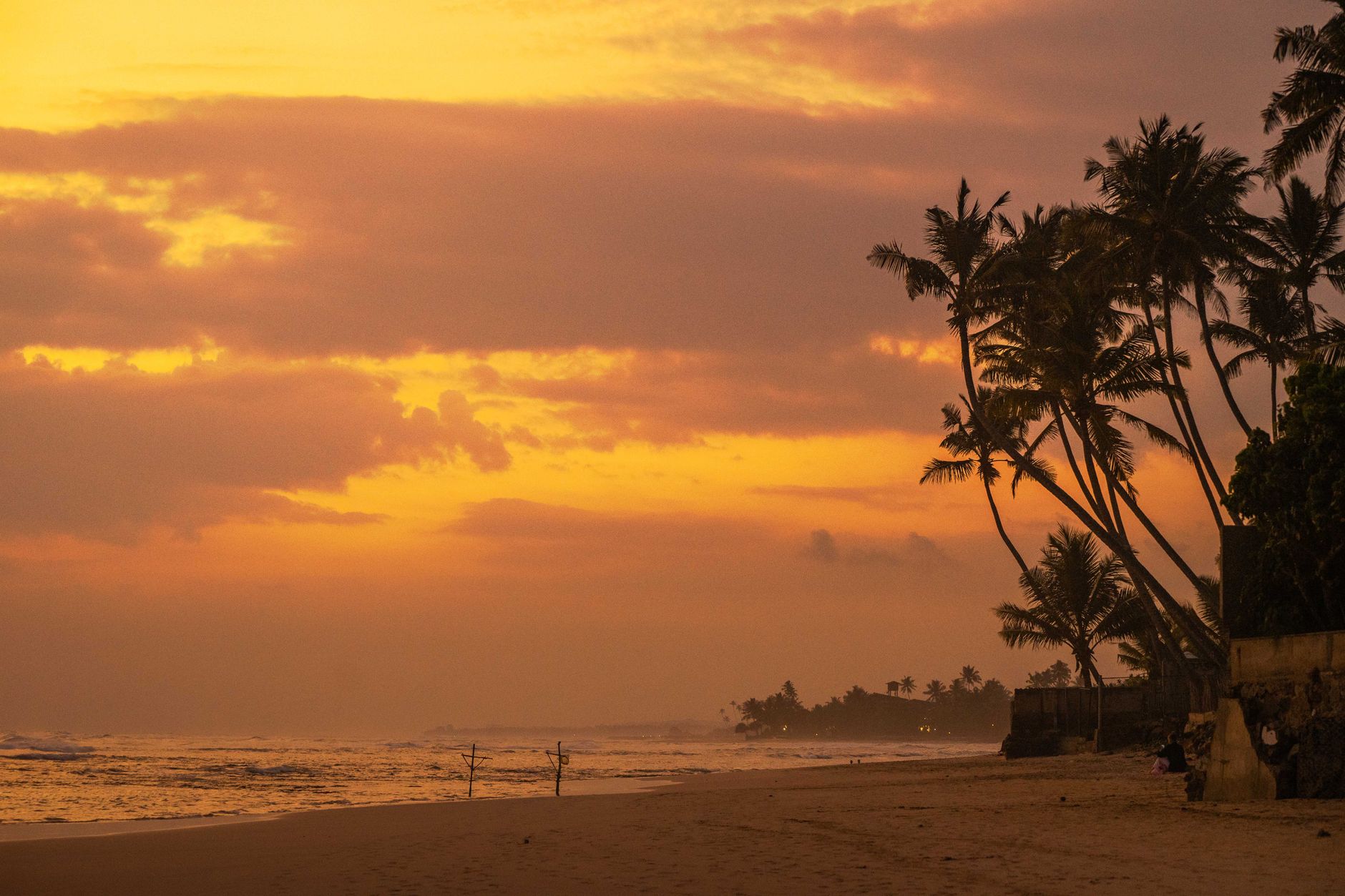
Ahangama is a working fishing village and beach town positioned between the busier tourist spots of Mirissa and Weligama on Sri Lanka's south coast. Unlike its neighbours, it hasn't been transformed into a resort destination, which means you'll find a genuinely functioning community alongside occasional travellers, fishing boats that launch each morning, and small family-run seafood restaurants where the catch of the day actually matters. The beach itself is modest—a curve of dark sand backed by rocky outcrops—but that unpretentiousness is precisely what draws people looking for something slower and more rooted in real Sri Lankan life.
What makes Ahangama different from Mirissa and Weligama?
Mirissa, just west along the coast, has become something of a package-tour hub with organized beach clubs, boat parties, and heavy footfall. Weligama, to the east, caters more to water sports and surfing crowds. Ahangama sits between them almost apologetically—it hasn't courted tourism aggressively, so it retains an older character. The seafront is lined with fishing boats rather than sunbeds, modest family homes rather than resort compounds, and local eateries rather than imported menu concepts. The town operates on fishing rhythms: early morning activity as boats launch, quiet midday heat, then renewed life in the late afternoon as the catch returns and restaurants prepare dinner. If you're drawn to the idea of a Sri Lankan beach town where tourism is incidental rather than central, Ahangama delivers that experience honestly.
The fishing culture and early mornings
Visiting Ahangama without witnessing the fishing activity is to miss the point of being there. Dawn is the meaningful time—fishermen prepare nets, boats are pushed into the shallows, and the beach becomes a working space. Traditional stilt fishing still happens here, though it's become less common; you're more likely to see longliner boats and small trawlers. The genuine value in being present for this is partly visual (the light, the activity, the human effort) but mostly atmospheric—you're watching a livelihood that has sustained this place for generations, not a performance staged for visitors.
Related: Trincomalee for Solo Travellers: Safety and Practical Tips
Related: Is Ella Worth Visiting? An Honest Take
Related: Clock Inn Colombo: A Guide to the Historic Landmark and Area
The fish market happens early, usually before 7 a.m., near the southern end of the beach. It's real commerce, not curated, so it's worth arriving before the serious heat and before tourist meal times compress the activity.
Where to eat and what to order
Ahangama's strength is straightforward seafood prepared the same way local families have eaten it for years. Small beachfront restaurants—many without formal names, operating from simple structures—will grill or curry whatever came in that morning. Expect grilled tuna or kingfish with lime and chilli, squid curried mild or spiced hot, and prawns that taste entirely different from what you've encountered elsewhere because they're hours old rather than days. Rice and curry or kottu with fish is reliable and inexpensive, and the crab, when available, is worth seeking out specifically.
The restaurants are casual: plastic chairs, no tablecloths, menus that change daily based on the catch. Service is unhurried in the best sense—not slow, but not rushed—and prices are roughly half what you'd pay in Mirissa for the same quality fish. Eating lunch or dinner watching fishing boats arrive and local families come in for their evening meal provides genuine context for why you're eating what you're eating.
Swimming and water conditions
The beach here is functional rather than pristine, with a steeper gradient and rockier base than the nearby stretches at Mirissa or Weligama. Swimming is possible and safe in calm conditions, though the presence of working boats means you need basic awareness—avoid the areas where nets are being prepared or boats are launching. The water is warm year-round, and the rocky outcrops at the northern and southern edges provide natural pools that are sometimes calmer.
Between November and April, the south coast receives swell, and Ahangama can be rough. May to September is generally calmer, though wind patterns shift the experience daily. Check conditions locally before swimming; the people living here understand the water and will give you honest guidance.
Best time to visit
May through September offers the most consistent calm conditions for swimming and the best light for early morning fishing activity. October and April are transitional months with variable conditions but fewer visitors. November through March brings swell and occasional rain, though the fishing remains active and the beach less crowded. The heat peaks in May and June, so an early start to the day rewards you with cooler exploration time.
Practical details
Ahangama has no train station or major transport hub, which is part of its quietness. Reaching it requires either a tuk-tuk from Weligama (15 minutes, inexpensive) or from Mirissa (20 minutes), or a personal vehicle. There's a modest selection of guesthouses and small hotels, mostly locally owned, concentrated near the beach. The town has small shops and a pharmacy, but don't expect much beyond basic supplies; larger shopping should happen in Weligama or before arrival.
Internet and phone signal are generally reliable, but the pace of life means you'll feel pleasantly disconnected from constant connectivity. The community is used to occasional visitors but not dependent on them, which shapes interactions—friendly and genuine, but not performed.
Why stay longer than a day trip
One afternoon at Ahangama gives you a sense of the place; two or three days allows you to actually exist within its rhythms. You'll arrive for dawn fishing one morning, settle into the restaurant pattern of eating when hungry rather than at fixed meal times, and perhaps chat with the same shop owner or fisherman twice. That repetition, small as it is, is where the appeal of a place like this becomes clear. It's not about amenities or activities; it's about inhabiting somewhere real for long enough to feel the difference from the tourism circuit.
Nearby worth visiting
Weligama offers a larger town feel with more facilities and the distinctive stilt fishing (though largely now a tourist attraction). Mirissa has a wider beach and is easier to reach by public transport. Matara, 15 kilometres east, is a working port town with colonial architecture and cultural context. Most of these can be visited as day trips from Ahangama if you base yourself there.
FAQ
Is Ahangama safe for swimming? Yes, generally. The main hazard is working fishing boats, so avoid swimming where nets are being prepared or boats are launching. Water conditions vary; ask local residents about conditions on any given day before entering.
What language will I need? Sinhala is primary, with some English among younger people and shopkeepers accustomed to occasional visitors. A translation app and basic politeness go further than fluency here.
Are there ATMs and card payments? Limited. One or two small ATMs exist, but they're not reliable. Bring cash from Weligama or Mirissa. Most small restaurants prefer cash; larger establishments may accept cards but shouldn't be counted on.
Can I visit Ahangama as a day trip? Yes, easily from Weligama, Mirissa, or Matara. However, you'll miss the dawn fishing and the slower rhythm that makes the place distinctive. At least one overnight stay is worthwhile.