Best Hotels in Ella, Sri Lanka
Ella's accommodation landscape splits into three clear zones: the town proper (walkable to cafés, bars, the railway station), the hillside south and east (clifftop villas with tea plantation views, 10–20 minutes uphill by foot), and the valley floor towards Little Adam's Peak (remote, peaceful, suited to those with transport). Room rates typically range from £12–20 for budget guesthouses to £80–150+ for boutique mid-range properties, and £150–400 for luxury villas. The best season to book ahead is December to March; May–September sees fewer tourists and better availability.
What type of hotel suits Ella best?
Town-centre guesthouses put you within 5 minutes of the train station, Café Chill, and the main bazaar. You'll hear roosters and the 6 a.m. train whistle; the trade-off is instant access to breakfast, sunset drinks, and early-morning treks to Little Adam's Peak or Ravana Falls. Most are simple, tiled-floor conversions of colonial houses; hot water, WiFi, and fans are standard; air-con is rare and unnecessary above 1,500 metres elevation.
Hillside boutique hotels and villas (found along the southern and eastern ridges) offer private verandas overlooking undulating tea estates, often with mist rolling through at dawn. Expect hardwood interiors, proper mattresses, and showers heated by solar panels or immersion heaters. The walk into town is 15–25 minutes downhill (easy) and 30–40 minutes uphill (steep, hot). These suit couples or groups seeking retreat over convenience, and they command premium pricing.
Related: Galle Turtle Hatchery: Where to See Hatchlings & Conservation Work
Related: Yala National Park: Wildlife, Logistics & What to Expect
Related: Is Siyambalanduwa Worth Visiting? An Honest Take
Budget cave and ecolodge stays cater to backpackers and long-term workers. Cave hotels, hewn into the rock face, offer novelty and low cost but negligible ventilation and damp mornings. Ecolodges in the valley emphasise sustainability—composting toilets, rainwater tanks, solar power—and attract a quieter, environmentally conscious crowd.
How to choose: Location trade-offs
Stay in town if you:
- Arrive by train (station is central)
- want to eat out or socialise every evening
- plan day trips and value minimal hiking
- prefer not to book transport
- have one night and want zero friction
Stay on the hillside if you:
- rent a tuk-tuk for the duration
- seek sunrise over tea plantations from your bed
- plan to spend mornings hiking Ella Gap or Little Adam's Peak
- value quiet, seclusion, and views
- stay 3+ nights and can amortise transport costs
Stay in the valley if you:
- have your own transport
- want true isolation and nature immersion
- book a multi-night retreat experience
- are least concerned with restaurants and bars
Quality markers to look for
Across all price brackets, look for:
- Backup electricity (solar or generator). Power cuts are common during monsoon. The worst experience is a wet hair, no hot water, and a dead phone at 6 p.m.
- Water pressure and hot water reliability. Most guesthouses heat water by immersion heater; confirm it works, or you'll shower in cold mountain water.
- Mosquito screens on windows. Ella's elevation (1,041 metres) means fewer mosquitoes than coastal areas, but dengue still circulates. Screens matter.
- A working WiFi extender in bedrooms, not just the lobby. This is where Ella guesthouses most often disappoint.
Mid-range and above:
- Whether breakfast is included and whether it suits your dietary needs. Many boutique hotels cater to vegan and gluten-free guests.
- Proximity to the hiking trailheads. Ask if the hotel supplies a trail map and whether staff have hiked the routes themselves.
- Whether laundry is washed by hand (gentler on garments, slower) or machine (faster, rougher). For a 3-night stay, this matters.
Booking strategy
Ella's best hotels fill 6–8 weeks ahead during peak season (December–February). If you arrive in December without booking, rooms exist, but choice narrows to mid-tier or budget properties. Book direct via hotel websites when possible; commission-heavy OTA platforms (booking engines on travel sites) sometimes pressure hotels to overbook or downgrade rooms on the day.
If you're touring the region, note that Ella sits between Kandy, 50 km north (2–3 hours by train or road), and Tissamaharama, 100 km south (wild elephant habitat, Yala National Park). A night here breaks up a longer journey and justifies a mid-range stay with views rather than a hurried budget flip.
Ella's neighbourhood character
The town is compact—you can walk the main street in 15 minutes. It's neither a resort nor a sterile tourist bubble; you'll hear Tamil pop music from a barber shop, see schoolchildren in uniform, and eat devilled dishes at family-run lunch counters. Hotels here blend into the landscape rather than towering above it. That's partly why accommodation feels integrated rather than extractive. A stay here funds local families and small businesses far more directly than a sprawling chain hotel does.
The climate is cool year-round (15–23°C), so pack layers. Mornings are misty; afternoons are often clear. Rain comes in June–September and sporadically in December. When it rains, the tea terraces go neon green and mist clings to the valleys—it's atmospheric rather than unpleasant, though landslides can briefly block roads.
Practical considerations
Ella has no ATM in the town centre; the nearest is in Badulla, 10 km north. Withdraw cash before you arrive or ask your hotel to arrange it. Electricity plugs are British three-pin. Mobile networks (Dialog, Airtel) work reliably; 4G is fast enough for video calls. The railway station has a small café and ticket office; book trains at least one day ahead during peak season, or you risk standing-room-only journeys.
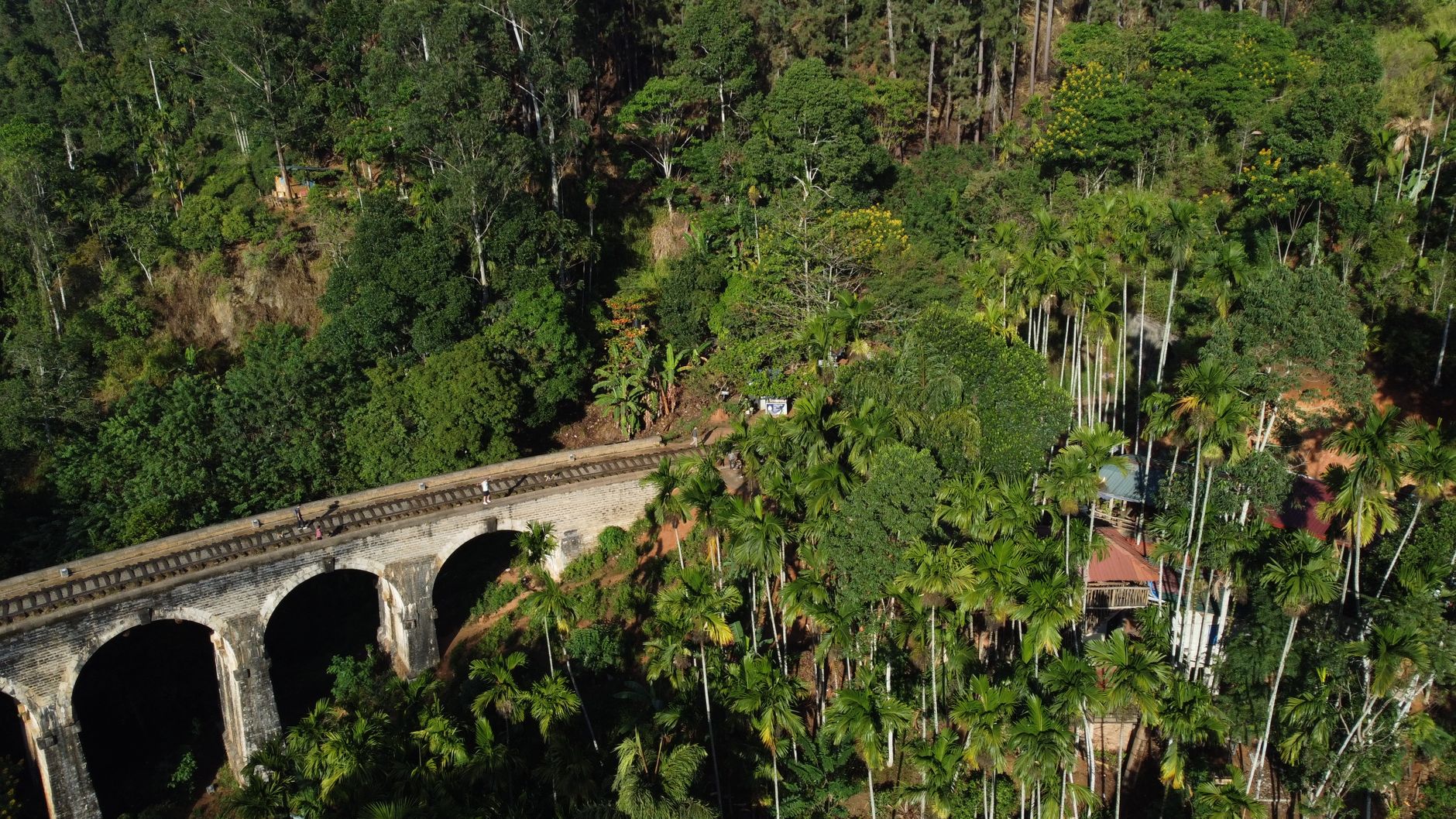
Most travellers spend 2–3 nights in Ella: one for Little Adam's Peak and Ravana Falls, one for the Ella Gap trail or a slower day exploring the tea estates and chatting with pickers, and a half-day before moving on. A fourth night allows you to loop south towards Demodara's nine-arch railway bridge or day-trip to Kandy.
FAQ
Is it essential to book ahead? December–February: yes, book 4–8 weeks ahead. March–May: optional, but book 2 weeks ahead for mid-range hotels. June–November: walk in and choose from multiple options the same day.
Do I need a tuk-tuk if I stay on the hillside? No, but your legs will remind you of the steep return walk. Hiring a tuk-tuk for £3–5 per journey is worth the comfort. Alternatively, hike down to town for dinner and take a tuk-tuk back.
Which hotel has the best tea estate views? Ask your chosen hotel where sunrise and afternoon views are sharpest. South and east-facing verandas catch light differently; no single property monopolises vistas—the hills are so folded that many spots offer them.
What's the best time to visit Ella? December–February (cool, dry, clear mornings). July–September is wet but less crowded, and mist-draped tea estates are photogenic. Avoid March–May if you dislike heat; September–November can be wet and humid.