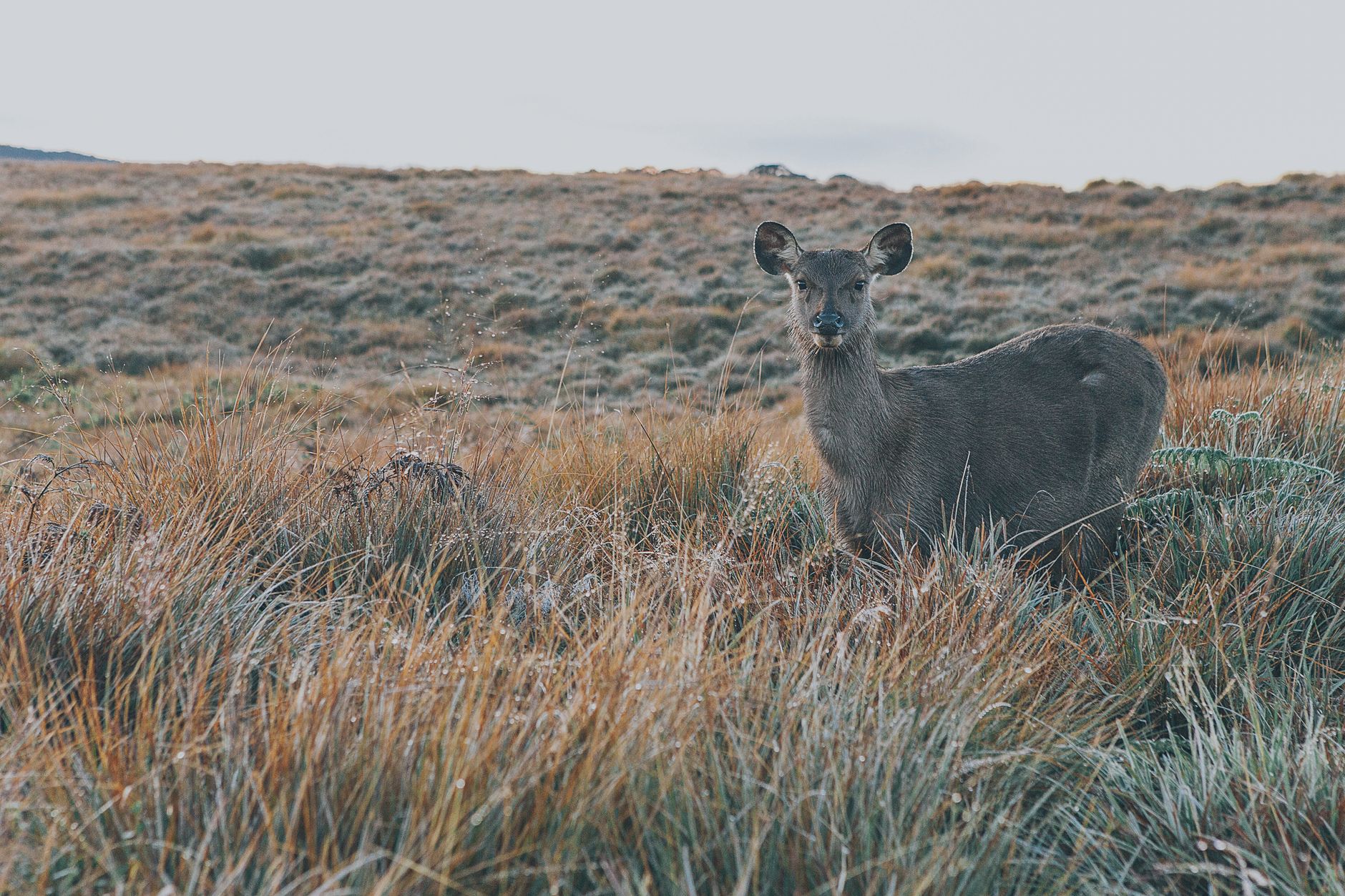
Horton Plains is a windswept highland plateau in central Sri Lanka, sitting at around 2,200 metres elevation where morning mist clings to grasslands and the air carries a chill you won't find elsewhere on the island. The most visited circuit—often called the Horton Plains Trek or walk to World's End—takes roughly three to four hours and follows a well-maintained path through moorland vegetation, ending at a dramatic cliff edge where the land simply drops away into the southern lowlands far below. It's an experience defined less by jungle encounters and more by atmospheric weather shifts, the particular quality of light filtering through clouds, and the strange quiet of an upland environment where you're likely to spot sambar deer, wild boar, and various highland bird species.
What exactly is World's End?
World's End is the colloquial name for a sheer cliff face at the southern edge of the plateau, dropping approximately 870 metres. On clear mornings—which are rare—you can see all the way to the southern coast and the towns of Matara and Galle, but most visitors experience it through heavy cloud cover, which creates an eerie, almost ethereal quality where the cliff edge disappears into mist and the landscape feels boundless and abstract. The anticlimactic weather is actually part of the appeal; there's something powerful about standing at the edge of a vast drop you can barely see, relying on the map and the ground beneath your feet rather than your eyes to confirm you're standing somewhere genuinely high and exposed.
Best time to visit Horton Plains?
The window for visiting Horton Plains is determined by rainfall and mist rather than heat. The driest months are typically August to October and January to March, when mornings are clearer and you have a better chance of seeing the view from World's End. Visiting between November and December or April to July means thicker cloud cover and muddier paths, though fewer visitors and a more moody, atmospheric experience. December to February brings the coldest temperatures—a genuine novelty in Sri Lanka—and many trekkers bring light jackets. The plateau receives heavy rain during monsoon periods, making trails slippery and visibility poor. Starting any trek early, ideally by 6:00 or 6:30 a.m., is essential because cloud typically builds during the morning; later departures mean thicker mist by the time you reach World's End. [Check /horton-plains/best-time-to-visit for detailed month-by-month guidance.]
Related: Ella with Family: What Works and What to Skip
See also: Coral Beach Hotel Mirissa: Location, Access & What to Expect
See also: Train from Kandy to Ella: Route, Schedule & What to Expect
How to get there and what to arrange?
Horton Plains is accessed through the town of Ohiya, which sits at the plateau's edge. Most visitors arrange transport from nearby towns like Nuwara Eliya or Ella, both of which have guesthouses and transport options. The journey takes one to two hours by vehicle from Nuwara Eliya, winding through tea estates and hill country villages. You'll need to hire a jeep or arrange a trek through your accommodation; the plateau isn't reachable by public bus directly to the trailhead, though it is technically possible to reach Ohiya town by regular bus and walk from there (a longer approach). Entry to Horton Plains National Park costs around 4,000 LKR for foreign visitors and includes park access but not a guide. Many visitors do hire a guide—costs typically range from 3,000 to 5,000 LKR—which is genuinely useful because they know which side paths lead to worthwhile viewpoints and can point out wildlife you'd otherwise miss. Your accommodation can typically arrange this for you.
What's the actual walk like?
The main circuit begins at the visitor centre near Ohiya and typically follows the "Grand Circuit," a marked loop that takes in World's End, Baker's Fall (a small waterfall in a side valley), and various viewpoints. The terrain is open grassland and moorland rather than forest, meaning you're exposed to the wind and weather with little shelter; the path is generally clear and not technically difficult, but the altitude—starting around 2,160 metres—can affect visitors unaccustomed to higher elevations, and the wind can be surprisingly strong. Locals often run this route in under two hours, but most visitors take three to four hours to account for the altitude, photography stops, and the time it takes to absorb the landscape. There are no facilities on the plateau itself—no shops, cafés, or toilets beyond the visitor centre—so you need to bring water, light snacks, and a rain jacket even if the morning looks clear. The terrain is boggy in places, particularly near Baker's Fall, and after rain the grassland becomes slick; solid walking boots with good grip are worth the extra weight in your luggage.
Wildlife and vegetation
Horton Plains feels botanically and ecologically removed from the rest of Sri Lanka. The montane grassland and scrub habitat is home to species found nowhere else on the island, including various highland grasses, dwarf rhododendrons, and stunted trees shaped by constant wind exposure. Wildlife includes sambar deer (often seen in small groups grazing near the path), wild boar, and occasionally civets or porcupines, though large animals tend to move away from the trail noise. Birdwatchers report sightings of Sri Lanka's endemic highland species including the dull-blue flycatcher and Sri Lanka white-eye; early morning, before tourists fully populate the trail, offers the best bird-watching conditions. The lichen and moss covering many rocks and fallen trees gives the landscape a particularly old and undisturbed quality, even though the plateau has been grazed and modified by human activity for centuries.
Comparing Horton Plains to other highland walks
If you're deciding between multiple highland experiences in Sri Lanka's hill country, Horton Plains differs significantly from routes like climbing Pidurutalagala (the island's highest peak, near Nuwara Eliya) or trekking in the Ella region. Horton Plains is distinctly open and exposed—there's little forest, and views (when visible) are expansive rather than framed. The altitude is lower than some other highland options, making it more accessible to visitors unaccustomed to elevation, though still noticeably cooler and windier than lowland areas. The main appeal is the plateau landscape itself and the dramatic World's End vista, rather than lush forest, waterfalls, or village cultural encounters. For a genuine highland atmosphere combined with a relatively achievable morning walk, Horton Plains is unmatched on the island.
Practical tips and considerations
Arrive with realistic expectations about weather; the plateau is genuinely cold and often misty, and there's a good chance you won't see the full view from World's End regardless of season. Bring layers: a long-sleeved shirt, a fleece or light jacket, and a windproof outer layer make an enormous difference in comfort. Sun protection is still essential despite the cloud cover; the altitude and reflective grassland intensify UV exposure. If you're staying in the area for multiple days, consider visiting Horton Plains on your clearest morning and exploring nearby attractions like Nuwara Eliya's colonial architecture or Ella's waterfall and tea plantation walks on less clear days. The plateau closes at sunset for safety reasons, so you can't stay late hoping for better light. Travelling with a local guide not only improves wildlife spotting and adds context about the landscape's ecology and history, but also supports local communities economically.
FAQ
Do I need to book Horton Plains in advance? No advance booking is typically required for day visits. Simply pay the park entrance fee at the visitor centre on arrival. However, if you're arranging a guide and transport through accommodation, it's helpful to confirm plans the day before.
Can I visit Horton Plains in a single day from Colombo? Technically yes, though it involves a six-to-seven-hour drive each way and leaves little time for the trek itself. Most visitors base themselves in Nuwara Eliya or Ella (one to two hours away) and make Horton Plains a morning activity.
Is the trek difficult or suitable for beginners? The terrain itself is straightforward—no scrambling or technical sections—but the altitude and wind can be taxing. Anyone with basic fitness can complete it, though those unaccustomed to elevation may feel the effects. Take your time and bring adequate water.
What should I do if the weather is too poor to see World's End? Enjoy the atmospheric landscape itself; the mist-shrouded plateau and moorland have their own particular beauty. Walk the full circuit anyway to see Baker's Fall and experience the highland environment. Sometimes the mist clears briefly mid-trek, rewarding patience.