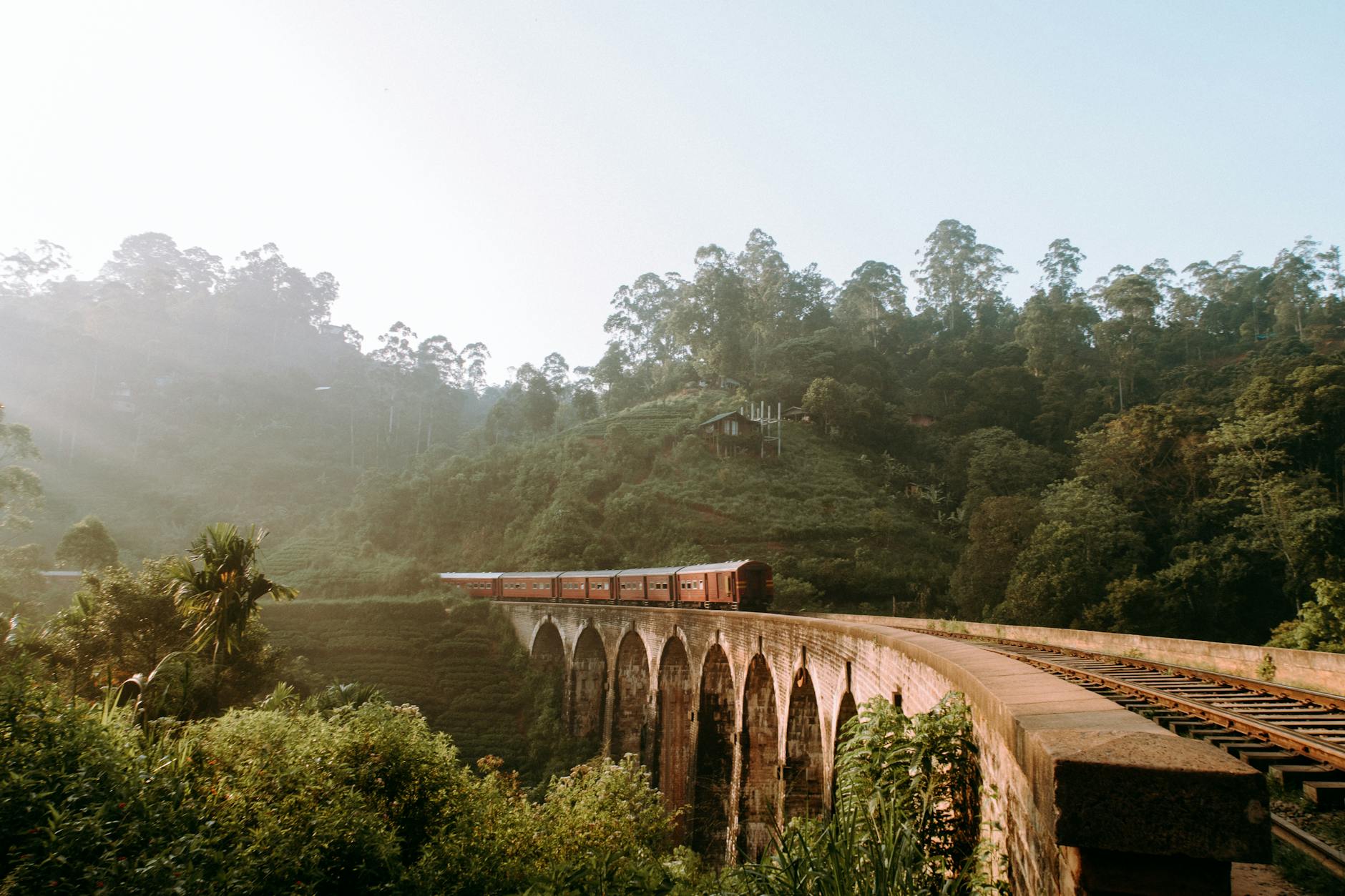
The Kandy–Ella train is a 7-hour journey through Sri Lanka's most dramatic landscape: tea estates, forested gorges, and mountain tunnels. It's not the fastest way south, but it's the most visually rewarding. Expect crowds, limited air-conditioning, and a genuine experience of how most Sri Lankans travel. Book tickets ahead during high season (December–February).
Route and distance
The train covers approximately 90 km from Kandy to Ella, but the journey takes seven to eight hours because the line climbs steeply into the central highlands. The route passes through Peradeniya, Gampola, Nawalapitiya, Nanu Oya, Diyatalawa, and finally Ella. Elevation gain is significant: you'll climb from Kandy (510 m) to Ella (1,041 m). The track is single-gauge, narrow-gauge mountain railway—not a trunk line—so speeds are deliberately slow.
The scenery justifies every minute. You'll see:
Related: The Yard Hiriketiya: Beach Hostel Guide & What to Expect
See also: Kanneliya Rainforest: Wildlife, Trails & Visitor Guide
Related: Kandy with Family: What Works and What to Skip
- Tea plantations covering entire hillsides, with pickers visible during harvest season (January–March, August–September).
- Nine Arch Bridge (near Ella), a colonial-era viaduct you'll cross slowly enough to photograph.
- Ravines and waterfalls, particularly dramatic during the monsoon season.
- Remote station stops where locals board with shopping and children.
Trains and schedules (as of August 2026)
Three trains operate this route daily; schedules shift seasonally:
-
Morning departure (typically 05:45–06:00 from Kandy) – Arrives Ella around 13:00–14:00. Departs early; you'll need accommodation in Kandy the night before. Most reliable for daylight viewing.
-
Midday departure (typically 09:00–10:00 from Kandy) – Arrives late afternoon (16:00–17:00). Balanced timing for photography; allows a leisurely Kandy morning.
-
Afternoon departure (typically 15:30–16:00 from Kandy) – Arrives after dark (22:00–23:30). Not recommended unless you have onward plans; you'll miss most scenery and arrive tired.
Always confirm exact times with Sri Lanka Railways or your accommodation—schedules do slip by 15–45 minutes, particularly during rainy season. Check at the booking office or on the railway website the day before travel.
Booking tickets
Online booking is unreliable for this route; the website often crashes or shows availability that doesn't match reality. Instead:
- Book in person at Kandy Railway Station the day before, or up to three days ahead during off-season.
- Go to the booking office (separate from the main platform building), not the ticket booth. Queues are longest 07:00–09:00.
- Bring cash (Sri Lankan rupees preferred; USD accepted but rates are poor).
- Expect to wait 20–40 minutes, longer in peak season.
Class options:
- First Class (~1,200–1,500 LKR): Reserved seats, sleeper option on certain trains, air-conditioning (sometimes works). Quieter; fewer sellers boarding at stops. Seats often reserved for groups; you may not sit together.
- Second Class (~800–1,000 LKR): Open seating, ceiling fans, mixed crowd. Doors open at stops; vendors board. More atmospheric; more chaotic.
- Third Class (~300–500 LKR): Unreserved, crowded, standing common on busy sections. Not recommended unless you relish intense local contact and physical discomfort.
First Class is worth the premium if you value comfort and want to enjoy the scenery without standing. Book two seats if you're travelling as one person and want a window.
What to bring and wear
- Camera or phone with decent battery – You'll want to photograph the Nine Arch Bridge and tea plantations. Charge fully before boarding.
- Layers – Temperature drops as you climb (up to 10°C cooler by Ella). A fleece or light jacket essential, even in dry season.
- Sunscreen and hat – Windows face all angles; sun exposure is real on the afternoon leg.
- Water and snacks – Sellers board regularly; prices are reasonable (20–100 LKR for water, buns, fruit). Don't rely solely on vendors.
- Toilet paper and hand sanitiser – Onboard toilets are basic and sometimes run out of paper. Squat-style; keep balance as the train sways.
- Small backpack or day bag – Not a large suitcase; overhead racks are tight and aisles crowded. Check luggage in the guard's van if you have heavy bags (small fee, usually collected on arrival).
- Book or audiobook – Dead time at stations; network patchy.
Timing and seasons
Best months: December–February, July–August – Clearest views, driest conditions. Expect crowds; book 2–3 days ahead.
Monsoon (May–September southwest; October–November northeast) – Mist common; views obscured 30–50% of the journey. Landslide delays possible (rare, but it happens). Fewer tourists; easier to book same-day.
Hot season (March–April) – Haze; minimal scenery interest.
The train runs year-round; even in mist, the experience is worth doing once.
Travel time comparison
| Route | Method | Time | Cost | Notes |
|---|---|---|---|---|
| Kandy to Ella | Train (First Class) | 7–8 hours | ~1,400 LKR | Scenic; frequent stops; atmospheric |
| Kandy to Ella | Private taxi | 3–4 hours | 4,000–6,000 LKR | Fast; air-conditioned; point-to-point; misses detail |
| Kandy to Ella | Tourist coach | 5–6 hours | 2,000–3,000 LKR | Crowded; curated stops; mediocre meals |
| Kandy to Ella | Bus (local) | 4–5 hours | 500–800 LKR | Cheapest; stops everywhere; most authentic; bumpy |
The train is the middle ground: cheaper than taxi, more scenic than a coach, slower but far more comfortable than a local bus.
Practical tips
- Arrive at Kandy station 30 minutes early – Gates close 10 minutes before departure; seating fills quickly even with reservations.
- Sit on the left side (north-facing) for the best views of tea plantations and gorges on the Kandy–Nanu Oya section. Switch sides after Nanu Oya.
- Open windows – Air-conditioning is nominal; windows are your ventilation. Be ready for dust and soot, especially in tunnels.
- Stay alert at stops – Thieves board at major stations. Keep bags zipped, valuables on you, not on overhead racks.
- Visit the toilet before boarding – The onboard facilities degrade as the journey progresses.
- Befriend your neighbours – Locals are endlessly curious and often speak English. Conversations often beat scenery.
After arriving in Ella
Ellla station sits at the edge of town, about 1 km from the main commercial area. From the platform, you can walk uphill into town (15 minutes, steep) or flag a tuk-tuk (150–200 LKR). Book accommodation in advance if arriving after 15:00; guesthouses fill quickly.
For onward travel, buses to Kandy, Nuwara Eliya, and Matara depart throughout the day. A return train ticket to Kandy can be booked from Ella station; expect the same crowds and scheduling quirks.
Learn more about Ella and best times to visit the region.
FAQ
Is the train safe? Yes. Petty theft is the main risk; violent crime is rare. Keep valuables secure and be alert at crowded stops. The train itself is well-maintained and derailments are extremely uncommon.
Will I get a seat if I turn up on the day? During off-season (April, November) you likely will. High season (December–February) expect standing room only, or no space at all. Booking ahead is essential in peak months.
What if the train is delayed? Delays of 30–60 minutes are normal. Rare landslips or track issues can cause 2–3 hour delays. Allow buffer time if you have a connection onward; don't book an evening bus or flight the same day.
Can I break the journey and get off at Nanu Oya? Yes. Nanu Oya is the station for Nuwara Eliya (bus transfer, 15 km). Tell the guard when boarding; you'll be noted. This is common and adds roughly 30 minutes to the Kandy–Ella leg if you include the bus ride onward.