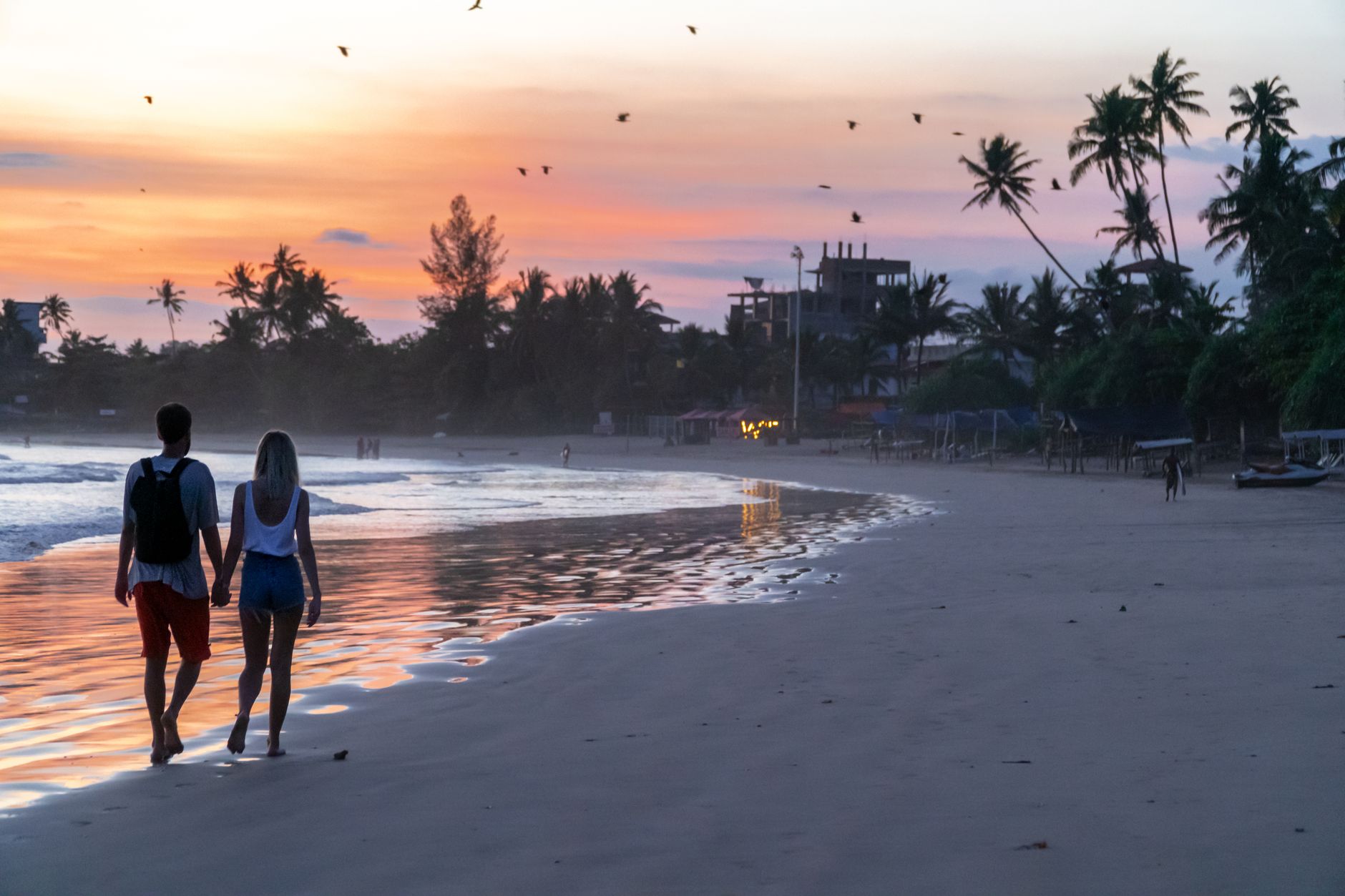
Most travellers need at least 10 days to see Sri Lanka without feeling rushed, though a focused 7-day trip is genuinely satisfying if you choose two or three regions rather than racing across the whole island. Two weeks gives you breathing room to slow down and actually enjoy each place rather than simply crossing it off a list.
Sri Lanka is one of those destinations that looks compact on a map and then surprises you with how long it actually takes to get around. Roads wind through hills, trains run on their own relaxed schedule, and the places worth pausing at — a stretch of empty beach at low tide, a street lined with kottu roti carts at dusk — tend to pull you in longer than your itinerary planned for. The honest answer to how many days you need depends less on geography and more on what kind of traveller you are.
What Can You Realistically See in 7 Days?
Seven days is workable, but only if you resist the urge to cover the entire island. The classic mistake on a one-week trip is attempting a full loop — Colombo, Sigiriya, Kandy, Ella, a beach — and ending up spending three of those seven days in transit. Instead, pick a lane.
Related: Matale in 2 Days: What to See and Where to Stay
See also: Unawatuna in 2 Days: What to See and Where to Stay
See also: Kalpitiya in 4 Days: The Complete Itinerary
The most satisfying 7-day route tends to follow the Cultural Triangle and Hill Country without backtracking. Spend your first day or two in and around Colombo, eating your way through Pettah market and catching a late afternoon walk along Galle Face. Then head north to Sigiriya for the rock fortress and the quietly spectacular Dambulla cave temples. From there, drop south to Kandy for a night or two — the Temple of the Tooth, the surrounding hills, a meal of rice and curry eaten on a proper banana leaf. Then take the train east into the hills toward Ella, arguably the finest train journey on the island, and allow yourself two full days rather than one. A beach day at the very end is possible if you choose somewhere in the south, though you'll arrive knowing you've only scratched one half of the country.
The key discipline with 7 days: do not add more stops. Each extra destination costs you a travel day in a country where distances deceive.
Is 10 Days Enough to Get a Real Sense of Sri Lanka?
Ten days is where the itinerary starts breathing properly. You have enough time to do the Cultural Triangle, the Hill Country, and arrive at the southern coast without feeling like you're running. You can also afford to sit still for a morning — to linger over a hoppers breakfast, to walk rather than take a tuk-tuk, to wander back to the same beach twice.
A well-paced 10-day structure might look something like this: two days in Colombo and the surrounding area, two days in the Cultural Triangle (Sigiriya, Polonnaruwa or Dambulla), two days in Kandy, two days in Ella and the hill country, and two days on the south coast at Unawatuna, Mirissa, or Tangalle. That's five regions, each given genuine time.
If culture interests you more than beaches, swap the final beach segment for an extra night in Kandy or a detour to Jaffna in the north, which has a completely different atmosphere, food culture, and architecture to the rest of the island — Tamil-influenced cuisine, crumbling colonial churches, and a seafront that feels unlike anywhere south of Vavuniya.
What Does a 2-Week Sri Lanka Trip Actually Allow You to Do?
Fourteen days is the point at which Sri Lanka stops being a highlights tour and starts feeling like a real trip. You can move more slowly between places, take the longer train routes without watching your schedule nervously, and include parts of the country that shorter trips have to skip.
With two weeks, a more complete route becomes possible: Colombo, the Cultural Triangle (two to three nights), Kandy (two nights), the Hill Country train through Nuwara Eliya and on to Ella (three nights in this region is genuinely rewarding — the walking around Ella alone justifies the extra day), followed by the south coast with enough time to choose between the livelier stretch around Unawatuna and the calmer, longer beaches near Tangalle. You can also loop back up through Galle, one of the most complete colonial-era fort towns in South Asia, with its narrow streets, Dutch Reformed church, and excellent independent restaurants.
A 14-day trip also gives you the option of heading north to Jaffna, though that genuinely requires either flying (the domestic flight from Colombo takes under an hour) or committing an entire day each way on the train. It's worth it if the north's distinct culture and history appeal to you — but adding it to a southern-focused itinerary will strain the schedule.
How Does the Time of Year Affect How Many Days You Need?
This matters more than most planning guides admit. Sri Lanka has two separate monsoon seasons affecting different coasts, and if you arrive at the wrong time for a particular region, you'll either be stuck waiting out rain or rerouting entirely. Understanding the best time to visit Sri Lanka for your specific route can mean the difference between a trip that flows and one that fragments.
Very broadly: the south and west coasts, Hill Country, and Cultural Triangle are best between November and April. The east coast — Trincomalee, Arugam Bay — comes into its own between May and September, when the west is wet. A 10-day trip attempting both coasts in the same season is setting itself up for weather frustration. A 14-day trip can sometimes catch the shoulder periods, particularly around May or October, when conditions are more variable but manageable.
Should You Spend More Time in One Place Rather Than Moving Every Day?
Yes, consistently. Travellers who return from Sri Lanka most satisfied almost always report staying longer in fewer places rather than ticking off more towns on a tighter schedule. Two nights in any given town gives you an evening arrival, a full day to explore properly, and a relaxed morning before leaving. One night means you're unpacking and packing around a rushed set of sightseeing hours, and you leave with surface impressions rather than any real feel for a place.
This applies especially to Ella, where the hiking trails, the Nine Arch Bridge at quiet hours, and the general rhythm of the village reward a second full day enormously. It applies to Kandy, where the Perahera festival (if you're there in July or August) is best experienced across more than one evening. And it applies to Galle, where the fort itself can be done in a few hours but the surrounding area — Koggala, Unawatuna, the coastal road — deserves unhurried time.
FAQ
Is 5 days in Sri Lanka worth it? It's worth it if you keep expectations realistic and stay in one region — either the Cultural Triangle and Kandy, or the south coast and Galle. Attempting a cross-island loop in 5 days will feel exhausting rather than rewarding.
Can you see both the east and west coast in one trip? Yes, but it depends heavily on the time of year. The two coasts have different monsoon windows, so travelling between them in a single trip works best during the transition months of May or October, or on a trip of 14 days or more.
What's the biggest mistake people make when planning days in Sri Lanka? Underestimating travel time between destinations. Road journeys that look short on a map can take three to four hours. Build in buffer time, and always factor train journeys as experiences in themselves rather than just transport.
Is Colombo worth spending time in, or should you pass through quickly? Colombo rewards a day and a half to two days if you're interested in food, architecture, and city life. The Pettah market area, the Fort district, and the Colombo 7 neighbourhood all have distinct characters. If none of that appeals, one night as a transit point is perfectly reasonable.