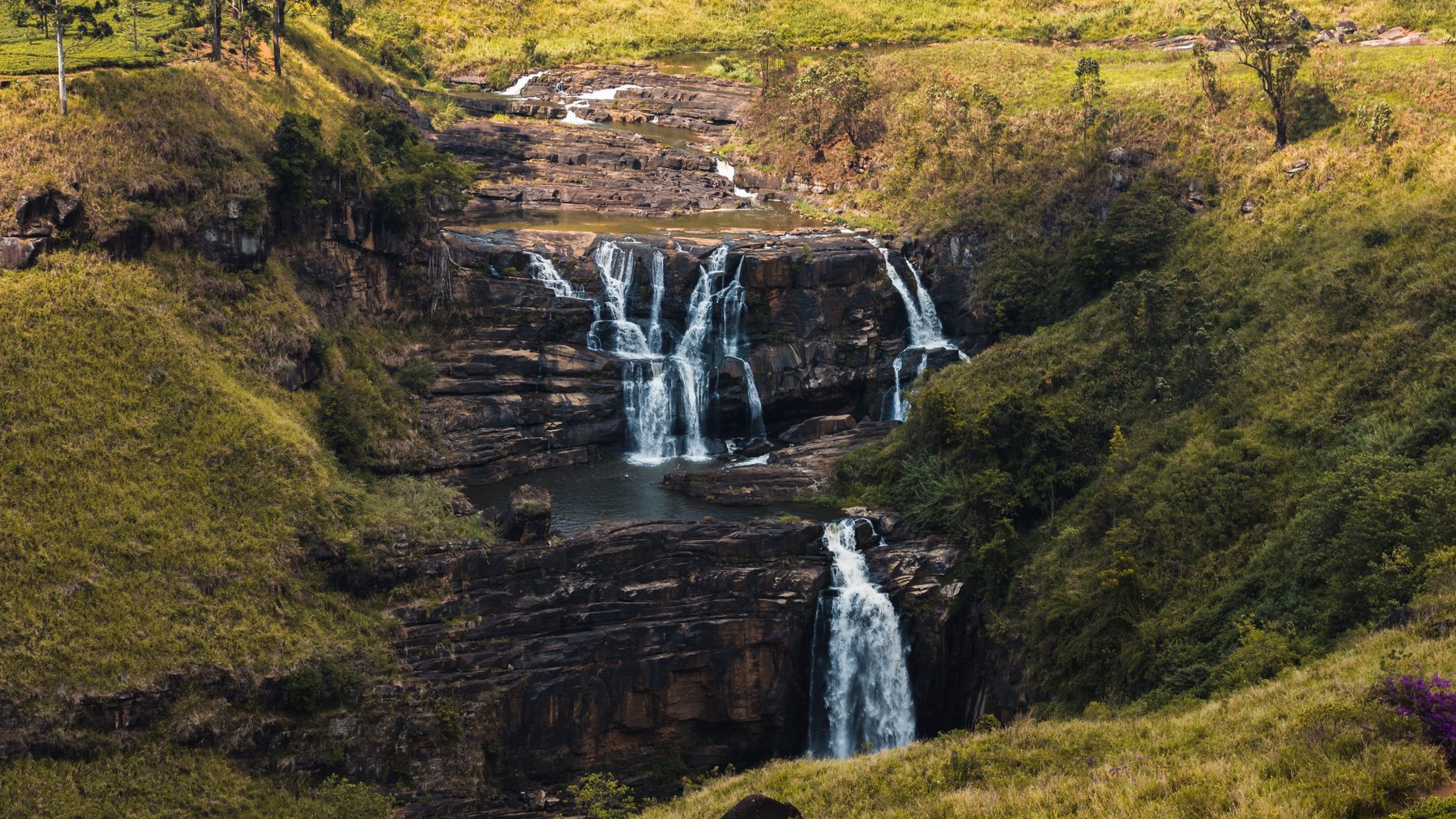
What is Jodu Ella waterfall?
Jodu Ella is a multi-layered waterfall system located in the Ella region of Sri Lanka's central highlands, consisting of several distinct cascades that flow into one another through pools and rocky channels. The falls drop approximately 30 metres across multiple tiers, creating a genuinely appealing swimming destination that draws fewer tourists than the more famous Ravana Falls nearby. The walk to reach it passes through working tea estates and upcountry forest, offering atmospheric views of both the landscape and local life along the way.
Where exactly is Jodu Ella, and how do you get there?
The waterfall sits in the hills above the village of Ella, roughly 3 kilometres inland from the town centre. Most visitors begin from Ella town itself, either walking the full route or arranging local guides or transport partway. The approach typically starts near the Ella Gap or via alternative paths through tea estates; the exact trailhead can be tricky to locate without local knowledge, which is why hiring a guide through your accommodation or booking platform is genuinely worthwhile rather than attempting to navigate solo.
The walk itself takes roughly 1 to 1.5 hours depending on fitness and path conditions. The terrain is moderately steep in places, with loose earth and tree roots common, so proper footwear with grip matters more than you'd think. Sections pass through actively harvested tea plantations where workers gather leaves in the early morning, and you may see local communities living in simple structures throughout the hillside—remaining respectful and staying on established paths is important.
Related: Ayurveda Retreat in Sri Lanka: Find Authentic Treatment & Wellness Centres
Related: Is Ipalogama Worth Visiting? An Honest Take
Related: Hikkaduwa Beachside Hotels: Where to Stay by the Water
What's the swimming and safety situation?
Unlike Ravana Falls, which has become crowded and whose pool is often murky, Jodu Ella's pools are genuinely swimmable during the right season, with clearer water and more space to move about. The rock formations create natural amphitheatres around each pool level, and you can wade progressively deeper or choose a shallower area depending on confidence. The setting feels more intimate and wild than managed tourist spots, which many visitors appreciate, though this also means there's no lifeguard, rescue equipment, or warning systems.
Entry into the water requires care—rocks are often slippery, and the pools can be deeper than they appear. Strong swimmers comfortable with natural water conditions find it rewarding; hesitant swimmers should stay in the shallows or skip water entry altogether. Never enter during or immediately after heavy rain, as flow volume increases unpredictably and the rocks become treacherous.
When is the best time to visit Jodu Ella?
The waterfall flows year-round but is most dramatic and accessible from October through February, when rainfall is reliable and the highlands receive good moisture, yet the weather remains relatively stable for walking. The pools are fuller and clearer during this window than in other seasons. Visiting in early morning, before any mist burns off and before afternoon clouds roll in, gives you the best light and smallest crowds.
From March to September, the northeast monsoon brings erratic weather and the waterfall can dry noticeably by mid-April or May. Late afternoon visits any time of year risk sudden cloud cover and temperature drops typical of highland weather, so plan for mid-morning to early afternoon walks instead. If you're specifically hoping to swim, aim for the dry season months rather than the wetter periods.
How does Jodu Ella compare to other waterfalls nearby?
Ravana Falls, the most famous waterfall in the Ella region, is easier to reach—it's accessed via a 15-minute walk from the main road—but has become quite crowded and commercialised, with guides crowding the pools and the water often appearing murky from foot traffic. Ravana is broader and more dramatic in sheer drop, but feels less peaceful as a result.
Dunhinda Falls, located an hour's walk north of Ella, is more remote and spectacular in terms of single-drop height but involves a longer, more strenuous walk and can be difficult to locate without guidance. Jodu Ella sits comfortably in the middle ground: more accessible than Dunhinda but less hectic than Ravana, with genuinely good swimming and a quieter atmosphere that rewards the modest effort required.
What should you bring and what's the local etiquette?
Wear sturdy walking shoes with proper grip—flip-flops and smooth-soled shoes lead to slips and turned ankles on this terrain. Bring significantly more water than you think necessary; the walk is steady and uphill, dehydration creeps up quickly at altitude, and there are no shops or facilities en route. Sun protection matters even on cloudy days in the highlands; the reflective properties of wet rocks and water can burn you intensely.
If swimming, bring a change of clothes and a small towel or quick-dry cloth. Waterproof bags for phones and valuables are sensible, though leaving valuables behind entirely is wiser—your guesthouse safe is genuinely safer than anything carried to a remote waterfall. A waterproof light jacket is worthwhile because highland weather shifts rapidly.
Respect the landscape and any locals you encounter—this isn't a marked tourist trail, so courtesy and discretion keep access open for future visitors. Don't assume pools are empty of people before entering or splashing about; listen first and approach calmly. Leave all rubbish with you; there's no waste collection here and the site's appeal depends entirely on its quietness and cleanliness.
Should you hire a guide?
Unless you have reliable navigation skills, local knowledge, or detailed GPS waypoints already arranged, hiring a guide is genuinely the smart choice rather than a tourist option. Guides cost roughly similar to a restaurant meal, navigate the tricky path variations without hesitation, and add cultural context about the tea estates and local life you pass through. They also know water safety and seasonal conditions intimately, which matters for swimming decisions.
Arrange guides through your guesthouse or booking platforms; most Ella accommodation providers have trustworthy contacts. Expect the walk to take slightly longer with a guide because they'll pause to explain things, but the experience is richer and safer as a result.
FAQ
How long should you plan for a full Jodu Ella visit? Plan 4–5 hours total: roughly 1 to 1.5 hours walking each way, with 1 to 2 hours at the waterfall itself for swimming, photographs, and rest. If visiting via guide, add time for conversation and explanations.
Is Jodu Ella suitable for children? Older children (10+) comfortable with hills and slippery terrain can manage it; very young children find the walk challenging and water entry risky. The terrain doesn't have rope assistance or safety barriers, so parental judgment matters more than at managed sites.
Do you need a permit or is there an entrance fee? There's no formal entrance fee or permit system. Jodu Ella remains relatively undeveloped, which is part of its appeal. Respect for the landscape and local community is the unwritten expectation.
Can you visit Jodu Ella as a day trip from Colombo? Yes, but it's demanding—roughly 5 hours each way by road, leaving little time at the waterfall itself. Base yourself in Ella for at least one night, or consider it a stop during a longer highlands itinerary. See best time to visit Ella for planning.