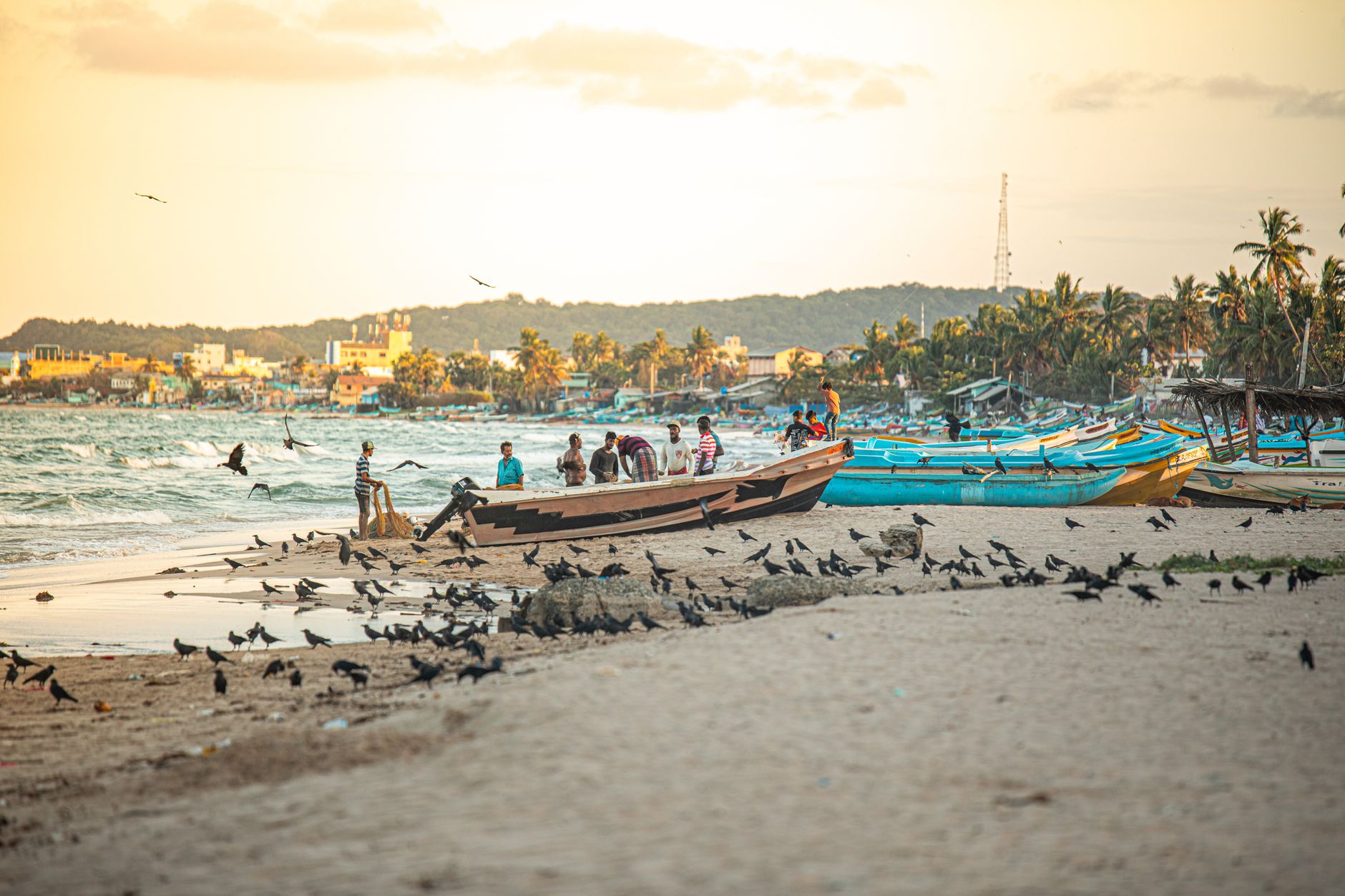
Trincomalee suits families, snorkellers, and travellers who want calm water and history. Arugam Bay suits surfers, backpackers, and those after a laid-back party scene. Your best pick depends on when you travel, what you want from the water, and your budget for getting there.
What Are the Key Differences at a Glance?
Both sit on Sri Lanka's east coast but feel nothing alike. Trincomalee is a working port city of roughly 100,000 people with a Hindu temple on a sea cliff, whale watching from April to September, and sheltered bays. Arugam Bay is a small strip of guesthouses and surf shops with a permanent population under 5,000. One has colonial forts. The other has point breaks.
| Factor | Trincomalee | Arugam Bay |
|---|---|---|
| Best for | Families, snorkellers, history | Surfers, backpackers, nightlife |
| Peak season | May–Sep | May–Oct |
| Water conditions | Calm, flat bays | Exposed, surf-friendly |
| Distance from Colombo | ~260 km (5–6 hrs by road) | ~320 km (7–8 hrs by road) |
| Vibe | Town-based, mixed traveller | Village, traveller-heavy |
| Budget per day | LKR 6,000–15,000 | LKR 4,500–12,000 |
Which Has Better Beaches?
Trincomalee wins on variety. Nilaveli Beach stretches nearly 10 km with powder sand and almost no wave action — ideal for children and weak swimmers. Uppuveli is shorter but closer to town (about 5 km north of the centre) and has more restaurants directly on the sand. Both bays are protected enough to swim comfortably from May through September.
Related: Kandy vs Nuwara Eliya: Which Suits Your Trip?
Related: Unawatuna vs Weligama: Which Suits Your Trip?
Arugam Bay's main beach is around 2 km long. The waves that make it a surf destination also make it rough for casual swimming. Head 3 km south to Pottuvil Point or a little further to Elephant Rock if you want calmer water. The scenery is dramatic but the ocean demands respect.
Bottom line: Calm swimming → Trincomalee. Waves and beach bars → Arugam Bay.
Which Is Better for Surfing?
Arugam Bay, without question. The main point break is consistently ranked among Asia's top ten surf spots. Swell runs May to October, with July and August delivering the most reliable 1.5–2.5 m waves. Beginners can hire a board for around LKR 1,500 per day and lessons start at roughly LKR 5,000 for two hours.
Trincomalee has no meaningful surf. The same sheltered geography that makes Nilaveli perfect for snorkelling kills any wave action.
Which Is Better for Snorkelling and Diving?
Trincomalee. Pigeon Island National Park sits 1 km offshore from Nilaveli and holds some of the healthiest coral in Sri Lanka. Blacktip reef sharks, sea turtles, and large parrotfish are common sightings. A boat trip to the island costs around LKR 3,500–4,500 per person including park fees. Dive operators in Uppuveli charge roughly LKR 8,000–10,000 for a two-tank dive.
Arugam Bay has a few reef dive sites, but visibility and coral health are inconsistent. Most operators here focus on surf guiding rather than diving.
What About Wildlife Beyond the Water?
Both towns give access to serious wildlife, but different animals.
From Trincomalee, Kaudulla and Minneriya National Parks are roughly 70–90 km west. These parks host the famous elephant gathering — up to 300 elephants in one field — from August to October. Whale watching trips depart from Trincomalee harbour between April and September: blue whales and sperm whales are regularly spotted.
Arugam Bay borders Kumana National Park (about 40 km south), one of Sri Lanka's best bird sanctuaries with over 200 recorded species. Leopards are present but rarely seen. Crocodiles live in the lagoon near Pottuvil. Elephants wander close to town regularly, especially at night — this is not a zoo experience.
Which Is Cheaper?
Arugam Bay runs slightly cheaper overall. Guesthouse rooms start around LKR 3,500 per night for a basic double in shoulder season. Rice-and-curry meals at local spots cost LKR 500–800. Beer at beach bars runs LKR 700–900.
Trincomalee has a wider price range. Budget rooms exist from LKR 4,000 but the town is more spread out, so you spend more on three-wheelers (tuk-tuks) between Uppuveli, Nilaveli, and the town centre. Factor in roughly LKR 300–600 per tuk-tuk trip. Pigeon Island fees add up if you visit multiple times.
When Should You Visit Each?
Both towns sit on the east coast and share broadly the same weather window: dry and sunny from May to October, with the northeast monsoon bringing rain from November to January.
For Trincomalee, the sweet spot is May to August. Seas are calm, whale watching peaks, and Pigeon Island is at its clearest.
For Arugam Bay, surf peaks in July and August. If you want waves without crowds, try May–June or late September. Check the Arugam Bay best time to visit guide for month-by-month detail.
Avoid both towns from November to January unless you enjoy overcast skies and closed surf shops.
How Hard Is It to Get There?
Trincomalee: The most comfortable option is the train from Colombo Fort — roughly 7–8 hours but scenic and reliable. Buses take around 6 hours. Hiring a private car costs LKR 18,000–25,000 from Colombo.
Arugam Bay: No train. The nearest station is Colombo–Batticaloa line, getting off at Siyambalanduwa (about 35 km from Arugam Bay). Most travellers take a direct bus from Colombo (7–8 hrs) or break the journey in Ella or Kandy. Read the Arugam Bay town overview for transport options.
Combining both: It's doable. Arugam Bay to Trincomalee takes about 4–5 hours by hired car via Polonnaruwa. You pass Kaudulla National Park en route — worth a stop.
Which Should You Choose?
Choose Trincomalee if:
- You're travelling with young children or non-swimmers
- Snorkelling, diving, or whale watching is a priority
- You want a mix of beach time and cultural sightseeing
- You prefer somewhere with proper town infrastructure
Choose Arugam Bay if:
- Surfing is the main reason you're visiting
- You want a backpacker-friendly village atmosphere
- Budget is tight and you want cheap beach bars
- Wildlife at Kumana appeals more than Pigeon Island
Do both if: You have 10+ days on the east coast and can handle a half-day transfer between them.
For a broader picture of east coast timing, the best time to visit Sri Lanka page covers national weather patterns in detail.
FAQ
Can I visit both Trincomalee and Arugam Bay in one trip? Yes. They're about 4–5 hours apart by road. Most travellers spend 3–4 nights at each. Hiring a private car for the transfer (roughly LKR 12,000–16,000) lets you stop at Kaudulla National Park or Polonnaruwa en route.
Which is more suitable for families? Trincomalee. Nilaveli's calm, flat water is safe for children. Arugam Bay's surf and limited medical facilities make it less practical with young kids.
Is Arugam Bay safe to visit? Yes. The area has been stable since the end of the civil conflict. The usual precautions apply: watch for rip currents, don't leave valuables on the beach, and be cautious around the lagoon crocodiles after dark.
Which town has better food? Trincomalee has more variety — Tamil, Muslim, and tourist-oriented restaurants across a wider area. Arugam Bay has solid beachside food but the menu in many places repeats: rice and curry, pasta, smoothie bowls. Neither is a food destination in the way Colombo or Galle is.