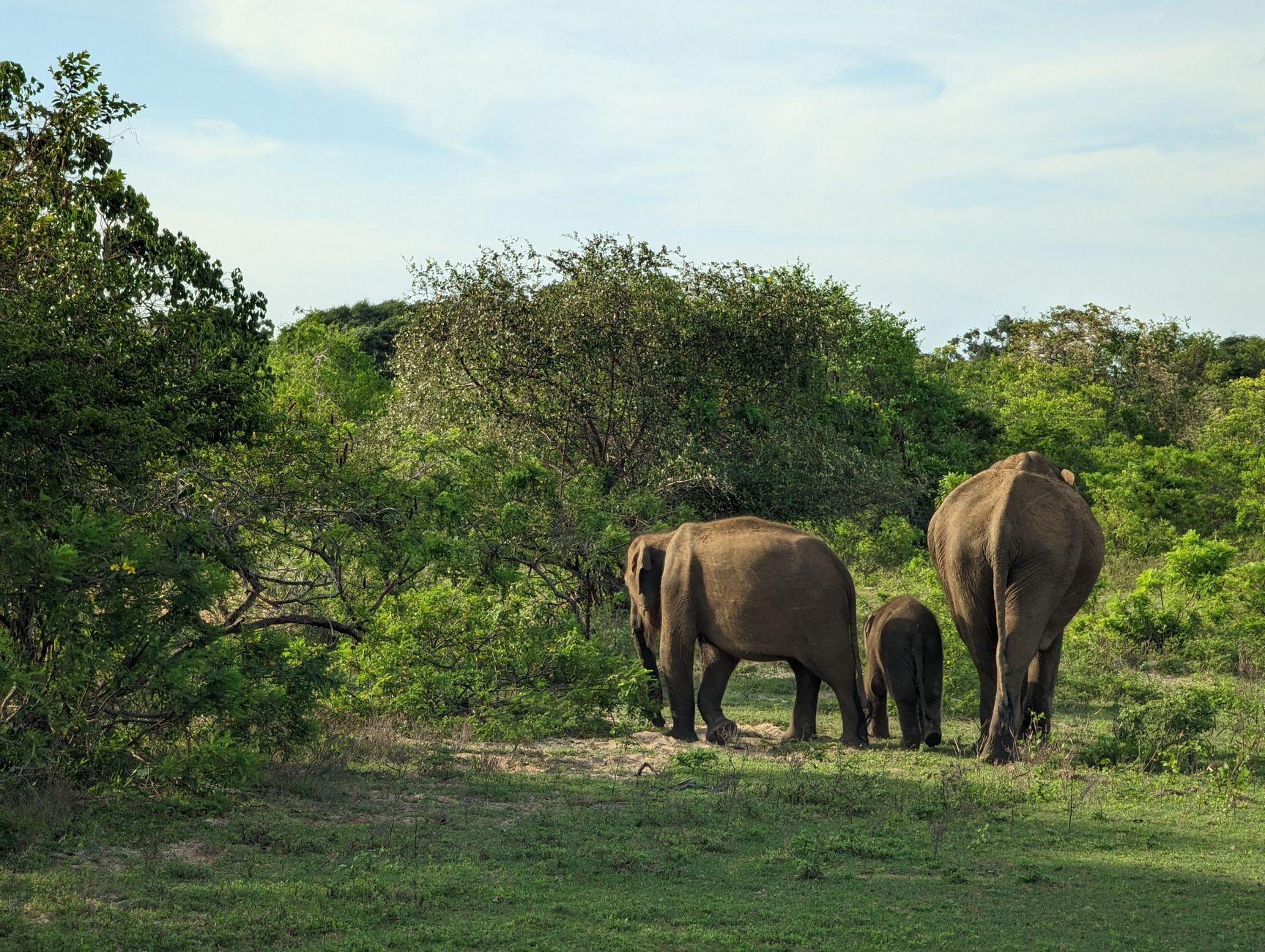
Yala National Park is Sri Lanka's premier wildlife sanctuary and the country's most visited protected area. Spread across 97,881 hectares of dry-zone scrubland, grassland and lagoon, it's the place where your odds of spotting a Sri Lankan leopard shift from theoretical to tangible. Unlike African reserves, Yala's dense vegetation means sightings require patience, early starts and genuine luck—but the concentration of big cats here remains the highest on the island.
Why Visit Yala?
Yala's reputation rests on three pillars: leopards, elephants and sloth bears. The park's Block 1 (the open section where tourism is permitted) holds the densest leopard population in the country. Between November and April, when water sources concentrate wildlife near the lagoons, encounters become statistically probable rather than miraculous. Herds of Asian elephants move through Block 5 and surrounding areas, particularly during the dry months (June–September) when they're drawn to remaining waterholes. Sloth bears—smaller, stockier than their Himalayan cousins—are present year-round but sightings remain uncommon; listen for their distinctive loud calls at dusk.
Beyond the charismatic megafauna, Yala teems with wildlife: sambar deer, axis deer, water buffalo, crocodiles, monitor lizards and over 200 bird species including painted storks, white ibis and the occasional Sri Lankan eagle.
Related: Best places in Sri Lanka for beach hopping
See also: Kanneliya Rainforest: Wildlife, Trails & Visitor Guide
See also: Is Galle Worth Visiting? An Honest Take
When Is the Best Time to Visit?
Your timing determines what you'll see—and whether conditions are accessible.
November to April (Dry season, tourist peak) This is Yala's prime window. Northeast monsoon rains have ceased; vegetation dries, pushing animals toward concentrated water sources. Leopard sightings peak December–February when heat stress and water scarcity force cats to hunt near lagoons. Daytime temperatures hover around 28–32°C. Roads are firmly packed and passable. Elephant activity is steady; sloth bear calls increase at dusk. Book jeeps 2–4 weeks ahead; early morning slots (5–6 a.m. departures) fill first. Expect 15–40 vehicles sharing popular circuits.
May to September (Wet season, quieter, leopards scarcer) Southwest monsoon brings heavy rainfall May–June; the park can flood. July–September sees sporadic showers and lower tourist numbers. Wildlife spreads across a greener, water-rich landscape, reducing sightings. Leopards disperse; elephant gatherings intensify around permanent waterholes (particularly Block 5, which is closed to tourists). Many lodge operators reduce safari schedules due to road washouts. Humidity is high; mornings can be misty. Choose this window only for solitude and bird-watching, or if your budget demands it.
July to September (Elephant congregation) If elephants are your priority, the tail-end wet season concentrates them at remaining water sources in Block 5 (inaccessible to tourists) and Block 1 periphery. Morning safaris before 7 a.m. offer best visibility before heat haze.
How to Get There
Yala's main entrance gate is at Tissamaharama, a small town 310 km south of Colombo (roughly 6 hours by road). Buses run from Colombo Fort or Galle; hire a private driver for comfort and flexibility. Fly-drive packages via Hambantota International Airport (90 km away) are increasingly common for international visitors seeking time efficiency.
Once at the gate, entry is by registered four-wheel drive only; you cannot drive your own vehicle into the park. All safaris must be arranged through your accommodation or a licensed operator in Tissamaharama.
What to Expect on a Safari
Jeep safaris run 5–8 a.m. (best for predators) or 3–6 p.m. (secondary). Early starts are non-negotiable for leopard spotting; cats hunt in cool morning hours and retreat to shade by 9 a.m. Afternoon drives catch elephants at waterholes but miss most big-cat activity.
Your experienced tracker will scan for pug marks (leopard prints), scat and kills in trees—yes, leopards drag carcasses into branches to avoid scavengers. Sit quietly. Long pauses are normal. When a kill is spotted or fresh tracks found, drivers radio each other; within minutes, 10–15 vehicles converge. The experience is both thrilling and chaotic.
Bring binoculars, a spotting scope if serious, high-factor sunscreen, a wide-brimmed hat and 2+ litres of water. The open jeep provides zero shade. Wear neutral colours (khaki, olive, brown); avoid white and bright patterns. Silence your phone.
Leopards vs. Elephants: Which Is More Likely?
Leopard sightings peak November–February in Block 1. Experienced guides and luck increase odds, but expect 1 in 3 to 1 in 5 morning safaris to yield a sighting—and that's during peak season. Patience is the real asset. A single mid-afternoon nap in a tree can make a drive memorable.
Elephant sightings are more reliable, especially June–September when herds gather. You'll likely spot at least one herd per safari during dry months.
Sloth bears are elusive. More visitors hear their booming calls at dusk than observe them. If spotting one is essential, allocate 4+ safaris and accept lower odds than leopards.
Costs and Logistics
Park entry is approximately LKR 3,000–4,500 per vehicle (not per person), paid at the gate. Jeep hire runs LKR 15,000–25,000 for a full-day shared safari; private jeeps cost 2–3 times more. Fuel, tracker fees and driver gratuities are additional. Budget LKR 6,000–10,000 per person per half-day safari when shared with others.
Stay in Tissamaharama, a working town 15 km from the gate, where guesthouses range from basic to comfortable. Proximity saves time and cost; a pre-dawn departure from Tissamaharama means 15 minutes in a jeep versus an hour from Mirissa or Unawatuna.
Real Challenges and Honest Notes
Yala is not a guaranteed wildlife show. Leopards are cryptic, territorial and largely nocturnal. A poor guide, wrong timing or bad luck means you'll spend five hours scanning scrubland and logging zero cats. Accept this before booking. Equally, the vehicle density in Block 1 during peak season can feel less like safari and more like organised tourism—dozens of jeeps converging on a single cat, engines running, guides shouting.
Road conditions deteriorate June–September; washboard tracks become impassable after heavy rain. The park sometimes closes Block 1 entirely (2022–2023 saw extended closures due to flooding and maintenance).
Bring your own drinking water and snacks. Park facilities are minimal beyond the entrance gate.
FAQ
Can I visit other national parks if Yala is closed? Yes. Udawalawe National Park (190 km, 4 hours by road) offers excellent elephant viewing year-round and is a reliable alternative if Yala's Block 1 is closed. Horton Plains near Ella provides montane forest and hiking, though wildlife differs dramatically.
What's the difference between Block 1 and Block 5? Block 1 is the only area open to tourists and covers the northern, drier section with grassland and lagoons—prime leopard territory. Block 5, to the south and east, is protected and closed to safaris; it harbours more elephant activity but is off-limits except to researchers.
Do I need a guide or can I self-drive? All vehicles require a licensed tracker/guide; self-driving is not permitted. Guides are essential—they read tracks, know water points and communicate leopard sightings via radio.
Is Yala safe during monsoon season? Yes, but road accessibility is compromised. Heavy rain (May–June) causes flooding. The park may close Block 1 for weeks. July–September is safer road-wise but still wet and unpredictable. Check closure status before booking.