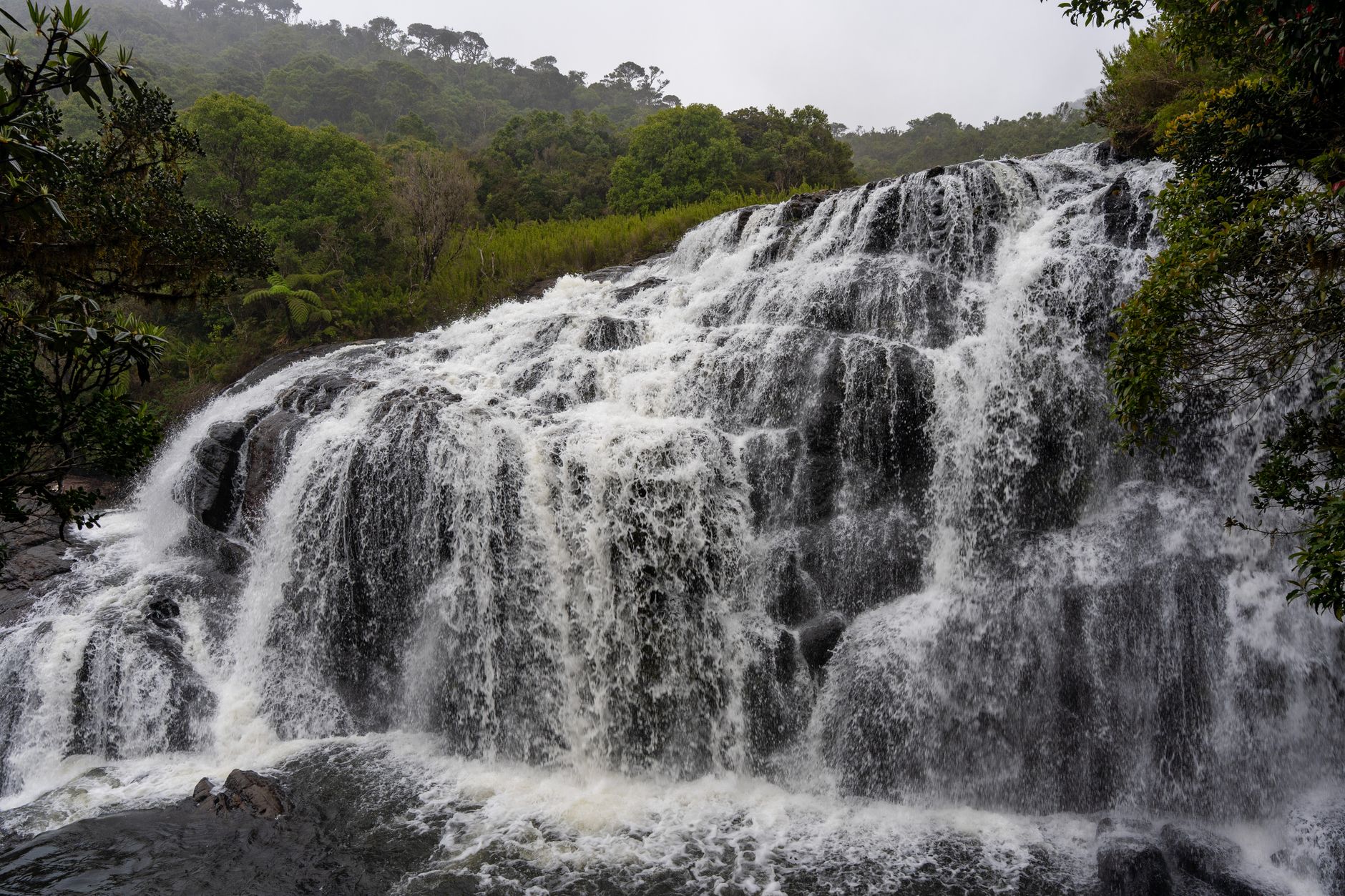
Alugolla Waterfall: A Quieter Cascade in the Central Highlands
Alugolla is an understated waterfall tucked into the misty tea-country folds above Kandy, drawing far fewer visitors than its better-known counterparts like Ramboda or Devwatte. The waterfall itself drops perhaps 20 metres into a dark pool ringed by tree ferns and native hardwoods. What makes it worth visiting is precisely what makes it hard to find: a genuine bush walk through living highland forest, without the commercialised infrastructure of more famous sites.
Where is Alugolla and how do you get there?
Alugolla sits roughly 15 kilometres north of Kandy town centre, accessed via the Kandy–Matale Road. The actual trailhead begins near the village of Alugolla itself, after turning off the main road into a quiet eucalyptus plantation area. From Kandy's heart, expect a 40-minute drive or a three-wheeler ride (₨1,500–2,000) to the start point. The final kilometre is typically walked or negotiated on foot from where vehicles must stop.
The actual trail is unmarked but well-trodden by locals. Ask for "Alugolla Ella" (waterfall) in the village; locals will direct you to the tea garden gateway. GPS coordinates are unreliable here due to poor mobile signal and canopy cover, so a guide from Kandy—bookable through guesthouses or trekking contacts—is sensible if you're unfamiliar with Sinhala directions.
Related: Best places in Sri Lanka for beach hopping
See also: Black Forest Beach Resort: Location, Facilities & What to Expect
See also: Is Ella Worth Visiting? An Honest Take
The walk itself: what to expect underfoot
The track descends steeply through overgrown tea plots, then enters true forest where the air becomes noticeably cooler and damper. Sections are muddy year-round; during monsoon months (May–June, October–November) the path becomes a proper creek bed in places. Wear proper walking shoes with ankle support—the slope is relentless, and loose volcanic soil offers little grip. The descent takes 20–25 minutes; the return climb is harder and takes 30–35 minutes, especially if your calves aren't conditioned for steep, rooty terrain.
You'll pass through several fern-hung groves where moisture hangs permanently in the air. Listen for the brown-capped babbler (a loud, throaty call) and watch the mid-canopy for white-spotted fantails flitting between branches. The understory feels genuine rainforest despite being at only 750 metres elevation—Sri Lanka's central highlands retain more native vegetation than elsewhere on the island.
The waterfall pool: swimming and water conditions
The falls themselves are modest but the pool beneath is genuine and swimmable when water levels aren't in spate. After dry periods (January–February, August), the waterfall is reduced to a trickle and the pool shrinks noticeably. During or immediately after monsoon rains, the waterfall becomes a roaring, chocolate-brown torrent—dramatic but unsafe for swimming.
Water temperature hovers around 15–17°C year-round, cold enough to shock if you plunge suddenly. The pool bed is rocky and slippery; enter slowly, testing footing as you go. There are no facilities, no lifeguards, and no safety equipment—this is entirely self-managed swimming. Locals do swim here regularly, but they know the site intimately and the water's temperament.
The pool's rocks are moss-covered and slick. A walking pole or hand placement before stepping is sensible. Never dive; depth varies and hidden boulders are common in highland pools.
Best time to visit Alugolla
January–February and August offer the clearest skies and lowest water levels, but the waterfall is diminished and the walk feels dryer.
March–April and September are ideal: monsoons have recently passed, water levels remain good, mist is heavy (adding atmosphere), and temperatures are warm but not oppressive.
May–June (southwest monsoon) and October–November (northeast monsoon) bring the most dramatic waterfall volume, lush forest, and lowest tourist numbers. The walk becomes a muddy adventure; bring waterproof shoes or accept that you'll finish soaked.
July and December are transitional—mixed conditions, moderate crowds from school holidays.
If you want strong water flow and forest atmosphere, visit during monsoon. If you want to swim comfortably and hike easily, come during shoulder months.
Wildlife and forest ecology
The forest around Alugolla is classified as Central Highlands wet evergreen forest. At this elevation, you're in the range of Sri Lankan endemic birds like the ashy-headed laughingthrush, dull-blue flycatcher, and mountain hawk-eagle (rarely, but present). Mammals are harder to spot; palm civets and giant squirrels inhabit the canopy but are nocturnal or crepuscular. You're more likely to hear them than see them—a sudden thrashing in the mid-canopy often signals a flying lemur or large squirrel fleeing human approach.
Tree ferns (Cyathea crinita) dominate the understory and are indicators of undisturbed moisture. The dominant canopy trees are native laurels and hardwoods, with scattered exotic eucalyptus from earlier plantations. The tea gardens above are agricultural monoculture, so the forest proper—once you're below the tea line—feels like a pocket of genuine wilderness.
Practical essentials
Footwear: Waterproof hiking boots or approach shoes with robust ankle support. Slipping is common; trainers will not suffice.
Water and snacks: Bring at least 1.5 litres per person. There are no shops near the trailhead. A light energy bar or banana is sensible for the climb back up.
Waterproofing: A lightweight waterproof bag for phones and wallets. The pool splashes and afternoon mist is heavy.
Time required: Allow 2–2.5 hours for the round trip (including a 20–30 minute stop at the pool), plus travel to and from Kandy.
Guides: Not strictly necessary if you're reasonably confident navigating unmarked terrain and have local directions noted. A guide from Kandy costs ₨2,500–4,000 for the day and adds confidence and local context.
How Alugolla compares to other highland waterfalls
Ramboda (nearer Nuwara Eliya) is higher and more dramatic but crowded and accessed via a concrete staircase. Devwatte (near Peradeniya) is similarly accessible but surrounded by commercial tourism. Alugolla feels genuinely remote and less visited, though the waterfall itself is smaller. If you want volume and spectacle, visit Ramboda. If you want a quieter forest walk with a genuine swimming pool, Alugolla rewards the extra effort.
Getting to Kandy and connecting onward
Kandy is the natural base for visiting Alugolla. Kandy itself offers guides, accommodation, and transport options. If you're travelling between Kandy and the central highlands, Ella lies south and makes a logical onward stop via the scenic train journey. For context on the wider region, see the Central Highlands best times to visit guide.
FAQ
Is Alugolla waterfall safe to visit alone? The walk itself is straightforward and well-trodden, so yes. The waterfall is unmanaged and there are no facilities, so swimming carries inherent risk—cold water, slippery rocks, no emergency services nearby. Many visitors go solo without incident; assess your own confidence with unmarked terrain and water safety.
What's the best time to see the waterfall at its fullest? October–November (northeast monsoon) produces the strongest flow. May–June is secondary. Avoid January–February and July–August if volume matters.
Do I need a guide? The path is marked by local foot traffic and is broadly descending (hard to get seriously lost going downhill). A guide adds confidence, local knowledge, and helps with slippery sections. Not essential, but worthwhile if you're unfamiliar with hill country terrain.
Can you camp or stay overnight at Alugolla? No formal facilities exist. Camping is technically possible but unregulated. Your accommodation will be in Kandy, a 40-minute drive away.