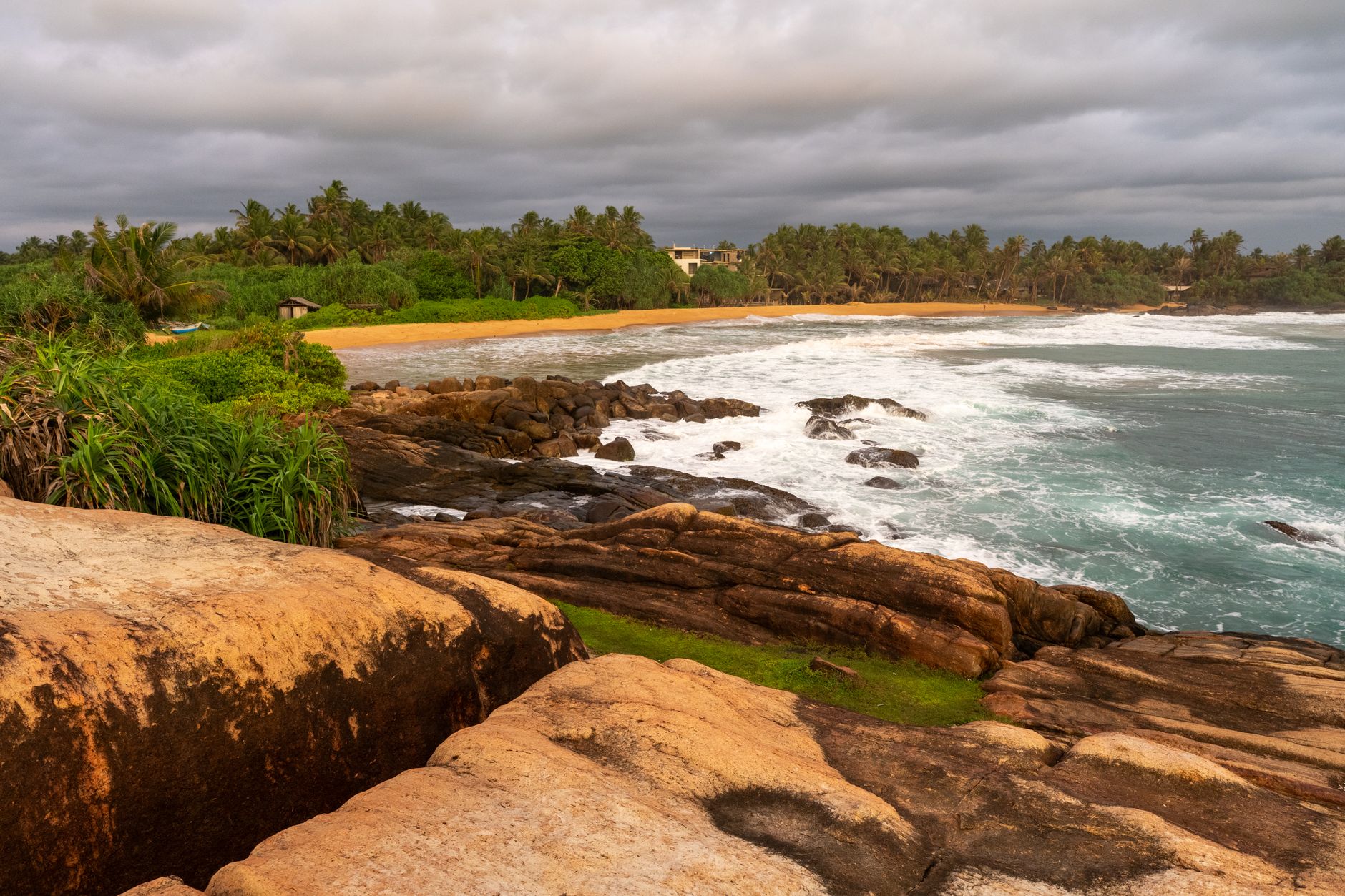
Four days based around Ambalantota puts you at the centre of Sri Lanka's southern wildlife corridor. Within 45 minutes in any direction you have two national parks, a protected bird sanctuary, mangrove lagoons, and uncrowded Indian Ocean beaches. This itinerary is sequenced to catch wildlife at its most active, minimise backtracking, and leave room for the slower hours that make the south coast so addictive.
Where exactly is Ambalantota, and why base here?
Ambalantota sits on the A2 coastal highway about 240 km from Colombo, tucked between Hambantota to the east and Tangalle to the west. It's quieter and cheaper than either neighbour, yet close enough to both. The town itself is unremarkable — a fishing harbour, a handful of local restaurants, a fuel station — but that's the point. You're here for what surrounds it, not for the town.
For a broader sense of the region's seasonal rhythms, the southern coast best-time guide is worth reading before you book. The dry season (roughly May to September) keeps the roads to Bundala dust-dry and the lagoons shallow enough to concentrate birds. The period October to January brings occasional heavy rain but also dramatic skies and far fewer tourists.
Related: Bentota in 2 Days: What to See and Where to Stay
See also: Unawatuna in 2 Days: What to See and Where to Stay
Related: Jaffna in 4 Days: The Complete Itinerary
Day 1: Arrive, settle in, Bundala at dusk
Arrive by early afternoon if you're driving from Colombo or connecting from Ella or Mirissa. Check in and rest through the midday heat — it matters.
At around 15:30, drive the 12 km east to Bundala National Park. Bundala is a Ramsar wetland, a chain of five lagoons separated from the ocean by a narrow strip of thorny scrub. The birding here is genuinely extraordinary: greater flamingos wade in the shallower lagoons from October through March, painted storks roost in the trees above the water, and open-billed storks work the mudflats in groups of dozens. Even outside peak bird season, the crocodiles on the banks of the first lagoon are reliably visible, and spot-billed pelicans are present year-round.
A two-hour jeep safari with a park-assigned tracker costs a fixed entry fee plus jeep hire; arrange it the evening before through your accommodation. You'll be back by 18:00, in time to watch the light flatten over the lagoon from the road.
Where to stay: Malala Retreat (4-star, rated 9.6/10 from 14 reviews) is the standout option — small, well-run, with a genuine connection to the landscape. If you want something larger with a pool and full resort facilities, Shangri-La Hambantota (5-star, 8.7/10) sits on a headland 15 km east and is worth the short drive. Budget travellers should look at Jade Green Hambantota (3-star, 7.7/10), which is functional and central.
Day 2: Udawalawe — elephants, raptors, and a waterhole
Leave by 05:30. The 50 km drive northwest to Udawalawe National Park takes just over an hour on the A2 and then inland roads. The early safari slot (06:00–10:00) is essential — elephants move freely in the cool hours and then retreat into shade. Udawalawe holds a permanent population of around 600 elephants, the highest density of any park in Sri Lanka. Unlike Yala, where you queue with twenty other jeeps at a leopard sighting, Udawalawe's elephants are simply everywhere: drinking at the reservoir, walking in single file across the grass, mothers steering calves away from the road.
Watch for crested hawk-eagles in the tall trees near the reservoir edge, and keep an eye on the sky — brahminy kites quarter the open grassland regularly. The park's landscape is open and dry, easier for wildlife spotting than dense jungle.
Return to Ambalantota by early afternoon. Eat at a local restaurant near the harbour — grilled seer fish with rice and a pol sambol, eaten at a plastic table, is exactly right.
Spend the evening at Kalametiya Bird Sanctuary, a 15-minute drive west. This is a quieter alternative to Bundala — a mangrove-fringed lagoon where you can hire a local boat for an hour and drift past herons, kingfishers, and the occasional sea eagle. Sunset over Kalametiya is one of the south coast's best.
Day 3: Coast, beach, and the Hambantota salt flats
This day is slower by design. Drive east toward Hambantota in the morning and stop at the salt flats just before the town. The shallow evaporation pans attract waders — little stints, curlew sandpipers, and kentish plovers from August to April. The geometric pink and white patterns of the salt workings are visually striking in morning light.
Continue into Hambantota for fresh coconut and a walk around the old Dutch fort remnants near the fishing harbour, then return west along the coast road, stopping at Rekawa Beach for a mid-morning swim. The beach here is wide, the sand coarse and pale gold, and the current gentler than at some of the exposed Tangalle beaches. Between May and October, green turtles nest on Rekawa at night — the local turtle conservation project runs guided watches from 20:00 onward (worth booking ahead).
For accommodation with direct beach access, Ceylonta Beach Resort and Spa (rated 8.4/10 from 18 reviews) is a solid mid-range choice. Villa Blu (5-star, 9.2/10) offers a more intimate, high-quality experience. The Sarada Lagoon View Cabana (rated 9.6/10 from 1 review) is a tiny lagoon-side option worth considering if you want something genuinely local in feel.
Day 4: Morning wildlife, departure
A final early start. If you've only done one Bundala safari, repeat it this morning — you'll see different species and different behaviour. Alternatively, drive 20 minutes inland to the Lunugamvehera National Park boundary, where elephant herds often cross the road at dawn.
Pack up and leave by 10:00 if you're heading to Colombo (around 4 hours on the expressway via Matara) or by 11:00 if you're continuing west along the coast to Tangalle or Mirissa. The stretch of coast road between Ambalantota and Tangalle is genuinely beautiful — low scrub, occasional Buddhist temples on rocky outcrops, fishing boats pulled up on the sand.
For those continuing the journey east, Yala National Park is 80 km from Ambalantota and makes a natural fifth day if you're extending the trip.
Which hotel is the best base in Ambalantota?
For wildlife focus and comfort: Malala Retreat is the clear recommendation — its 9.6 rating reflects genuine quality and it's well-positioned for both Bundala and Udawalawe runs. For families or group travellers wanting full resort facilities: Shangri-La Hambantota is worth the minor extra distance. The Amawin Resort (4-star, 8.2/10) is a quieter mid-range option. Avoid decisions based on star ratings alone here — Ceu Ceylon (5-star, 9.1/10 from 3 reviews) shows promise but has minimal reviews as yet.
FAQ
Do I need a private vehicle for this itinerary? Yes, for practical purposes. Tuk-tuks can handle the town and short distances, but Udawalawe and early morning Bundala safaris require either a hired car with driver or a pre-arranged jeep. Most hotels can organise both.
Can I do Udawalawe and Bundala in the same day? Technically yes — an early Udawalawe safari followed by a late afternoon Bundala session — but it's tiring and you'll shortchange both parks. Spreading them over two days gives you far better wildlife encounters.
Is Ambalantota safe for solo travellers? Entirely. The south coast is one of Sri Lanka's more relaxed tourist areas. Standard precautions apply, but solo travellers — including solo women — move around this region without particular difficulty.
What's the best month to visit for both birds and elephants? July and August balance both well: Udawalawe's elephants are concentrated around water sources (easier to spot), and wading birds are returning to Bundala's lagoons. The weather is mostly dry and the seas are calm enough for swimming.