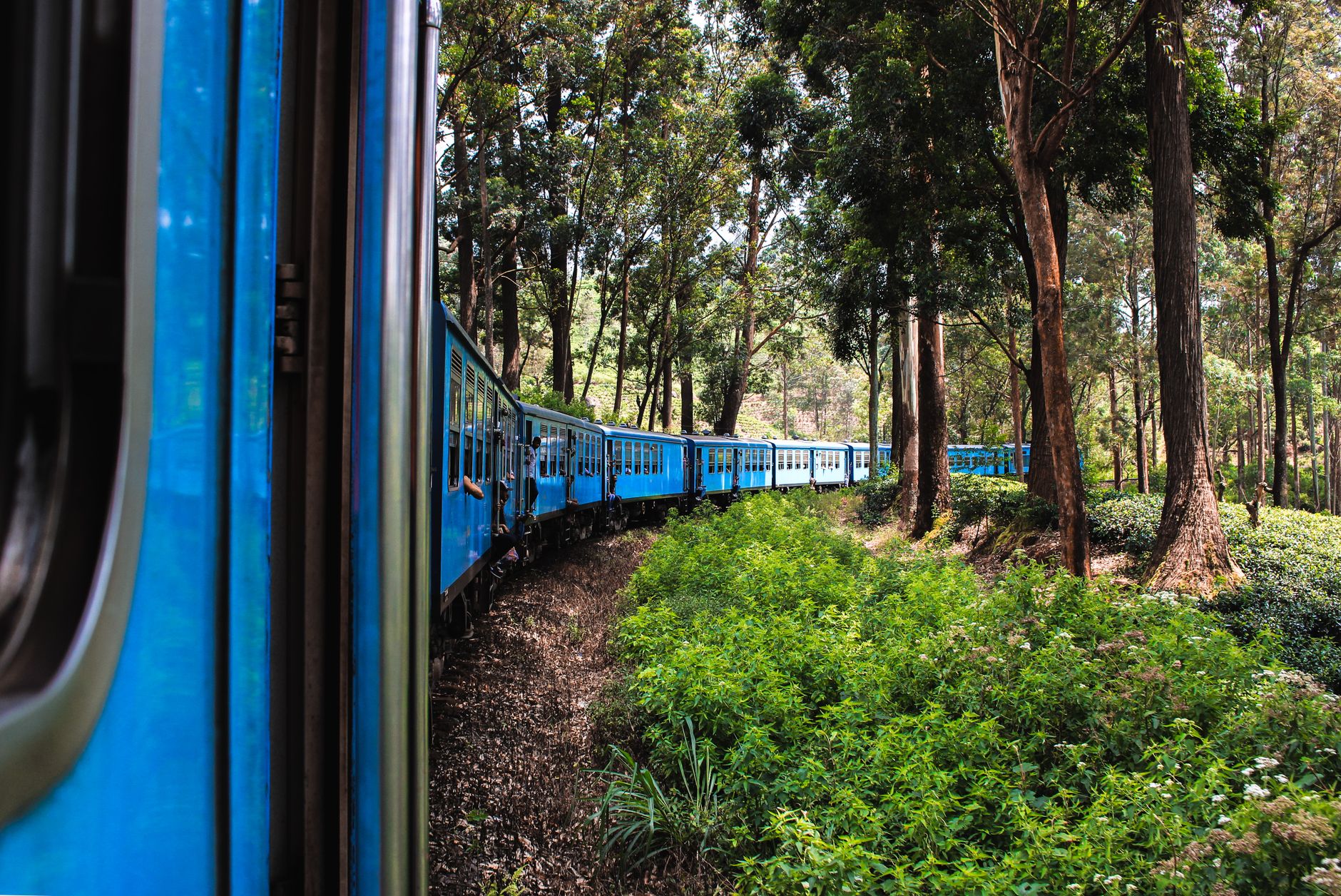
Best Places in Sri Lanka for Scenic Train Journeys
Sri Lanka's railway system, inherited from the British colonial era, still runs three genuinely stunning routes. Unlike tours or buses, trains move slowly enough to absorb the landscape—tea gardens blur past at walking pace, villages flash by in seconds, and you sit beside ordinary Sri Lankans commuting home. This is not luxury travel; it is authentic transport that happens to be beautiful.
Three routes dominate: Kandy to Ella through the central highlands (the most photographed), Colombo to Matara down the southern coast (most relaxed), and Colombo to Jaffna through the north (slowest, least predictable). Each suits different travellers and seasons.
What makes train travel different from buses here?
Trains move slower, which sounds inefficient until you realise it lets you see. You can open windows, stand between carriages, and photographs don't blur because of constant gear changes. Trains also run fixed routes regardless of traffic—a 6-hour journey takes 6 hours, reliably. Buses are faster point-to-point but jolt, bounce, and stop constantly. Trains are meditation; buses are endurance.
Related: Best Places in Sri Lanka for Wildlife Safari
See also: Arugam Bay for Solo Travellers: Safety and Practical Tips
See also: Is Colombo Worth Visiting? An Honest Take
The downside: no air conditioning on scenic routes, crowds during school holidays (April, September), occasional delays, and no guaranteed seats on popular sections. Toilets are basic. Food is limited—buy supplies at Colombo Fort or Kandy stations before boarding.
The Kandy–Ella Highland Route: Most Scenic, Most Crowded
This 6–7 hour journey from Kandy (altitude 500 m) to Ella (1,041 m) climbs through Sri Lanka's tea belt. You'll pass terraced plantations, waterfalls, tunnels carved through solid rock, and viaducts spanning deep valleys. On clear mornings, the mist lifts by 9 a.m. and visibility is exceptional. This is the route most travel guides photograph.
Difficulty: Moderate. Sitting is easy; standing during crowded stretches (Kandy to Peradeniya, Nuwara Eliya to Ella) requires stability. Humidity is high; bring water.
Best time: December to March (dry season, clear views). July–August is cooler but cloudier. Avoid April and September (school holidays; trains are rammed).
Booking: Seat reservations are possible but trains often run full. Arrive at Kandy station by 6 a.m. for a 6:45 a.m. departure and claim a window seat early. Unreserved tickets are cheaper and often just as available if you're flexible on timing.
What to expect: The landscape changes every 30 minutes—lowland forests, rubber plantations, then tea gardens. Stops at Peradeniya (botanical gardens are visible), Gampola, Nawalapitiya, and Nuwara Eliya. Around Nuwara Eliya (6,500 ft), the air cools sharply; many travellers disembark here for a break. The final stretch to Ella descends through Demodara's famous nine-arch viaduct (photograph spot: get off at Demodara station if time allows).
Fitness note: The seating is basic (upright, no padding). Six hours sitting is manageable for most; moving between carriages during stops helps. Leg room is limited.
Cost: Typically 450–600 LKR (about £1.20–£1.60 GBP) for an unreserved seat in the open carriage. Reserved seats in closed compartments cost double but guarantee space.
The Colombo–Matara Coastal Route: Relaxed and Accessible
This 2.5–3 hour journey hugs the southern coast from Colombo Fort to Matara. The track runs metres from the beach for stretches; you see fishing villages, palm groves, and the Indian Ocean. It is gentler than the highlands route and suits families, older travellers, or those with limited time.
Difficulty: Easy. Flat terrain, shorter journey, frequent stops in towns. You can board/alight almost anywhere without planning.
Best time: Year-round. The southwest monsoon (May–September) brings rough seas (dramatic waves) but doesn't stop trains. December–March is driest. July–August is coolest.
Booking: No advance reservation needed. Buy tickets at Colombo Fort station an hour before departure. Multiple trains run daily; missing one isn't a crisis.
What to expect: The route departs Colombo through suburbs, then opens onto coast near Moratuwa. Stops include Panadura, Kalutara, Beruwala, Bentota, Aluthgama, and Hikkaduwa before reaching Matara. Each stop is a beach town; you can hop off, explore for 30 minutes, and catch the next train. The track curves inland briefly near Kalutara and Bentota, passing through lagoons and wetlands.
This route attracts fewer foreign tourists than Kandy–Ella, so you'll ride mostly with locals going to work or school. Friendliness is high; locals often chat and help with luggage.
Cost: 300–400 LKR (about £0.80–£1.10 GBP) for the full Colombo–Matara journey.
Fitness note: Minimal physical demand. Seating, crowds, and journey length are all manageable for any fitness level.
The Colombo–Jaffna Northern Route: Slow, Remote, Least Touristy
This 12–14 hour overnight or two-day journey runs north through coconut plantations, dry scrubland, and rural towns largely untouched by mass tourism. Jaffna itself sits at Sri Lanka's northern tip and offers colonial architecture, Hindu temples, and quiet beaches.
Difficulty: Moderate to challenging. The journey is long; sleeper carriages are cramped (bunk-style bunks, four per compartment). Toilets are very basic. Heat and humidity are significant, especially April–June. You'll spend a night on the train or split the journey across two days.
Best time: December to February (cooler, less humid). Avoid April–June (intense heat). Jaffna experiences the dry season later (May–September), so December–March is more reliable.
Booking: Advance booking essential. Contact Sri Lanka Railways or book in Colombo Fort. Sleeper berths cost roughly 2,500–3,500 LKR (£6.50–£9 GBP) depending on class.
What to expect: The overnight express departs Colombo around 10 p.m. and arrives Jaffna around 10–11 a.m. Stops include Kurunegala, Anuradhapura (famous ancient Buddhist sites are inland, not visible), and smaller towns. The landscape is flatter and drier than the highlands; coconut palms dominate. Few foreign tourists ride this route; it is a working railway for Sri Lankans. Sleeper compartments are basic but functional. Food vendors board at stops; bring snacks and water for safety.
This route suits travellers seeking authenticity and willing to trade comfort for experience. It is slower and less predictable than the other two, but far more adventurous.
Cost: Night sleeper fares vary (roughly 2,500–3,500 LKR). Day sitting tickets are cheaper (600–800 LKR) but an overnight sitting is exhausting.
How to Choose
For scenery: Kandy–Ella wins decisively. The highlands are stunning and the journey is manageable in a day.
For relaxation: Colombo–Matara is ideal. It's short, coastal, and stress-free.
For adventure and authenticity: Colombo–Jaffna is unique but demands tolerance for discomfort and time.
For first-time visitors with limited time: Take the Kandy–Ella route as a day trip. Arrive in Kandy the evening before, depart early, and alight in Ella by afternoon. Ella has backpacker infrastructure and is a good base for hiking.
Practical Tips
Booking windows: Reservations open 30 days ahead. The Kandy–Ella route fills 2–3 weeks before peak seasons (December, January, July, August). Coastal and northern routes are less competitive.
Luggage: Trains have overhead racks and under-seat space. Large backpacks may need to be stored near carriage exits; keep valuables with you.
Photography: Bring a small bag with a camera or phone. When standing at carriage doors (safe only when stationary or slowing), you'll capture unobstructed views. Never lean out of moving trains.
Food and water: Stations sell packaged snacks and biscuits. Vendors board at larger stops selling curry rolls, short eats, and drinks. Bring a water bottle; tap water on trains is drinkable but reliability varies.
Timing: Trains are slower than buses but run on schedule better. Plan a 15-minute buffer at both ends. Departure times can shift by 5–10 minutes due to freight priorities.
Money: Buy tickets at stations with cash (LKR). Credit cards sometimes work but are unreliable. No food or drink vendors accept cards.
Which region should you visit for train travel?
For the most scenic and famous route, visit the central highlands (/ella, /kandy). The best time to visit Ella is December to March. The Ella–Kandy line itself requires minimal planning beyond booking a seat. For coastal relaxation, base yourself in Matara or southern beach towns. For adventure, add Jaffna to a longer northern itinerary, though infrastructure there is developing.
FAQ
Can you buy train tickets on the day of travel? Yes, for most routes. Unreserved seats are almost always available if you arrive early (6–7 a.m. for morning trains). Reserved seats on the Kandy–Ella route may sell out weeks ahead during peak season, but standing or joining the queue for cancellations is possible. Coastal and northern routes are less crowded.
Is it safe to travel alone on Sri Lankan trains? Yes. Trains are heavily used by commuters; carriages are public and well-trafficked. Petty theft is rare. Avoid displaying expensive cameras, keep bags in sight, and trust your instincts on crowded sections. The Kandy–Ella route, being touristy, has security awareness; the northern route is quieter but equally safe.
What's the difference between open and closed carriages? Open carriages have no doors or windows between sections, allowing you to move freely and step into the breeze. Closed compartments are private, four-person enclosed cabins with doors and windows. Open carriages are cheaper, airier, and more social. Closed compartments offer privacy and slightly more comfort but feel claustrophobic on long journeys. For day trains, open is recommended; for overnight, closed (sleeper) is essential.
Do trains run every day? Yes, all three main routes run daily. Service is reliable. Occasional delays (30 minutes to 2 hours) occur due to freight trains or maintenance, but cancellations are rare unless there are major disruptions (flooding, strikes). Check departure times locally; published schedules are approximate guides, not guarantees.