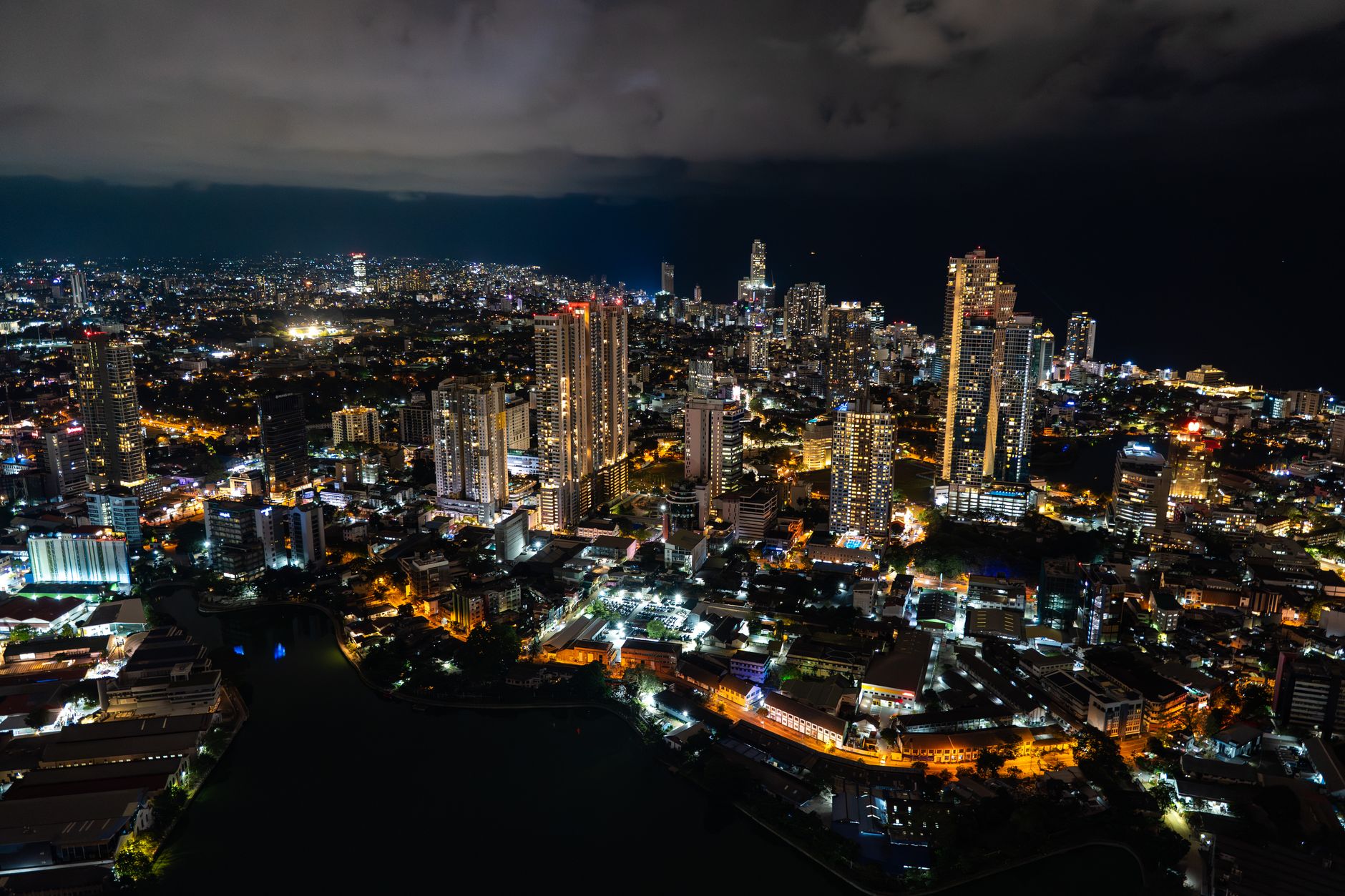
Four days in Colombo is the right amount — enough to cover the headline neighbourhoods without rushing, and enough downtime to eat well, which is really the point. This itinerary moves roughly south to north and back again, grouping areas geographically so you're not zigzagging across traffic for no reason. Colombo's roads are congested from around 7:30–9:30am and 4:30–7pm; build that into your timing.
For broader trip planning, see our Colombo city guide and best time to visit Colombo.
Day 1: Fort, Pettah, and the Harbour Front

Start in Fort, Colombo's old commercial and administrative core. The neighbourhood is denser with history than it first appears — the red-brick Old Parliament Building, the Bank of Ceylon headquarters, and the Cargills clock tower reward slow walking over tuk-tuk rides. The Colombo Lighthouse near the harbour is photogenic early in the morning before the tour groups arrive.
Related: Dambulla in 2 Days: What to See and Where to Stay
See also: Colombo in 2 Days: What to See and Where to Stay
Related: Bentota in 2 Days: What to See and Where to Stay
Cross into Pettah on foot via the pedestrian bridge on Main Street. Pettah is a functional wholesale market district, loud and layered: electronics on one block, spices on the next, bolts of fabric stacked ceiling-high. The Jami Ul-Alfar Mosque (the red-and-white candy-striped one) on Second Cross Street is the neighbourhood's visual anchor. Wander, but don't expect a curated experience — this is working commerce.
For lunch, eat at one of the small rice-and-curry spots on Bankshall Street. Point at what looks good; the jackfruit and dhal are usually reliable.
Afternoon: walk the Galle Face Green promenade as the sea breeze picks up. Street vendors sell isso vadai (prawn fritters) from carts along the esplanade — eat them standing up, with lime.
Where to stay in Fort/Galle Face area: Galle Face Hotel (5 stars, 8.6/10) is the colonial landmark choice — ocean-facing rooms, wide verandahs, and a history that goes back to 1864. Grand Oriental Hotel (3 stars, 7.2/10) sits directly above the harbour and costs considerably less; the harbour-view rooms are the reason to book it.
Day 2: Cinnamon Gardens, Viharamahadevi Park, and the National Museum

Cinnamon Gardens (also called Colombo 7) is where the city exhales. Wide avenues, embassy residences, old rain trees, and the kind of quiet you don't find in Fort. Begin at Viharamahadevi Park — named after a Sinhalese queen — in the early morning when joggers and monks share the paths. The giant Buddha statue at the northern end faces the town hall, and the park's frangipani trees drop flowers onto the walkways all morning.
The National Museum of Sri Lanka, just outside the park's southern gate, opens at 9am. The Kandyan royal regalia collection on the upper floor is worth the entry fee alone — the tooth-relic casket replicas and the king's throne are displayed with enough context to be genuinely illuminating. Budget 90 minutes.
Afternoon: walk south through Cinnamon Gardens past the Lionel Wendt Centre (Sri Lanka's leading arts venue) and into Bambalapitiya for lunch. The Majestic City area has good kottu spots; the sound of a kottu being chopped on a flat griddle is one of Colombo's most recognisable sounds.
Evening: the rooftop bars around Union Place and Beira Lake come alive after 6pm. The lake itself is underrated — lit up at dusk, with cormorants roosting in the trees on the small island at its centre.
Where to stay in Cinnamon Gardens / central Colombo: Marino Beach Colombo (5 stars, 9.3/10 from 4,524 reviews) is the highest-rated hotel on this list — beachfront, with a pool that overhangs the Indian Ocean. Granbell Hotel Colombo (4 stars, 9.1/10) is a sharp mid-range option with strong service reviews. The Kingsbury Colombo (5 stars, 8.9/10) overlooks the harbour from a central position, with good sunset-facing rooms.
Day 3: Slave Island, Wellawatta, and Street Food

Slave Island (Colombo 2) is one of the city's most genuinely diverse neighbourhoods — Tamil, Muslim, and Sinhalese communities layered in close proximity, with kovils, mosques, and churches within a few streets of each other. The Sri Subramaniya Swami Kovil near Beira Lake is active and visually intense; remove shoes before entering.
Take the commuter train south from Fort Railway Station to Wellawatta (about 20 minutes, very cheap, always crowded in a useful way). Wellawatta is Colombo's Tamil neighbourhood: Galle Road here is lined with silk shops, sweet stalls, and tea houses. Pick up murukku (fried lentil snacks) from a roadside seller and eat them on the sea wall.
The beach strip between Wellawatta and Dehiwala is a good late-afternoon walk — fishing catamarans are pulled up on the sand, and the fishermen tend to be back sorting their catch by 4pm.
For dinner, head to Mount Lavinia (accessible by train or tuk-tuk). The beach-facing restaurants along Hotel Road do fresh grilled fish; order by weight at the counter and eat with your hands if you want to do it properly.
Where to stay near the coast: Mount Lavinia Hotel (5 stars, 7.7/10) is a genuine colonial-era landmark set directly on Mount Lavinia beach — the building dates to 1806 and the pool area is exceptional. Mandarina Colombo (8.8/10 from 3,663 reviews) offers a boutique feel with strong guest scores for a more central option.
Day 4: Kelaniya, Colombo Fort Markets, and Departure Prep
Day four works best for the sites you might otherwise skip. The Kelaniya Raja Maha Vihara temple, about 11km northeast of Fort, is one of the most revered Buddhist temples in Sri Lanka — the ceiling murals depicting the life of the Buddha are detailed and unusually well-preserved. Go before 9am to avoid tour buses. A tuk-tuk from Fort takes about 30–40 minutes.
Back in the city by mid-morning, revisit Manning Market in Pettah if you want to buy spices, dried fish, or cashews to take home — it's the practical place to do it, with prices set for locals rather than tourists.
Afternoon: the Dutch Hospital Shopping Precinct in Fort has been converted into a relaxed complex of restaurants and boutiques — a good place for a slow lunch and a last look at the colonial architecture before heading to the airport or onward to Galle or Ella.
Good mid-range Fort options for a final night: C1 Colombo Fort (3 stars, 8.8/10) is compact, well-located, and consistently reviewed for cleanliness and staff. Cinnamon Red Colombo (4 stars, 8.7/10) is close to the Beira Lake area and useful if you're catching an early departure.
How does Colombo compare to other Sri Lankan cities for a 4-day stay?
For pure sightseeing density, Colombo is less immediately spectacular than Galle (which has a compact Dutch fort and clear sea) or Kandy (with the Temple of the Tooth as an anchor). But Colombo rewards the time if you're willing to treat it as a living city rather than a list of landmarks. The food scene is stronger than anywhere else in the country, the museums are the best-resourced, and the range of accommodation from heritage hotels to sharp boutique properties is unmatched. Four days is the minimum to feel like you've actually been here rather than just transited.
FAQ
Is 4 days enough for Colombo? Yes — four days covers the main neighbourhoods, key museums, the coastline at Mount Lavinia, and day-trip distance to Kelaniya, without feeling rushed. You could extend to five if you want to include a day trip to Negombo or the Kelani River.
What's the best area to stay in Colombo? Fort and Galle Face are central and walkable for sightseeing; Cinnamon Gardens is quieter and more residential. For a beachfront experience, Mount Lavinia is about 12km south of Fort and accessible by train.
How do you get around Colombo efficiently? Tuk-tuks via the PickMe app (metered, no haggling) for short trips; the commuter train for the coastal route south to Mount Lavinia and Wellawatta. Avoid private cars during peak hours — traffic is genuinely gridlocked.
Is Colombo safe for solo travellers? Generally yes. Fort, Pettah, and Cinnamon Gardens are all fine to walk during the day. Pettah at night is quieter and less recommended for solo wandering; stick to areas with restaurants and street stalls open.