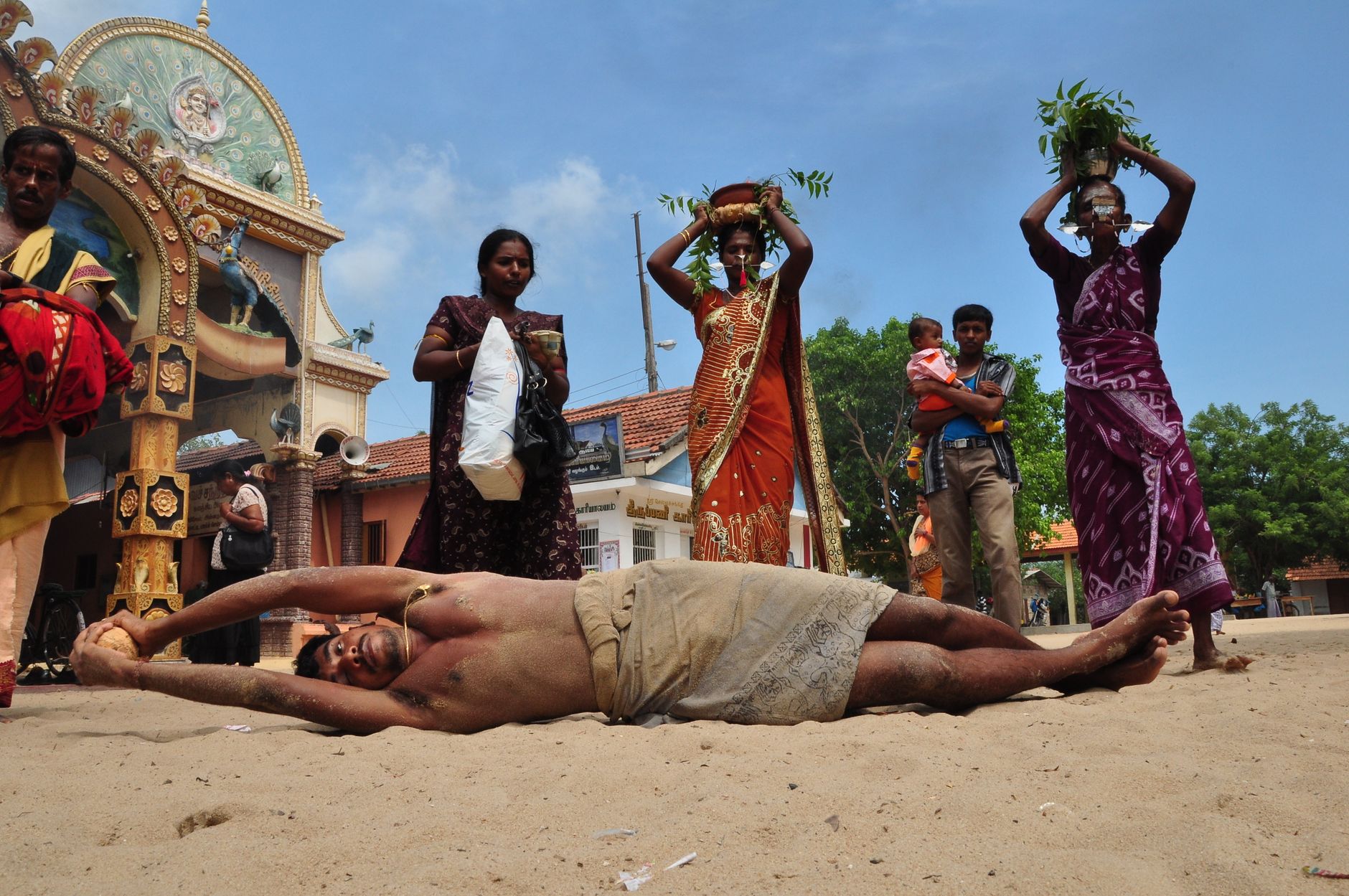
Two days in Jaffna is enough to cover the Dutch fort, the great Nainativu temple, the haunting war-era ruins, and a slow lunch of crab curry — if you sequence it properly. This itinerary is built around logical geography, not wishful thinking, so you spend your time looking at things rather than stuck in a tuk-tuk retracing your route.
For broader trip-planning context, see the Jaffna city guide and the best time to visit Jaffna.
Day 1: The peninsula — fort, temples, and the Jaffna market

Morning: Jaffna Fort and the Dutch legacy
Start at Jaffna Fort before 8 am, when the sea breeze still cuts through the heat and the light on the coral-stone walls is almost orange. The Portuguese began it in 1618; the Dutch rebuilt it more substantially after 1658. It is one of the best-preserved European fortifications in Asia, and unlike many Sri Lankan heritage sites it remains completely walkable and largely unmanicured — you can climb the bastions, peer into the moat, and stand on the seaward ramparts looking across the lagoon toward Kayts Island without a single rope barrier in the way.
Related: Matale in 2 Days: What to See and Where to Stay
See also: Colombo in 2 Days: What to See and Where to Stay
See also: Kandy in 4 Days: The Complete Itinerary
Allow 90 minutes. The interior is spacious enough that you will not feel crowded even when tour groups arrive around 9 am.
Late morning: Nallur Kandaswamy Kovil
A 10-minute tuk-tuk ride north brings you to Nallur Kandaswamy Kovil, the most important Hindu temple in Sri Lanka. Outside the August chariot festival season it is quiet enough to appreciate the architecture — five-tiered gopuram in the Dravidian style, painted in white and gold, with a working inner sanctum that non-Hindus may enter respectfully (shoes off, no leather items). Priests conduct puja around 10 am; the drums and smoke make this a genuinely sensory stop rather than a passive one.
Midday: Jaffna Market and lunch
Walk or tuk-tuk to the Jaffna Municipal Market, which peaks between 10 am and noon. Palmyra jaggery, dried Jaffna chillies (smaller and hotter than the southern variety), fresh palmyra fruit — it is a useful orientation in what makes the northern kitchen distinct. Eat at one of the rice-and-curry places on Hospital Road nearby. A thali here, piled with murunga leaf sambol and dried fish, costs very little and tastes of nowhere else in the country.
Afternoon: Jaffna Library and the war ruins
The rebuilt Jaffna Public Library is worth a 20-minute stop — less for the current building than for what it represents. The 1981 burning of the original, one of Asia's largest libraries at the time, is a wound that Jaffna residents still talk about directly and without much euphemism.
Nearby, the ruins of buildings along Stanley Road and the shell-damaged walls visible throughout the old residential quarter require no guided tour. They are simply there, between occupied homes and fresh paint, and the contrast is more instructive than any museum display.
Evening
Sunset from the Casuarina Beach causeway area, or a walk around Kankanturei Jetty as fishing boats come in. Dinner: Jaffna crab curry is the thing to order, available at several restaurants along KKS Road.
Day 2: The islands — Nainativu and Nagadeepa

Why the island run deserves a full day
The causeways connecting Kayts, Karaitivu, and Punkudutivu islands to the peninsula are themselves worth the trip — dead-flat roads built on coral sand, flamingos visible in the lagoon shallows between October and March, pelicans and painted storks year-round. Budget a full day because the ferry timing controls everything.
Morning: Drive to Kurikadduwan Jetty
Leave your hotel by 7 am. Hire a tuk-tuk or car for the day — the island chain is about 35 km from central Jaffna. The drive through Kayts and across the Punkudutivu causeway takes roughly 75 minutes. Ferries to Nainativu depart from Kurikadduwan Jetty roughly every 30–45 minutes from around 8 am; the crossing takes 15 minutes.
Nainativu Island
Nagapooshani Amman Temple on Nainativu is a significant pilgrimage site — a small but architecturally elaborate kovil approached across a wooden jetty, coloured flags snapping in the wind off the Palk Strait. The island is quiet; no vehicles, no accommodation. Pilgrims arrive by boat, circumambulate the temple, receive prasad from the priests, and leave. You are welcome to do the same or simply sit on the jetty watching the frigate birds circle.
A separate short ferry from Nainativu (or directly from Kurikadduwan) reaches Delft Island if you want to extend the day — wild ponies, a Dutch fort, a coral church — but that adds three to four hours and makes for a very long return. Most two-day visitors skip Delft and save it for a dedicated third day.
Afternoon return and Jaffna Archaeological Museum
Back on the mainland by early afternoon, stop at the Jaffna Archaeological Museum near the fort. It holds Tamil Bronze Age artefacts, Dutch-period objects, and some striking Chola-era bronzes — about an hour's worth of material if you read the labels.
Where to stay in Jaffna

Best overall
Fox Resorts Jaffna leads on guest satisfaction with a rating of 8.9/10 from 115 reviews — four stars, genuinely consistent service, and a location that makes the fort walkable. It is the most reliable all-round pick.
Jetwing Jaffna and Northgate Jaffna both sit at 8.7/10 (from 402 and 227 reviews respectively) and offer solid four-star comfort. Jetwing has the larger review base, which makes its score more statistically trustworthy.
Jaffna Heritage Hotel (8.5/10, 133 reviews) and The Thinnai Suites (8.6/10, 97 reviews) are strong mid-four-star options with character — the Thinnai Suites in particular has the architectural detail that fits a heritage destination.
Good value mid-range
Jaffna Heritage Villa (three stars, 8.6/10 from 98 reviews) punches above its star rating and suits travellers who want atmosphere over amenities. Yals Town Inn (two stars, 8.1/10 from 39 reviews) is the pick at the budget end — lean operation, decent scores.
Worth knowing before you book
Valampuri Hotel (7.6/10) and Gnanams Hotel (7.2/10) are functional and centrally located but the scores reflect limitations in comfort and maintenance. Tilko Jaffna City Hotel (6.7/10) and Sobia Villa (6.6/10) have the lowest ratings in this list despite their respective four- and five-star classifications — the gap between star category and guest experience is notable.
Hotel Green Grass sits at 6.8/10 from 246 reviews — a large sample that makes the middling score harder to dismiss.
Practical notes
Jaffna is roughly 400 km from Colombo. The overnight train (Yal Devi Express) takes about seven hours and arrives in the morning, which slots neatly into this itinerary. For more on getting the timing right, see the Jaffna best time to visit guide.
A tuk-tuk hired for a full day costs more than per-trip metered rides but saves significant time on the island run — worth negotiating the night before.
FAQ
Is two days enough for Jaffna? For first-time visitors, two full days covers the essential sights comfortably. Adding a third day allows for Delft Island, a slower pace through the market district, or a cooking experience focused on Jaffna Tamil cuisine.
What is the best time of year to visit Jaffna? January to March and July to September are the driest windows. The northeast monsoon (November–January) brings rain but also the flamingos to the lagoon causeway. Avoid the Nainativu ferry during rough sea days in December.
Can I visit the Nainativu temple as a non-Hindu? Yes. Dress modestly (shoulders and knees covered), remove shoes at the entrance, and leave bags outside the inner sanctum. Priests are accustomed to non-Hindu visitors and the atmosphere is welcoming rather than restrictive.
How do I get from Colombo to Jaffna? The Yal Devi overnight train is the most practical option — it runs daily, sleeper berths are bookable in advance, and you arrive without losing daytime travel hours. Buses are cheaper but slower. Domestic flights operate but add cost and require an airport transfer on the Jaffna side.