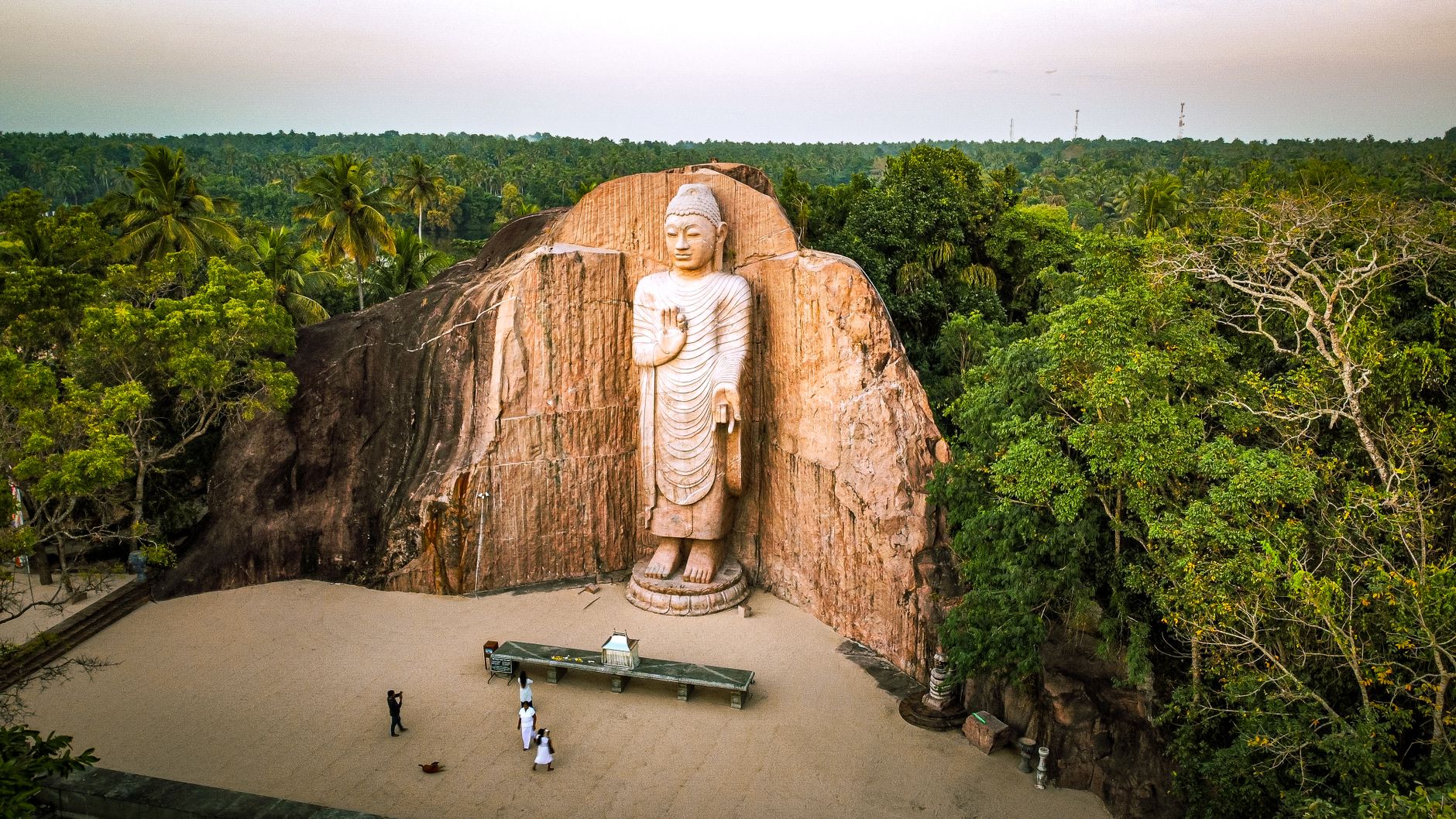
Sri Lanka Travel Guide for American Tourists
Sri Lanka is among Asia's easiest destinations for American travellers. Visas are straightforward, English is widely spoken, and daily costs run $30–60 for budget travellers, $80–150 for mid-range comfort. The island spans 270 km north to south—manageable in 1–2 weeks. No vaccinations are legally required, though hepatitis A, typhoid, and Japanese encephalitis are commonly recommended.
Do I need a visa?
Yes. Americans require an Electronic Travel Authorisation (ETA), not a traditional visa. Apply online at www.eta.gov.lk before arrival. Cost: $35 USD. Processing takes 48 hours; most get approval in 1–2 hours. Print your confirmation. Alternatively, you can obtain a visa on arrival at Colombo's Bandaranaike International Airport (BIA), though online is faster and recommended.
Your passport must be valid for six months beyond your stay.
Related: Where to Go in Sri Lanka: Choosing Your Route by Month
See also: Sri Lanka Travel Guide for German Tourists: Planning Your Visit
Related: Sri Lanka Travel Guide for UK Tourists
What's the cost per day?
Budget travellers (hostels, street food, local buses): $25–40/day. Mid-range (mid-range guesthouses, restaurant meals, tuk-tuks): $80–120/day. Upmarket (luxury hotels, fine dining): $200+/day.
Breakdown:
- Guesthouse double room: $15–50
- Street meal: $1–3
- Restaurant lunch: $4–10
- Inter-city train: $2–15
- Tuk-tuk ride: $2–8 (negotiate beforehand)
- Tourist attractions (temples, parks): $5–15 entry
Flights are your biggest cost: New York to Colombo averages $900–1,400 return (book 2–3 months ahead). Sri Lanka's internal transport is cheap.
When should I visit?
Sri Lanka has two monsoon seasons. Visit between December and March for the west and south coasts (Mirissa, Unawatuna, Colombo). Visit May to September for the east and north (Arugambe, Trincomalee, Jaffna). The central highlands (Kandy, Ella) work year-round, though May–September can be wet and misty.
Avoid April (pre-monsoon heat) and October–November (inter-monsoon rains). August–September has fewer tourists but afternoon downpours are common.
Check /ella/best-time-to-visit for highland-specific timing.
How do I get around?
Trains: Iconic and cheap. Colombo to Kandy takes 3 hours (reserved seat: $3–5). Kandy to Ella takes 7 hours (reserved seat: $5–8). Advance booking recommended for scenic routes (Kandy–Ella, Colombo–Galle). Book at www.rajadhani.gov.lk or at stations same-day. Note: schedules are approximate; delays of 30 mins–2 hours are normal.
Buses: Fastest, most frequent. Colombo to Kandy (3 hours, $3–6). Colombo to Galle (2.5 hours, $3–5). Book with private operators (Intercity, CTB) or your guesthouse. Avoid night buses unless essential; driving standards are inconsistent.
Tuk-tuks: For short distances and city exploration. Always negotiate price before entering. Expect $2–5 for 5 km. Use Uber or PickMe app (available in Colombo, Kandy, Galle) for fixed rates.
Rental cars with driver: $40–80/day. Safer than self-driving. Arrange through your hotel or apps like Klook.
Domestic flights: Not worth it. Flight time Colombo to Jaffna is 1.5 hours but airport time, cost ($80–150 return), and bus alternative (8 hours, $10) makes buses better value.
What should I pack?
- Clothing: Lightweight, loose-fitting fabrics. Temples require covered shoulders and knees—bring a sarong or lightweight trousers. One smart outfit for restaurants.
- Sun protection: SPF 50+, hat, sunglasses. Sun intensity is extreme year-round.
- Medications: Any prescription meds (in original bottles), antihistamines, antidiarrhoeal tablets, paracetamol. Malaria risk is low but consult your doctor.
- Electronics: Universal power adapter (Type D/M—three round pins). Voltage is 220–240V. Phone charger essential; power cuts occur in some areas.
- Cash & cards: ATMs are common in cities and towns. Visa/Mastercard widely accepted. Keep cash for tuk-tuks, temples, and small vendors. Budget guesthouses prefer cash.
- Documents: Passport, visa confirmation, travel insurance (highly recommended), hotel confirmations.
Language and communication
English is widely understood in tourism areas, hotels, restaurants, and among younger people. Learn basic Sinhala: "Ayubowan" (hello), "Obasan" (thank you), "Labda da?" (how much?). Locals appreciate the effort.
Mobile data is cheap and reliable. Local SIM cards (Dialog, Airtel) cost $2–3 with 5GB data for $5–10. WiFi is standard in guesthouses and cafes.
Health and safety
Drink bottled or purified water. Street food is generally safe but avoid uncooked vegetables and unpasteurised dairy. Stomach upset is common in first few days; bring antidiarrhoeals.
Criminal theft against tourists is rare but petty theft occurs in crowded areas. Avoid walking alone after dark in unfamiliar neighborhoods. Keep valuables out of sight. Colombo is safer than it was; exercise normal city precautions.
Taxis and tuk-tuks are safe; agree fares beforehand or use apps.
How many days do I need?
1 week: Colombo, Kandy, train to Ella, Mirissa beach. Rushed but doable.
10–12 days: Add Galle Fort, Trincomalee, or Jaffna. Relaxed pace, allows acclimatisation.
2+ weeks: Explore cultural triangle (Sigiriya, Dambulla, Polonnaruwa), spend time in each region, incorporate beach time.
Avoid more than 2–3 destinations per week. Travel times are slow; constant moving tires.
Customs and respect
Buddhism shapes daily life. Remove shoes entering temples and homes. Don't touch Buddha statues or monks (especially female tourists). Avoid pointing with one finger; gesture with an open hand. Don't eat with your left hand; it's considered disrespectful. Photography is usually permitted but ask at temples and archaeological sites.
Dress modestly, especially outside tourist areas. Swimwear is for beaches only. Affection in public is uncommon; avoid kissing or excessive physical contact in public.
Where to start your itinerary?
Arrive in Colombo, spend 1–2 days, then head to Kandy by train (most scenic). From Kandy, either head east to Ella via train, or northwest to the cultural triangle (Sigiriya, Polonnaruwa). End at a beach (Mirissa, Unawatuna, or Arugambe depending on season).
See /ella for detailed highland planning.
FAQ
Can I travel solo as an American? Yes. Solo travel is common and safe. Guesthouses provide social environments; organised day tours are readily available. Women should follow standard precautions (avoid isolated areas at night, dress modestly, stay aware in crowded transport).
How much cash should I carry? Carry $200–300 USD for emergencies, exchangeable at banks and ATMs. Daily expenses (meals, transport, entry fees) are paid in Sri Lankan Rupees (LKR); withdraw via ATM as you travel. Cards work in cities but fail in rural areas.
Is travel insurance necessary? Strongly recommended. Basic medical costs are low ($20–50 for clinic visits) but emergency evacuation, cancellations, or serious illness can cost thousands. Annual travel insurance for Americans is $100–250.
Can I extend my ETA once in Sri Lanka? Yes. The ETA is valid 30 days. Extensions (additional 30 days) are granted at immigration offices in Colombo or Kandy. Cost: ~$30 USD. Processing takes 1–3 days.