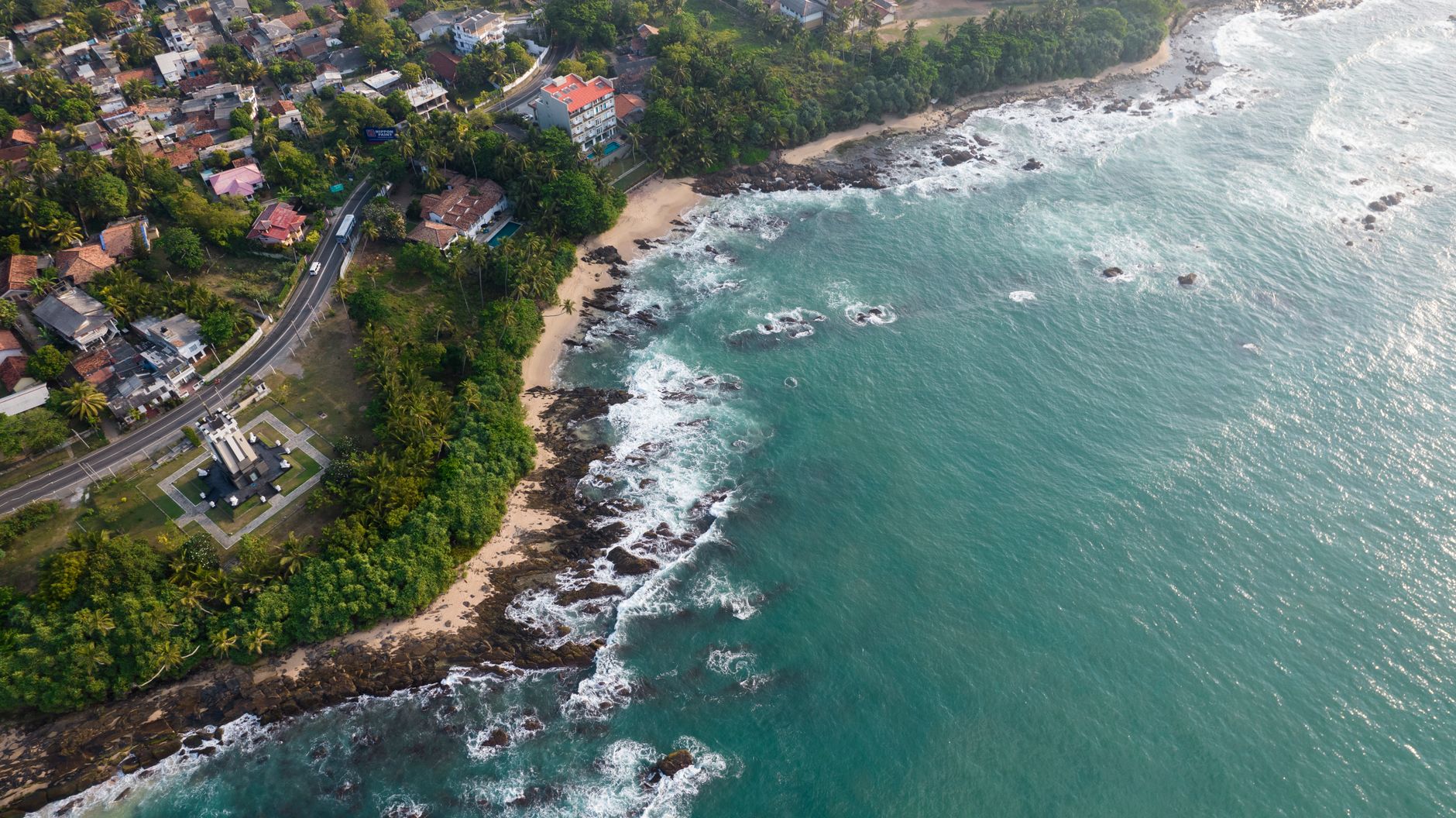
Four days in Tangalle gives you enough time to genuinely feel the southern coast's slower rhythm — exploring wild and varied beaches, a working fishing harbour, ancient rock temples, and the green countryside around Mulkirigala — without ever needing to rush. This itinerary moves at a human pace, mixes culture with coast, and leaves room for long lunches.
Tangalle sits roughly halfway between Mirissa and Yala, which makes it an excellent anchor point for a southern Sri Lanka trip. It's the kind of town where the mornings smell of salt and cooking fires, and the afternoons feel genuinely unhurried.
Where should you stay in Tangalle?
Before the days begin, it's worth choosing your base carefully, because Tangalle's beaches are spread across several kilometres of coastline and your location shapes what feels easy versus effortful.
Related: Ambalantota in 2 Days: What to See and Where to Stay
See also: Colombo in 2 Days: What to See and Where to Stay
Related: Sigiriya in 4 Days: The Complete Itinerary
For the most luxurious and secluded experience, Anantara Peace Haven Tangalle Resort sits on its own headland with sweeping views and consistently earns the highest ratings in the area (9.3/10 from 201 reviews). It's genuinely special and suits those who want a retreat with structure around it. At a similar tier, Turtle Bay Hotel rates 9.0/10 and offers an intimate five-star alternative with far fewer rooms.
For a mid-range stay with strong character, Serein Beach Hotel (8.8/10, 108 reviews) and Moonstone Villas (8.6/10, 151 reviews) both deliver excellent value without the resort-scale feel. Goyambokka Guest House at 8.7/10 from 216 reviews is arguably the best-value property in Tangalle — simple, well-run, and right by one of the calmer beaches. For a lively beach setting with easy access to Hiriketiya Bay, Dickwella Resort & Spa Hiriketiya earns 8.4/10 from 242 reviews and suits surfers and social travellers. Palm Paradise Cabanas & Villas Beach Resort Tangalle offers solid four-star comfort at 8.5/10 (252 reviews) and is well-positioned for beach access.
Budget travellers and those who like atmosphere over amenities will find Nuga Eden Tangalle (8.3/10, 327 reviews) reliable and genuinely popular.
Day 1: Arrive, orient, and breathe
If you're arriving from Galle or Mirissa, you'll likely reach Tangalle by late morning or early afternoon. Resist the temptation to immediately fill the afternoon with activity.
Settle in, then walk down to Tangalle's main beach and harbour area. The harbour is one of the most honest and visually striking parts of town — brightly painted fishing boats crowd the lagoon mouth, and if you arrive in the late afternoon, the catch is being sorted and sold on the concrete quayside. It's not a tourist attraction; it simply is what it is, and that's precisely why it's worth seeing.
For your first dinner, look for a small rice-and-curry restaurant on or just off the main road rather than eating at your hotel. Most places serve a fixed plate — several small dishes of coconut-based curries, dhal, pol sambol, and either fish or chicken — and the standard is reliably good. Eating local on your first evening sets the tone for the whole trip.
Day 2: Beach day focused on Medaketiya and Goyambokka
Tangalle's beaches are not uniform, and Day 2 is about understanding the difference between them. Medaketiya Beach, the long open stretch running east of town, is dramatic and wide — strong surf, golden sand, and often only a handful of people on it. It's a beach for walking and watching, not for swimming, since the currents can be powerful, particularly between October and April.
Goyambokka Beach, a short tuk-tuk ride east, is calmer and partially sheltered. This is where swimming is more reliably safe, and the atmosphere is gentler. Spend the late morning here, perhaps with a coconut from a roadside vendor.
In the afternoon, follow the coast road further east toward Rekawa. This area is significant for sea turtle nesting — five species nest along this stretch of coast — and the Rekawa Lagoon Conservation Project runs guided night visits during nesting season (roughly April to September) to watch turtles come ashore. If your visit falls during this window, book a space in advance through a local operator or your guesthouse.
Day 3: Mulkirigala Rock Temple and inland exploration
Day 3 pulls you away from the coast entirely, and it's worth it. Mulkirigala Rock Temple, about 15 kilometres north of Tangalle, is one of the more impressive ancient sites in the south — a series of cave temples cut into a dramatic granite outcrop, filled with reclining Buddha statues and painted ceilings, reached via steep stone steps that reward you with views across the flat southern plain.
It receives far fewer visitors than Dambulla or the Cultural Triangle sites, which means you can move through the complex slowly and genuinely absorb it. Dress respectfully (shoulders and knees covered, shoes off at the cave entrances), and carry water — the climb in the heat is more demanding than it looks from below.
Return to Tangalle via the town market if it's a market day, or stop at a roadside stall for a late lunch of hoppers or string hoppers with lunu miris. The drive back through rubber and coconut plantations has its own quiet beauty.
This evening, Hiriketiya Bay — about 20 minutes west of central Tangalle — is worth visiting for a late afternoon drink or dinner. The bay has a distinct personality from Tangalle town: younger, more surf-oriented, with several small cafés overlooking a horseshoe of calm water popular with beginner surfers.
Day 4: Slow morning, Hummanaya blowhole, and departure
Day 4 is for the details you may have missed. Start with a slow breakfast — ideally string hoppers and dhal if your guesthouse or a nearby café serves them — and take a final walk along whichever beach you've come to feel most attached to.
If you're not leaving until afternoon or evening, the Hummanaya Blowhole, roughly 20 kilometres west of Tangalle near Dikwella, is an unusual coastal feature worth the detour. At the right sea conditions and tides, seawater is forced through a rock fissure and shoots upward dramatically. It's at its most impressive during rough weather and between November and March — check conditions locally before making the trip.
For those heading onward to Yala or the east coast, the road north and east from Tangalle passes through Hambantota and offers a completely different landscape: scrubby dry-zone bush rather than tropical green.
How does Tangalle compare to nearby beach towns?
Tangalle occupies a specific middle ground. It's wilder and less developed than Unawatuna or Mirissa, without the resort infrastructure of those places, but it's more accessible and varied than the remote beaches near Rekawa or Bundala. If you want organised beach amenities and a busy bar scene, Tangalle will underwhelm you. If you want a place where the fishing industry still shapes daily life and the beaches have genuine character, it's exactly right.
FAQ
Is Tangalle safe for swimming? It depends on the beach and the season. Goyambokka and the sheltered cove near Marakolliya are generally the safest for swimming. Medaketiya Beach has strong surf and currents and is better for walking than swimming, particularly outside the calmer months of May to September. Always check conditions locally.
How do you get to Tangalle from Colombo? The most practical options are a direct bus from Colombo Fort (roughly 5–6 hours depending on traffic and the route), a hired car with driver (around 3.5–4 hours via the Southern Expressway), or a combination of train to Matara followed by a bus or tuk-tuk onward. There is no direct train service to Tangalle itself.
What is the best time of year to visit Tangalle? The driest and calmest period for the southern coast is roughly May through September, when the southwest monsoon has passed and the sea is generally calmer. October and November can bring rain from the northeast monsoon's indirect effects. For turtle nesting at Rekawa, April to September is the key season. Read more about Tangalle's best time to visit.
Can you do a day trip to Yala National Park from Tangalle? Yes, though it's a long day. Yala's main gate is roughly 80–90 kilometres east of Tangalle, and a full safari typically lasts 3–4 hours. Most visitors hire a driver from their guesthouse or hotel the evening before. It's more enjoyable as a standalone trip with an overnight stay near the park rather than as a rushed day trip, but it is entirely possible if time is limited.