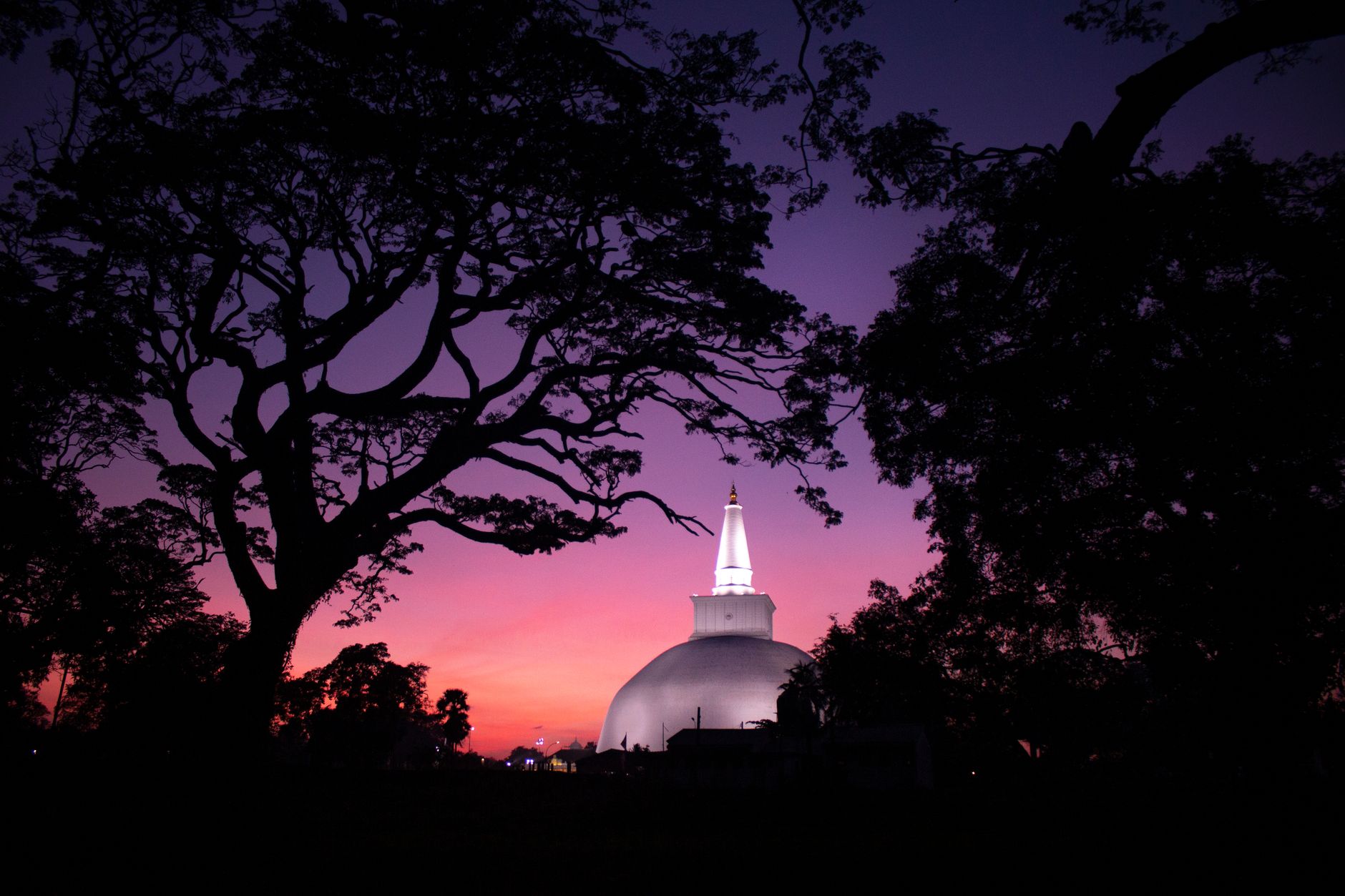
Two days in Tissamaharama gives you enough time for a proper Yala National Park safari, the ancient dagoba circuit around town, and a slow evening on the tank watching painted storks wade through the shallows — provided you use the early mornings, when the wildlife is actually moving. Here's how to spend every hour well.
What makes Tissamaharama worth two full days?

Tissa, as locals call it, sits at the junction between Sri Lanka's deep-south cultural heritage and its wildest national park. The town itself is built around a series of ancient irrigation tanks — Tissa Wewa, Debarawewa Wewa, and Yoda Wewa — that double as outstanding bird habitats. Within 30 km you have Yala National Park (home to the world's highest density of wild leopards), Bundala National Park (a Ramsar wetland and flamingo staging ground), and a cluster of Buddhist monuments dating to the 3rd century BC. The distance between sights is small; the variety is enormous.
Day 1: Yala National Park safari and the lake at dusk

Early morning (5:30 am – 11:00 am): Yala Block 1 safari
Related: Matale in 2 Days: What to See and Where to Stay
See also: Colombo in 2 Days: What to See and Where to Stay
See also: Kitulgala in 4 Days: The Complete Itinerary
Book your jeep the evening before and be at the Palatupana gate for the 6:00 am opening. Block 1 is where the leopard density is highest — roughly one per square kilometre in the core zone — but they move early and retreat to scrub cover once the sun climbs. Your driver should head first towards Patanangala beach and the rocky outcrops near Yala Lagoon; leopards use these granite boulders as look-out points in the morning light. Sloth bears are most active between 7:00 and 9:00 am. Elephants tend to cluster around the waterholes after 8:30 am. Ask your naturalist to check the Gomadiya waterhole before it heats up.
The park closes to midday vehicles in the dry season (roughly May–September), so you'll be back in Tissa by 11:30 am anyway.
Afternoon (2:00 pm – 5:00 pm): Kataragama Road temples and Tissa Dagoba
The midday heat between noon and 2:00 pm is best spent eating and resting. After lunch, walk or tuk-tuk to the Tissa Dagoba — a whitewashed stupa said to enshrine relics placed here by King Kavantissa in the 2nd century BC. The surrounding grounds contain the Sandagiri Dagoba and the ruins of the Yatala Wehera, a smaller stupa with a fascinating carved elephant frieze at its base. None of these require a guide; they're compact enough to explore on foot in 90 minutes.
Evening (5:30 pm – 7:00 pm): Tissa Wewa birdwatching
Walk the earthen bund along Tissa Wewa's edge as the light drops. Painted storks, open-billed storks, purple herons, and grey pelicans feed in the shallows from around 5:30 pm. In November–January, the tank also attracts migrant ducks and waders. No binoculars? Bring them from home — rental options in town are unreliable.
Day 2: Bundala National Park and Kataragama

Early morning (6:00 am – 9:30 am): Bundala flamingos and shorebirds
Bundala is only 15 km west of Tissa and is a completely different ecosystem from Yala — open lagoons and salt pans rather than dense scrub. Between November and March, greater flamingos feed in the brackish lagoons in flocks of several hundred. Resident species include the Indian roller, black-necked stork, and blue-tailed bee-eater. Crocodiles sun themselves on the lagoon banks. A 3-hour jeep circuit covers the main lagoons without backtracking. Bundala is cheaper and less crowded than Yala; booking on the morning is usually possible outside peak season.
Late morning (10:30 am – 12:30 pm): Kataragama sacred town
Kataragama is 18 km north of Tissa and is one of the few places in Sri Lanka where a Buddhist shrine, a Hindu kovil, and a mosque share the same sacred complex. The Maha Devale (dedicated to the god Kataragama/Murugan) draws pilgrims daily and is particularly atmospheric mid-morning before the midday crowds. Remove shoes at the entrance. The perahera held here each July–August is among the most intense religious festivals in the country — plan your visit around it if your dates allow.
Afternoon: slow travel back towards your next destination
If you're heading to Ella or Mirissa, an afternoon departure from Tissa puts you at either destination before dark. Check the best time to visit Ella if you're combining a hill-country leg with your southern circuit.
Where to stay in Tissamaharama: honest comparisons
Most properties cluster either in Tissa town itself or along the road towards Yala.
Best overall value goes to DoubleTree by Hilton Weerawila Rajawarna Resort — a 4-star property with a 9.4/10 rating from 296 reviews, set beside a tank with strong pool and dining facilities. It's slightly further from the Yala gate than some lodges but the consistency of service is hard to beat at this price bracket.
For a genuine bush-lodge feel, Cinnamon Wild Yala Hotel and Jetwing Yala both earn 9.0/10 and sit closest to the Yala park boundary — meaning you can be at the gate before most other jeeps have left their properties. Both are 5-star and priced accordingly.
Mid-range comfort is well served by Blue Turtle Hotel, a 3-star with an 8.8/10 rating from 213 reviews, which consistently receives strong marks for cleanliness and breakfast. Serene Park Hotel is a similar tier at 8.3/10 and is within walking distance of Tissa Wewa.
For ayurveda and slower travel, Thaulle Pure Ayurveda Resort earns an 8.6/10 from 164 reviews — an option if you want to add a treatment programme alongside your safari days.
Other solid options worth considering: Ekho Safari Tissa (5 stars, 8.2/10 from 1,224 reviews — the largest review sample in the area), Chaarya Resort and Spa (5 stars, 8.3/10), and Kithala Resort - Thema Collection (4 stars, 8.2/10) for a boutique feel with strong eco credentials.
What's the best time of year for this itinerary?
The dry season from May to September offers the most reliable wildlife sightings in Yala — water sources shrink and animals concentrate around remaining waterholes. October sees heavy northeast monsoon rains and Yala occasionally closes. November to January suits Bundala best, with peak flamingo numbers and migrant shorebirds. February to April is a good all-round compromise: Bundala is still active and Yala is fully open without the peak-season jeep congestion of July and August.
FAQ
Do I need to book Yala safari jeeps in advance? In peak months (July–September and December–January), yes — reliable naturalist-driver pairs book out days ahead. In shoulder months you can often arrange a jeep the evening before through your hotel, but don't leave it to the morning of.
Can I visit Yala and Bundala on the same day? Technically yes, but it makes for a very long day. Yala's morning slot runs 6:00 am–noon and Bundala is best done early too. Most visitors split them across two mornings, which this itinerary does.
Is Tissamaharama easy to reach by public transport? Yes. Direct buses run from Colombo (Bastian Mawatha terminal, roughly 6–7 hours) and from Matara. From Ella, you'll change at Wellawaya. There is no direct train to Tissa — the nearest rail station is at Matara.
How much time do I need inside Kataragama? Allow 1.5 to 2 hours to walk the full sacred precinct, including the Kiri Vehera dagoba behind the main kovil and the small museum near the entrance. Visit mid-morning on a non-poya (full moon) day for manageable crowds.