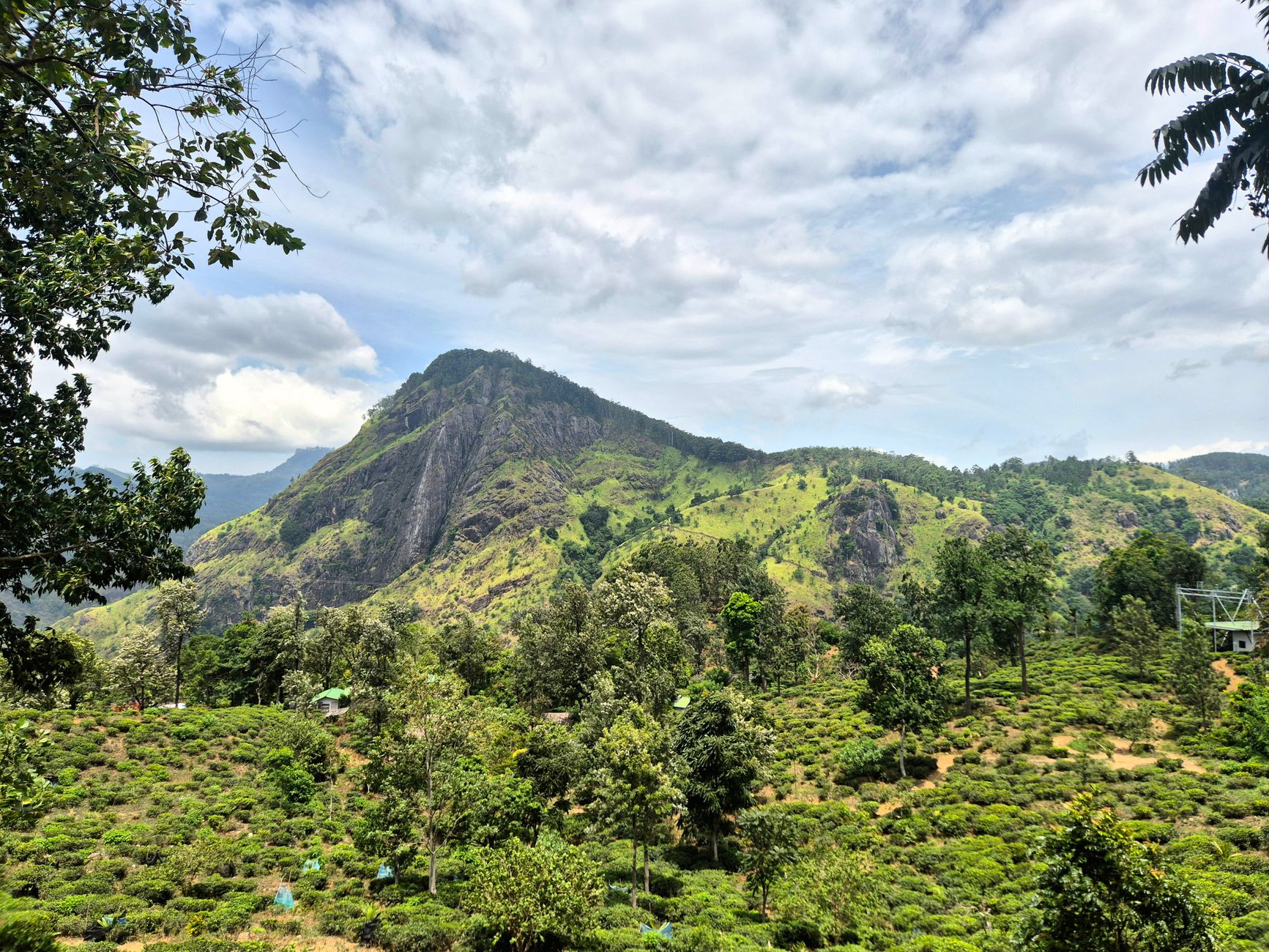
Ella suits travellers who want dramatic ridge-top views, a relaxed café culture and short hikes on their doorstep. Nuwara Eliya suits those drawn to cooler temperatures, colonial architecture, tea estate immersion and a more authentic local town feel. Most visitors with time will find real value in staying at both.
The Sri Lankan hill country rewards slow travel, and the question of where to plant yourself for a few nights is one that genuinely shapes your entire experience of this region. Both towns sit within the central highlands, both are linked by the legendary railway line, and both offer access to tea plantations rolling across misty green slopes — but the similarities, once you arrive, start to fade fairly quickly.
What kind of atmosphere does each town offer?
Ella is compact, social and built almost entirely around the traveller economy. The main street — a single lane of guesthouses, rooftop restaurants and smoothie bars — hums with conversation in multiple languages, and the whole place carries an easy, unhurried energy that makes it very simple to arrive and immediately feel comfortable. It lacks the grit and noise of a working Sri Lankan town, which for some people is exactly the point and for others feels slightly sanitised.
Related: Mirissa vs Unawatuna: Which Beach Town Should You Stay In?
See also: Trincomalee vs Arugam Bay: Which Suits Your Trip?
Nuwara Eliya, by contrast, is a proper functioning town with a market, a racecourse, hardware shops, a post office and a population that is largely Tamil, descended from the estate workers brought here under British plantation management. Walking through Nuwara Eliya's centre — past the colonial-era Hill Club, along the misty lake at Gregory's — gives you a layered, more complicated place to explore. The British left behind an odd architectural legacy here: mock-Tudor guesthouses, a rose garden, a golf course. It's slightly surreal and entirely fascinating.
How do the landscapes and hikes compare?
Ella's great advantage is that superb viewpoints and manageable hikes are immediately accessible from the town itself. Little Adam's Peak is a gentle 45-minute walk rewarded with a sweeping panorama across the valley. Ella Rock is a longer, more satisfying half-day hike through tea fields and forest, still reachable independently. The famous Nine Arches Bridge sits just a short tuk-tuk ride away, and timing your visit for one of the passing trains remains one of those genuinely thrilling experiences that the hill country delivers.
Nuwara Eliya's landscape is broader and more open — a wide, cooler plateau ringed by peaks, with Horton Plains National Park the unmissable excursion from this base. World's End, a sheer escarpment dropping more than 800 metres, is dramatic on a clear morning in a way that nothing in Ella quite matches. The drive or bus out to Horton Plains is itself beautiful, passing through eucalyptus groves and strawberry farms. Accommodation closer to the park is possible, but most people base in Nuwara Eliya town and leave early.
For more context on timing your visit to make the most of both landscapes, the best time to visit Ella guide covers rainfall patterns and visibility in detail, as does the equivalent resource for Nuwara Eliya's seasons.
Where is the food better?
Ella's café scene is genuinely enjoyable — plenty of rooftop spots serving good coffee, fresh juice, decent pasta and well-made Sri Lankan rice and curry. The food quality is consistent and the settings, perched above valley views, make even a modest meal feel like an event. It is, however, a menu designed for traveller tastes, and if you're looking for the kind of fiercely spiced, oil-rich dal and hoppers you'd find at a local eatery, you may need to look a little harder.
Nuwara Eliya offers both registers. The town's market has proper short-eats shops — little cups of vadai, warm kottu, string hoppers with dhal served on newspaper — that feel entirely unperformed. The colonial hotel dining rooms, meanwhile, serve afternoon tea with a straight face and considerable ceremony. It's a stranger, more interesting food landscape to navigate.
Which town has better transport connections?
Both towns are connected by the famous Kandy–Ella railway line, one of the most scenically extraordinary train journeys in Asia. The closest station to Nuwara Eliya is Nanu Oya, about eight kilometres from town, which means a tuk-tuk or bus transfer on arrival. Ella has its own station right at the edge of town, which makes arrival and departure considerably easier.
From Nuwara Eliya, the road connections to Colombo, Kandy and the south coast are straightforward. From Ella, buses and tuk-tuks link to Haputale, Wellawaya and the road south toward Yala and the coast. If you're building a route that includes both the hill country and the beaches, Ella often works better as a final hill country stop before heading south.
For a fuller picture of how both towns fit into a wider Sri Lanka itinerary, the Ella town guide and Nuwara Eliya guide lay out the logistics clearly.
Who should choose Ella, and who should choose Nuwara Eliya?
Ella works best for first-time visitors to the hill country who want an accessible, sociable base with walks and views on their doorstep and no complicated logistics. It's easier to arrive, easier to orientate yourself, and easier to meet other travellers if that appeals to you. Solo travellers, younger visitors and those on shorter itineraries tend to find Ella a more immediately rewarding choice.
Nuwara Eliya rewards travellers who are comfortable moving around independently, who are interested in the history and sociology of the tea industry, who want to visit Horton Plains properly and who appreciate a more layered, less curated destination. Families and those looking for slightly more upscale or heritage-style accommodation will also find the options here broader.
If your schedule allows five or more nights in the hill country, there is a strong argument for splitting your time: arriving by train into Nanu Oya, spending two or three nights in Nuwara Eliya, then continuing by train to Ella for the remainder. The train between the two, passing through Haputale and Bandarawela, is spectacular enough that the journey itself justifies making both stops.
FAQ
Is Nuwara Eliya colder than Ella? Yes, noticeably so. Nuwara Eliya sits at around 1,900 metres and temperatures can drop below 10°C on winter nights (roughly June to August). Ella is lower, warmer and more humid. Pack a proper layer for Nuwara Eliya regardless of the season.
Can I visit both Ella and Nuwara Eliya on a day trip from one base? Technically possible but not recommended — the road and rail journey between them takes two to three hours each way, and both places genuinely benefit from an overnight stay to see them in the morning light and at quieter times of day.
Which town is better for families with young children? Nuwara Eliya offers a bit more variety — the lake, Gregory's Park, the botanical gardens and the slower pace of the town make it manageable with children. Ella's hikes are rewarding but require reasonable fitness, and the main street has less space to move around freely.
Do I need to book accommodation far in advance? For both towns, especially during the Sri Lankan peak season (December to March) and around April's Sinhala and Tamil New Year, advance booking of at least several weeks is sensible. Ella in particular fills up quickly given how few rooms exist relative to demand.